Immunize.org supports evidence-based vaccination recommendations and schedules. Read more at About Us.
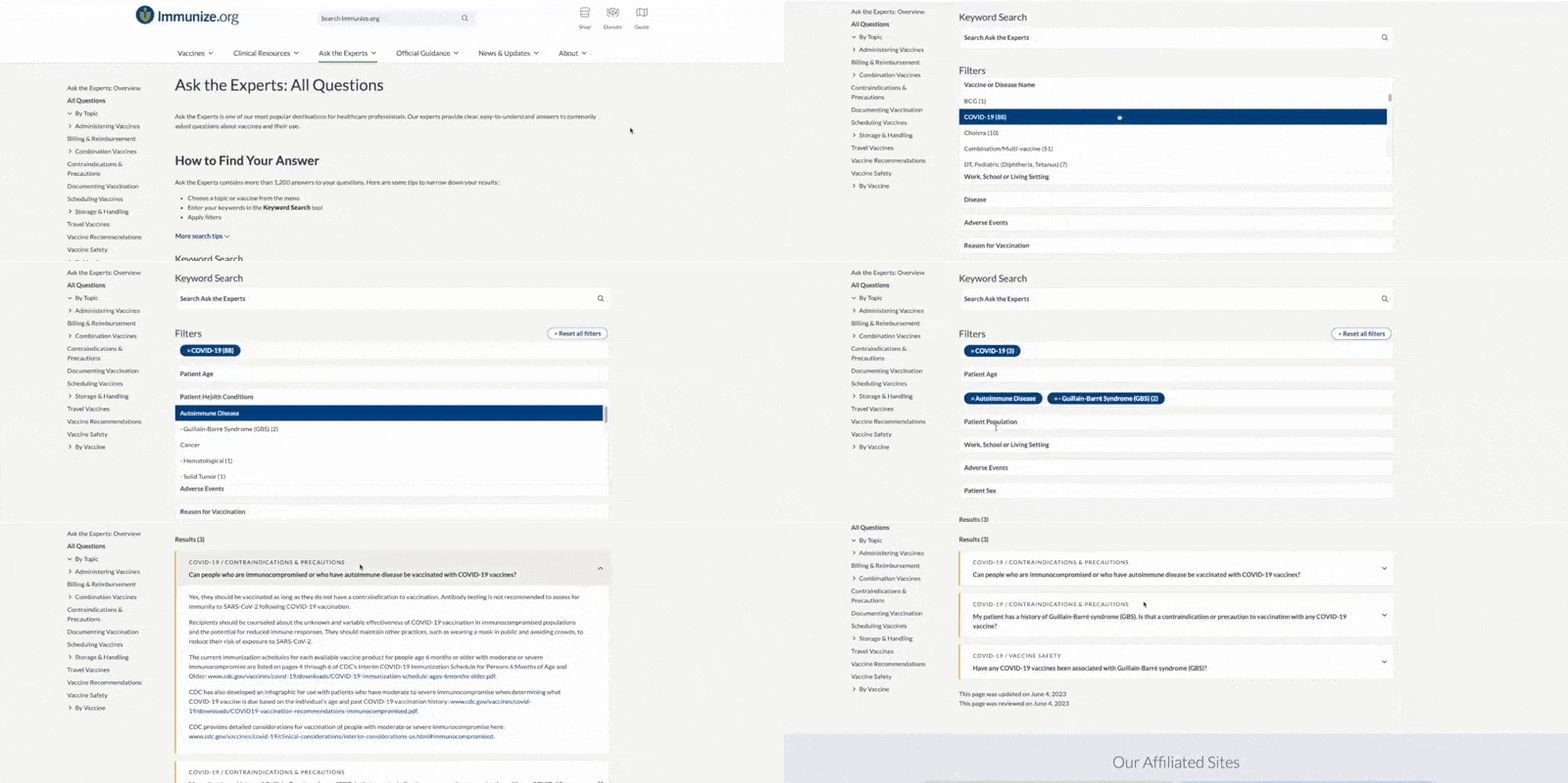
Welcome to the new Immunize.org!
Our website may look a lot different, but the trusted, up-to-date information you rely on is still here.
Let’s take a quick tour!
Navigation
We’ve updated the menus so you can find whatever you’re looking for, be it VISs, patient handouts, Ask the Experts, or updates and guidance from official sources.
Filters and Improved Search
Many pages now include robust filter options, keyword search, and list sorting to help find the exact answer or resource you need within our large repository of information.
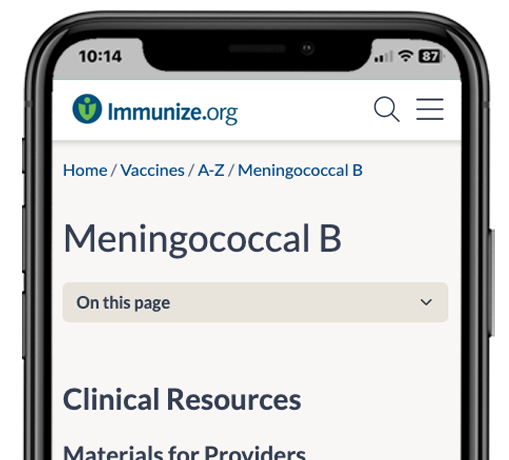
Mobile-Friendly
Our new website is easy to use on mobile devices and tablets, so immunization information is ready for you no matter where you are.
Pneumococcal disease is caused by Streptococcus pneumoniae, a bacterium that has more than 100 serotypes. Most serotypes can cause disease, but only a few produce the majority of cases of invasive pneumococcal disease.
Last reviewed:
April 5, 2024
Link copied
Pneumococcal
Disease Issues
How does pneumococcal disease spread?
The pneumococci bacteria are spread from person to person by droplets in the air. The pneumococci bacteria are common inhabitants of the human respiratory tract. They may be isolated from the nasopharynx of 5%–90% of healthy people.
Last reviewed:
November 13, 2024
Link copied
Pneumococcal
Disease Issues
What are the types of invasive pneumococcal disease?
Pneumococcal disease can be invasive, meaning a normally sterile part of the body is infected, or non-invasive. There are two major clinical syndromes of invasive pneumococcal disease (IPD): bacteremia (blood stream infection), and meningitis (infection of the meninges that surround the brain). They are both caused by infection with the same bacteria but produce different signs and symptoms.
Pneumococcal pneumonia is a common disease caused by pneumococcal infection. Symptoms include abrupt onset of fever, shaking chills or rigors, chest pain, cough, shortness of breath, rapid breathing and heart rate, and weakness. The case-fatality rate is 5%–7% and is higher in adults 65 years and older and people with certain underlying medical conditions.
Pneumococcal pneumonia can occur in combination with bacteremia and/or meningitis (invasive pneumococcal pneumonia), or it can occur alone (non-invasive pneumococcal pneumonia). Before the COVID-19 pandemic, at least 100,000 people were hospitalized each year for pneumococcal pneumonia. At least 30,000 people were hospitalized each year for IPD, and about 3,000 people died. Rates of pneumococcal disease declined during the COVID-19 pandemic, but rates have returned to pre-pandemic levels.
About 4,000 cases of pneumococcal bacteremia without pneumonia occur each year in the United States. Bacteremia is the most common clinical presentation among children less than two years, accounting for up to 70% of IPD in this age group. The overall case-fatality rate of pneumococcal bacteremia is about 20% and may be as high as 60% among older adults.
Pneumococci cause 50% of all cases of bacterial meningitis in the United States. There are an estimated 2,000 cases of pneumococcal meningitis each year. Symptoms and signs may include headache, tiredness, vomiting, irritability, fever, seizures, and coma. The case-fatality rate of pneumococcal meningitis is about 8% among children and 22% among adults. Permanent neurological damage is common among survivors.
Last reviewed:
November 13, 2024
Link copied
Pneumococcal
Disease Issues
What is pneumococcal serotype 4 and when might it be considered when selecting a pneumococcal vaccine product for adults?
S. pneumoniae bacteria are serotyped based on the polysaccharides in the outer capsule of the bacteria. The more than 100 known serotypes vary in how common they are and in what percentage of pneumococcal disease they cause. Pneumococcal vaccines are designed to target specific serotypes.
Our understanding of which serotypes are currently causing invasive pneumococcal disease (IPD) in the United States comes primarily from CDC’s Active Bacterial Core surveillance (ABCs) program, which routinely collects serotype data on IPDs leading to hospitalization in 10 states. From ABCs and similar systems in Alaska and the Navajo Nation, CDC has determined that certain adult populations in the western United States have a high percentage (30% or higher) of IPD caused by serotype 4. These areas include Alaska, Colorado, the Navajo Nation, New Mexico, and Oregon. Serotype 4 is not commonly detected in other regions of the United States.
Typically, people in these geographic areas who develop serotype 4 IPD are adults younger than age 65 years who have specific underlying conditions or risk factors, such as alcoholism, chronic lung disease, cigarette smoking, homelessness, and injection drug use. Affected adults typically have not received a pneumococcal vaccination targeting serotype 4.
Serotype 4 is included in all but one of the current pneumococcal vaccines offered to children and adults (PCV13, PCV15, PCV20, and PPSV23). Serotype 4 is not included in the adult PCV21 (Capvaxive, Merck). While ACIP has not expressed a preference for a specific pneumococcal vaccine schedule for adults, ACIP notes that vaccine schedules that include serotype 4 (PCV20 alone or PCV15 followed by PPSV23) are expected to provide broader serotype coverage for adults in these western states with underlying conditions or risk factors for serotype 4 IPD. ACIP and CDC have indicated they will continue to monitor the prevalence of serotype 4 and provide additional guidance if necessary.
For more details of clinical considerations for selection of pneumococcal vaccines in communities with high proportions of serotype 4, please see the box on page 797 of the September 12, 2024, MMWR article entitled, Use of 21-Valent Pneumococcal Conjugate Vaccine Among U.S. Adults: Recommendations of the Advisory Committee on Immunization Practices — United States, 2024: www.cdc.gov/mmwr/volumes/73/wr/pdfs/mm7336a3-H.pdf.
Last reviewed:
November 13, 2024
Link copied
Pneumococcal
Disease Issues
Considerations for serotype 4 when selecting an adult pneumococcal vaccine [Video]
Where would I find information about pneumococcal serotype 4 prevalence for my community?
Information about pneumococcal serotype prevalence is not available for most communities. The best available data is from communities in the 10 states that have active pneumococcal surveillance programs through the CDC’s Active Bacterial Core surveillance (ABCs), available at www.cdc.gov/abcs/index.html, as well as similar surveillance systems in Alaska and the Navajo Nation. Your local or state health department is your best source for guidance or additional information.
Last reviewed:
November 13, 2024
Link copied
Pneumococcal
Disease Issues
How serious is pneumococcal disease in the U.S.?
Pneumococcal disease is a serious disease that causes much sickness and death. Before the dip in pneumococcal disease observed in the first two years of the COVID-19 pandemic (when measures to control COVID-19 reduced the incidence of several infectious diseases), an estimated 30,000 cases and 3,000 deaths from invasive pneumococcal diseases (bacteremia and meningitis) occurred in the United States. Children younger than age two years and adults age 50 years and older have the highest incidence of serious disease. Case-fatality rates are highest for pneumococcal meningitis and bacteremia, and the highest mortality occurs among older adults and patients who have underlying medical conditions.
Last reviewed:
November 13, 2024
Link copied
Pneumococcal
Vaccine Products
Which pneumococcal vaccines are licensed for use in the United States?
One pneumococcal polysaccharide vaccine (PPSV23, Pneumovax 23, Merck) and three pneumococcal conjugate vaccines (PCV15 [Vaxneuvance, Merck], PCV20 [Prevnar 20, Pfizer], and PCV21 [Capvaxive, Merck]) are FDA-licensed and recommended by CDC for use in the United States. PCV13 (Prevnar 13, Pfizer) is FDA-licensed and may still be available in some clinics. It is no longer routinely recommended; however, CDC guidance allows for its use as previously recommended in situations where PCV15, PCV20, or PCV21 is indicated but unavailable and the alternative is that the patient would not be vaccinated.
PPSV23 is licensed for age 2 years and older. It was first licensed in 1983. It is an option for use in series with PCV15 for children and adults ages 2 through 64 years with specified risk factors for pneumococcal disease depending on their prior pneumococcal vaccination history. A PCV15 + PPSV23 series also is recommended as an option for pneumococcal disease prevention in adults 50 years and older. Following the 2022 changes to the pneumococcal vaccination schedule for adults, PPSV23 is no longer recommended alone, however PPSV23 is recommended for adults following PCV15 vaccination. It is not recommended for people who have previously received a PCV20 or PCV21 vaccination.
PCV15 is licensed for people age 6 weeks and older. CDC recommends the use of PCV15 as an option for the routine vaccination of children younger than age 5 years and certain children 6 through 18 years who have conditions that put them at high risk of invasive pneumococcal disease. CDC recommends PCV15 in series with PPSV23 as an option for pneumococcal disease prevention in adults age 19 through 49 years who are at increased risk for invasive pneumococcal disease due to behavioral or medical risk factors and for adults age50 or older. When used in adults, it is always recommended to be used as part of a vaccination series with PPSV23 typically given 1 year later (a minimum interval of 8 weeks may be considered for people with immunocompromising medical conditions, cochlear implant or cerebrospinal fluid leak).
PCV20 is licensed for people age 6 weeks and older. CDC recommends the use of PCV20 as an option for the routine vaccination of children younger than 5 years of age and certain children 6 through 18 years who have conditions that put them at high risk of invasive pneumococcal disease. CDC recommends it as an option for pneumococcal disease prevention in adults age 19 through 49 years who are at increased risk for invasive pneumococcal disease due to behavioral or medical risk factors and for adults age50 or older. If PCV20 is given, no further pneumococcal vaccination is recommended.
PCV21 was first licensed and recommended for adults in June 2024. CDC recommends the use of PCV21 as a product option for any adult age 19 or older when a PCV vaccine is recommended. It is specifically designed for adults: it does not contain 10 serotypes contained in PCV20; instead, it contains 11 additional serotypes that cause disease in adults. As with PCV20, after it is administered, no further pneumococcal vaccine doses are recommended.
What are the differences between polysaccharide and conjugate vaccines?
A polysaccharide vaccine is a type of vaccine that is composed of long chains of sugar molecules, called polysaccharides, that resemble the surface of certain serotypes of pneumococcal bacteria in order to help the immune system mount a response.
A conjugate vaccine is a type of vaccine that joins a protein to an antigen (in the case of pneumococcal vaccines, the protein is connected to unique polysaccharides from the surface of each of the pneumococcal serotypes). The protein helps improve the quality of the immune system response to the vaccine compared to the response to an unconjugated polysaccharide.
Last reviewed:
November 13, 2024
Link copied
Pneumococcal
Vaccine Products
What are the main differences between pneumococcal polysaccharide vaccine (PPSV23) and the pneumococcal conjugate vaccines (PCVs)?
The polysaccharide vaccine includes the different polysaccharides (chains of complex sugars) from different serotypes as the antigen. The conjugate vaccines have the polysaccharides for different serotypes attached (or conjugated) to a carrier protein. The immune response to the PPSV23 vaccine is a T-cell independent immune response, while the immune response to PCV vaccination is a T-cell dependent response that produces memory B-cells and reduces carriage of the bacteria in the respiratory track. The PPSV23 does not reduce bacterial carriage.
Last reviewed:
November 13, 2024
Link copied
Pneumococcal
Vaccine Products
How effective are pneumococcal conjugate vaccines at preventing pneumococcal carriage or disease?
FDA licensed the first pneumococcal conjugate vaccine against seven serotypes (PCV7, Prevnar7, Pfizer) in 2000. A large clinical trial showed PCV7 reduced invasive disease caused by vaccine serotypes by 97%. Compared to unvaccinated children, children who received PCV7:
Had 20% fewer episodes of chest X-ray confirmed pneumonia
Had 7% fewer episodes of acute otitis media
Underwent 20% fewer tympanostomy tube placements
FDA licensed PCV13 based on studies comparing the serologic response of children who received PCV13 to those who received PCV7. Substantial evidence demonstrates that routine infant PCV7 and PCV13 vaccination reduces the carriage and transmission of vaccine serotypes.
Researchers conducted a randomized placebo-controlled trial (CAPiTA trial) in the Netherlands among approximately 85,000 adults 65 years or older from 2008 through 2013. This trial evaluated the clinical benefit of PCV13 in the prevention of pneumococcal pneumonia. The results of the CAPiTA trial demonstrated:
46% efficacy against vaccine-type pneumococcal pneumonia
45% efficacy against vaccine-type non-bacteremic pneumococcal pneumonia
75% efficacy against vaccine-type invasive pneumococcal disease (IPD, i.e., bacteremia or meningitis)
FDA licensed PCV15 and PCV20 in 2021 based on studies comparing the serologic response of adults who received either PCV15 or PCV20 to those who received PCV13. These studies showed PCV15 and PCV20 induced antibody levels comparable to those induced by PCV13 and shown to be protective against invasive disease. FDA subsequently expanded the indication for use of PCV15 and PCV20 to include children starting at age 6 weeks in 2022 and 2023, respectively, based on serologic studies. PCV21 was licensed in 2024 based on a similar evaluation of serologic response to vaccination.
Last reviewed:
November 13, 2024
Link copied
Pneumococcal
Vaccine Products
How effective is pneumococcal polysaccharide vaccine at preventing pneumococcal carriage or disease?
According to CDC, more than 80% of healthy adults who receive PPSV23 develop antibodies against the serotypes contained in the vaccine that persist for at least 5 years. Older adults and people with some chronic illnesses or immunodeficiency may not respond as well and their antibody levels may decline more quickly.
Overall, the vaccine is 60% to 70% effective in preventing invasive pneumococcal disease caused by serotypes in the vaccine. PPSV23 shows less effectiveness among immunocompromised people; however, because of their increased risk of invasive pneumococcal disease, CDC recommends PPSV23 for people in these groups who receive PCV15. There has not been consensus regarding the ability of PPSV23 to prevent non-bacteremic pneumococcal pneumonia; however, recent observational studies reported 21%–46% effectiveness against PPSV23-type pneumococcal pneumonia when PPSV23 was given less than 5 years before illness onset.
Unlike conjugate vaccines, PPSV23 vaccination has not been shown to decrease nasal carriage of pneumococcal bacteria among those vaccinated.
Last reviewed:
November 13, 2024
Link copied
Pneumococcal
Vaccine Products
What are the recommendations for pneumococcal vaccination of children and adults?
The recommendations for pneumococcal vaccination of children and adults vary depending upon the specific vaccines available, and the recipient’s age, pneumococcal vaccination history, and medical or behavioral risk factors. CDC has summarized all of its recommendations at this site: www.cdc.gov/pneumococcal/hcp/vaccine-recommendations/index.html.
What are the different serotypes of S. pneumoniae targeted by different pneumococcal vaccines?
S. pneumoniae bacteria are serotyped based on the polysaccharides in the outer capsule of the bacteria. Serotypes vary in how common they are and in what percentage of pneumococcal disease they cause.
Among the PCV vaccines, PCV13 includes serotypes: 1, 3, 4, 5, 6A, 6B, 7F, 9V, 14, 18C, 19A, 19F and 23F. PCV15 includes all PCV13 serotypes plus 22F and 33F. PCV20 includes all PCV15 serotypes plus 8, 10A, 11A, 12F, and 15B. PPSV23 vaccine does not contain serotype 6A, but contains 19 other serotypes present in PCV20, plus serotypes 2, 9N, 17F, and 20.
PCV21 is designed to target additional serotypes causing a significant proportion of disease in adults that are not prevented by the vaccines approved for children. It does not contain 10 serotypes found in other pneumococcal vaccines approved for children (1, 4, 5, 6B, 9V, 14, 18C, 19F, 23F, 15B, or 2). Instead, it contains an additional 11 serotypes not found in PCV20: 9N, 17F, 20, 15A, 15C, 16F, 23A, 23B, 24F, 31, and 35B. Because of these differences, CDC estimates that PCV20 targets serotypes that cause between 54% and 65% of invasive pneumococcal disease (IPD) in adults, and PCV21 targets serotypes that cause between 77% and 85% of IPD in adults.
PCV13
PCV15
PCV20
PPSV23
PCV21
1
x
x
x
x
3
x
x
x
x
x
4
x
x
x
x
5
x
x
x
x
6A
x
x
x
x
6B
x
x
x
x
7F
x
x
x
x
x
9V
x
x
x
x
14
x
x
x
x
18C
x
x
x
x
19A
x
x
x
x
x
19F
x
x
x
x
23F
x
x
x
x
22F
x
x
x
x
33F
x
x
x
x
8
x
x
x
10A
x
x
x
11A
x
x
x
12F
x
x
x
15B
x
x
2
x
9N
x
x
17F
x
x
20
x
x
15A
x
15C
x
16F
x
23A
x
23B
x
24F
x
31
x
35B
x
Last reviewed:
November 13, 2024
Link copied
Pneumococcal
Vaccine Products
Why is PCV15 vaccine recommended to be given first when a patient is getting a PCV15 and PPSV23 vaccine series?
PCV15 vaccine is recommended to be given first because this sequence provides the best immune response to both PCV15 and PPSV23 vaccine serotypes. An evaluation of immune response after a second pneumococcal vaccination administered 1 year after an initial dose showed that subjects who received PPSV23 as the initial dose had lower antibody responses to conjugate vaccine serotypes after subsequent administration of PCV13 than those who had received PCV13 as the initial dose followed by a dose of PPSV23. Lower antibody responses to conjugate vaccine serotypes were also seen in people 65 years and older who received PCV20 1 to 5 years after a dose of PPSV23 compared to those who received PCV20 at least 6 months after a dose of PCV13 or those who received PCV13 followed by PPSV23. PPSV23 is not recommended following administration of PCV20 or PCV21.
Last reviewed:
November 13, 2024
Link copied
Pneumococcal
Recommendations for Children
When were the first conjugate vaccines licensed for children?
In 2000, the first pneumococcal conjugate vaccine (PCV) was licensed in the U.S. This vaccine contained seven serotypes (4, 6B, 9V, 14, 18C, 19F, and 23F) of Streptococcus pneumoniae and became known as PCV7 (Prevnar by Wyeth, now Pfizer). Ten years later in February 2010, a new 13-valent product was licensed — PCV13 (Prevnar 13, Pfizer) — which added 6 new serotypes (1, 3, 5, 6A, 7F, and 19A). Together, these 13 serotypes accounted for the majority of invasive pneumococcal disease (IPD) in the U.S. at the time, including serotype 19A, which is the most common IPD-causing serotype in young children. In February 2010 ACIP recommended that healthcare providers transition from use of PCV7 to use of PCV13 for routine vaccination of children.
PCV7 was initially recommended for routine use in infants and children ages 2 through 59 months. The recommendations were expanded with the licensure of PCV13 to include vaccination of children age 60 through 71 months with underlying medical conditions, and also vaccination of older children, ages 6 through 18 years, with medical conditions placing them at increased risk of invasive pneumococcal disease.
PCVs were further updated with licensure for use in children of PCV15 in 2022 and PCV20 in 2023.
Last reviewed:
November 13, 2024
Link copied
Pneumococcal
Recommendations for Children
What are the current recommendations for routine vaccination of children with PCV?
All infants should be given a primary series of either PCV15 or PCV20, at ages 2, 4, and 6 months with a booster at age 12 to 15 months. Otherwise healthy children who fall behind should be given catch-up vaccination through age 59 months; if they have certain underlying medical conditions they should be given catch-up vaccination through age 71 months.
Immunize.org offers a print-ready clinical resource that addresses pneumococcal vaccination recommendations for all children, including those with any relevant health condition or incomplete vaccination history, entitled Recommendations for Pneumococcal Vaccines Use in Children and Teens: www.immunize.org/wp-content/uploads/catg.d/p2016.pdf.
Last reviewed:
November 13, 2024
Link copied
Pneumococcal
Recommendations for Children
Which underlying medical conditions indicate that a child age 6 through 18 years should receive additional doses of pneumococcal vaccine beyond the routine schedule?
The conditions that increase the risk of pneumococcal disease and are indications for additional pneumococcal vaccine doses beyond the routine schedule are broken down into two categories: non-immunocompromising (non-IC) and immunocompromising (IC). Recommendations differ slightly under certain circumstances by IC or non-IC category.
Chronic kidney disease (except as specified in the IC list below)
Chronic liver disease
Chronic lung disease (including moderate persistent or severe persistent asthma)
Diabetes mellitus
Cochlear implant
Immunocompromising (IC) conditions include:
Kidney disease and on maintenance dialysis
Kidney disease with nephrotic syndrome
Asplenia or splenic dysfunction
Congenital or acquired immunodeficiency, including B-(humoral) or T-lymphocyte deficiency; complement deficiencies, particularly C1, C2, C3, and C4 deficiency; and phagocytic disorders (excluding chronic granulomatous disease)
Treatment with immunosuppressive drugs or radiation therapy (including treatment for Hodgkin disease, leukemias, lymphomas, malignant neoplasm, and solid organ transplant)
HIV infection
Sickle cell disease or other hemoglobinopathies
An older child through age 18 years with any high-risk condition who completed a pneumococcal conjugate series before age 6 years that included any dose of PCV20, is not recommended to receive any additional PCV doses.
Children with IC or non-IC conditions who completed a PCV series before age 6 years with PCV13 or PCV15 (but who have not received PCV20 or pneumococcal polysaccharide vaccine [PPSV23]) should receive additional pneumococcal vaccination with a single dose of PCV20 at least 8 weeks after the most recent PCV dose. If PCV20 is not available, a non-IC or IC child in this circumstance may, alternatively, receive a single dose of PPSV23 at least 8 weeks after the most recent PCV dose. An IC child given PPSV23 in this circumstance would also be due for a dose of either PCV20 or a second dose of PPSV23 at least 5 years after the first PPSV23.
Doses of the 7-valent PCV (the original Prevnar, PCV7) do not count toward PCV vaccination when determining the current pneumococcal vaccination needs of a child or teen with a qualifying non-IC or IC condition.
When feasible, administer any needed pneumococcal vaccination at least two weeks before initiating planned interventions that place a child at high risk (such as a cochlear implant or spleen removal).
Which children are at increased risk of invasive pneumococcal disease?
Regardless of risk, all children should receive routine vaccination with either PCV15 or PCV20 as age-appropriate. A child age 2 through 18 years with any of the conditions listed below may require additional pneumococcal vaccination depending on their age and prior vaccination status.
The conditions that increase the risk of pneumococcal disease and are indications for additional pneumococcal vaccine doses beyond the routine schedule are broken down into two categories: non-immunocompromising (non-IC) and immunocompromising (IC). Recommendations differ slightly under certain circumstances by IC or non-IC category.
Chronic kidney disease (except as specified in the IC list below)
Chronic liver disease
Chronic lung disease (including moderate persistent or severe persistent asthma)
Diabetes mellitus
Cochlear implant
Immunocompromising (IC) conditions include:
Kidney disease and on maintenance dialysis
Kidney disease with nephrotic syndrome
Asplenia or splenic dysfunction
Congenital or acquired immunodeficiency, including B-(humoral) or T-lymphocyte deficiency; complement deficiencies, particularly C1, C2, C3, and C4 deficiency; and phagocytic disorders (excluding chronic granulomatous disease)
Treatment with immunosuppressive drugs or radiation therapy (including treatment for Hodgkin disease, leukemias, lymphomas, malignant neoplasm, and solid organ transplant)
How do we account for the history of PCV7 vaccination when determining the pneumococcal vaccination needs of an older teen or young adult with a high-risk condition?
Because of the limited number of serogroups covered by PCV7 (which was used in the United States between 2000 and 2010), CDC recommends that doses of PCV7 should be ignored for the purposes of calculating the current pneumococcal vaccination needs of an older teen or adult patient at increased risk for pneumococcal disease. For example, a person at high risk of pneumococcal disease who received a complete series of PCV7 vaccination in early childhood should follow the vaccination recommendations for someone with their condition who has not received any doses of pneumococcal conjugate vaccine.
Last reviewed:
November 13, 2024
Link copied
Pneumococcal
Recommendations for Adults
Recommendations for Children
How does PCV7 receipt factor into decisions about adult pneumococcal vaccination? [Video]
What are the major changes in the ACIP recommendations for pneumococcal vaccination of children published by CDC on September 29, 2023?
Both PCV15 and PCV20 are recommended as pneumococcal vaccination options for children age6 weeks and older as well as for older children age 6 through 18 years with certain medical conditions or other risk factors for pneumococcal disease. ACIP no longer recommends PCV13 for children or adults; however, PCV13 may be given as previously recommended if it is the only PCV available and the recipient would otherwise go without vaccination. Pneumococcal polysaccharide vaccine (PPSV23) is recommended as an option for some children age 2 years and older who have certain underlying medical conditions and who have not had (or do not have the option of receiving) PCV20.
When is pneumococcal polysaccharide vaccine (PPSV23) recommended as an option for children?
PPSV23 has only limited indications in children age 2 through 18 years who have not had PCV20 and are at high risk for serious pneumococcal infection due to the presence of a specific non-immunocompromising (non-IC) or immunocompromising (IC) medical condition.
If PCV20 is not offered, PPSV23 is recommended as an option to be administered to a child age 2 years or older at least 8 weeks following completion of PCV vaccination with PCV13 or PCV15. If a child has an immunocompromising condition and PPSV23 is used, a dose of PCV20, or a second dose of PPSV23, should be given 5 years later.
A healthy child received only one dose of PCV13 at age 10 months. She is now 6 years old. Our state requires one dose of PCV after the first birthday for school attendance. Her physician says because she is older than 59 months, she does not need another dose of PCV. What should we do in this situation?
ACIP does not recommend routine PCV vaccination of healthy children 60 months of age or older. If there is a school requirement, the simplest solution is to give the child one dose of either PCV15 or PCV20 now. However, health insurance may not pay for this dose. For more information on the ACIP recommendations for pneumococcal vaccination of children, go to CDC’s summary of pneumococcal vaccine recommendations: www.cdc.gov/vaccines/vpd/pneumo/hcp/who-when-to-vaccinate.html.
Last reviewed:
November 13, 2024
Link copied
Pneumococcal
Recommendations for Children
ACIP recommends pneumococcal vaccination for adult cigarette smokers age 19 through 49 years. Should we also vaccinate 16-year-olds who smoke?
No. No data exist at this time to indicate that people younger than 19 who smoke are at increased risk of pneumococcal disease.
Last reviewed:
November 13, 2024
Link copied
Pneumococcal
Recommendations for Children
A 2-month-old was mistakenly given PPSV23 instead of PCV. What should be done?
PPSV23 is not effective in children less than 24 months of age. PPSV23 given to children younger than 2 years old should not be considered part of the pneumococcal vaccination series. PCV15 or PCV20 should be administered as soon as the error is discovered. Any time the wrong vaccine is given, the parent/patient should be notified. The facility staff should review their vaccination training and clinical procedures to prevent future vaccine administration errors.
Last reviewed:
November 13, 2024
Link copied
Pneumococcal
Recommendations for Children
A 6-year-old child who was fully vaccinated on-time with PCV13 has a diagnosis of selective IgA deficiency and was sent by her physician to the health department to receive additional pneumococcal vaccination. Does the child need additional pneumococcal vaccination? If so, what options do we have?
Selective IgA deficiency is a B-cell immunodeficiency, so additional pneumococcal vaccination beyond the routine age-based schedule is indicated for this 6-year-old with an immunocompromising condition. Because the child received a complete PCV13 series, the current recommendation is to administer a single dose of PCV20 or PPSV23 at least 8 weeks following the most recent PCV dose. If PCV20 is given, no further doses of pneumococcal vaccine are recommended. If PPSV23 is given now, then at least 5 years later give a dose of PCV20 or a second dose of PPSV23. See CDC’s recommendations at: www.cdc.gov/pneumococcal/hcp/vaccine-recommendations/risk-indications.html.
Last reviewed:
November 13, 2024
Link copied
Pneumococcal
Recommendations for Children
A healthy 4-year-old child in my practice was fully vaccinated on-time with PCV13. Do they need a dose of PCV15 or PCV20?
No. No additional doses of pneumococcal vaccine are recommended.
Last reviewed:
November 13, 2024
Link copied
Pneumococcal
Recommendations for Children
Some children in my practice started the pneumococcal vaccine series with PCV13. Now that PCV15 or PCV20 are recommended, do I need to restart the vaccination series or give additional vaccine doses to all of them?
Do not restart the series or give additional doses. The previously administered doses of PCV13 are valid. Complete the pneumococcal conjugate vaccination series with either PCV15 or PCV20 in accordance with the routine schedule.
Last reviewed:
November 13, 2024
Link copied
Pneumococcal
Recommendations for Children
Do I need to restart the PCV series if a child started the series with PCV13? [Video]
Please describe the recent changes to ACIP recommendations for pneumococcal vaccination of adults?
ACIP has made a series of changes in its recommendations for pneumococcal vaccination of adults since 2022 in response to the licensure of new pneumococcal conjugate vaccines (PCVs). In January 2022, CDC published recommendations for PCV15 (Vaxneuvance, Merck) and PCV20 (Prevnar 20, Pfizer) as pneumococcal vaccination options for all adults age 65 and older and for adults age 19 through 64 with certain medical conditions or other risk factors for pneumococcal disease. ACIP stopped recommending PCV13 (Prevnar 13, Pfizer) for adults; however, CDC clinical guidance allows for its use in rare circumstances if only PCV13 is accessible and the patient would otherwise be unvaccinated. When PCV15 is used routinely, it should be used in series with 23-valent pneumococcal polysaccharide vaccine (PPSV23, Pneumovax, Merck) given one year later.
In June 2024, ACIP recommended PCV21 (Capvaxive, Merck) as an option in all situations where PCV is recommended for adults. As with PCV20, PPSV23 is not recommended following PCV21.
In October 2024, ACIP recommended that routine immunization of all adults with a PCV begin at age 50 years, rather than age 65 years. This change was made to address the substantial amount of preventable invasive pneumococcal disease (IPD) among adults age 50 through 64.
Adults 19 through 49 years eligible for pneumococcal vaccination as a result of a high-risk condition who have no or unknown history of PCV should receive one dose of PCV20 or PCV21 alone, or a dose of PCV15 followed by a dose of PPSV23 one year later (with a minimum interval option of 8 weeks for people with an immunocompromising condition, cochlear implant, or cerebrospinal fluid leak).
Immunize.org has standing orders for pneumococcal vaccination of adults for all PCV options and PPSV23 (if indicated) at: www.immunize.org/catg.d/p3075.pdf.
Last reviewed:
November 13, 2024
Link copied
Pneumococcal
Recommendations for Adults
Why did ACIP shift the age for routine pneumococcal conjugate vaccination of all adults from 65 years down to 50 years in October 2024?
Lowering the age for routine PCV use in adults from 65 to 50 yearswas intended to address the substantial burden of preventable invasive pneumococcal disease (IPD) and pneumococcal pneumonia in people age 50 through 64 years. Despite long-standing risk-based recommendations for pneumococcal vaccination of adults age 19 through 64 at increased risk of IPD, by 2022,just 23% of this target group had received at least one adult pneumococcal vaccination, according to CDC’s National Health Interview Survey. In addition, according to CDC surveillance data, by age 50, the rate of IPD among Black adults is higher than the ratein the general population of the United Statesby age 65. Finally, the newer PCV products protect against a substantially larger proportion of pneumococcal serotypes responsible for IPD in adults, compared to PCV13. ACIP members expressed their hope that expanding the simple age-based recommendation to give PCV at age 50 would increase access to and administration of PCV, especially among unvaccinated people at increased risk of IPD.
Last reviewed:
November 13, 2024
Link copied
Pneumococcal
Recommendations for Adults
Will people vaccinated at age 50 need additional doses of pneumococcal conjugate vaccine in the future?
It is likely. Effectiveness of pneumococcal polysaccharide vaccine (PPSV23) begins waning significantly after about 5 years. While current pneumococcal conjugate vaccines (PCVs) are expected to remain effective longer than that, for at least several years, a future PCV dose may be needed by those vaccinated at younger ages to boost protection later in life. When ACIP voted to lower the routine PCV vaccination age to 50, the committee took into consideration that an additional dose, perhaps 10 or 15 (or more) years later, may be needed. In coming years, ACIP will periodically review any evidence of waning protection, evaluate future pneumococcal vaccine products, and make recommendations for revaccination of older adults when needed.
Last reviewed:
November 13, 2024
Link copied
Pneumococcal
Recommendations for Adults
Why is pneumococcal vaccine now recommended at age 50 instead of age 65? [Video]
What are the categories of medical conditions and other risk factors among adults for which pneumococcal vaccination is recommended? And what is the recommendation?
All people age 19 through 49 with the following medical conditions who have no history of pneumococcal vaccination or an unknown pneumococcal vaccination history should receive either a single dose of PCV20 or PCV21 alone or a dose of PCV15 followed by a dose of PPSV23 at least 1 year later. If using the PCV15 + PPSV23 series, clinicians can consider giving the dose of PPSV23 a minimum of 8 weeks later for more rapid protection against the serotypes unique to PPSV23 to people with immunocompromising condition, cochlear implant, or cerebrospinal fluid (CSF) leak. The conditions are:
Alcoholism or cigarette smoking
CSF leak
Chronic heart disease, including congestive heart failure and cardiomyopathies, excluding hypertension
Chronic liver disease
Chronic lung disease, including chronic obstructive pulmonary disease, emphysema, and asthma
Cochlear implant (including those preparing for cochlear implant)
Diabetes mellitus
Decreased immune function from disease or drugs (immunocompromising conditions), including:
Chronic renal failure or nephrotic syndrome
Congenital or acquired asplenia, or splenic dysfunction
Congenital or acquired immunodeficiency, including B-(humoral) or T-lymphocyte deficiency; complement deficiencies, particularly C1, C2, C3, and C4 deficiency; and phagocytic disorders (excluding chronic granulomatous disease)
Diseases or conditions treated with immunosuppressive drugs or radiation therapy, including Hodgkin disease, leukemias, lymphomas, malignant neoplasms, and solid organ transplant
Public health authorities working with Alaska Natives and American Indians may provide additional guidance for individuals in those communities where the overall risk of invasive pneumococcal disease is increased.
Last reviewed:
November 13, 2024
Link copied
Pneumococcal
Recommendations for Adults
My patient just turned 50 and has never had a pneumococcal vaccine. What are my options now?
For adults 50 years and older with no prior pneumococcal vaccination or whose previous vaccination history is unknown, you have two options:
One dose of PCV20 or PCV21 alone, or
One dose of PCV15 followed by a dose of PPSV23 one year later (if the patient has an immunocompromising medical condition, cochlear implant or cerebrospinal fluid leak consider giving PPSV23 as soon as 8 weeks later).
Last reviewed:
November 13, 2024
Link copied
Pneumococcal
Recommendations for Adults
My patient just turned 50 and has never had a pneumococcal vaccine. What are my options now? [Video]
My patient just turned 50 and had a dose of PPSV23 at age 47 due to alcoholism. What is due now?
CDC recommends that adults who have ever had at least one dose of PPSV23 do not need another dose of PPSV23. They should receive one dose of any of the 3 recommended vaccine options: PCV15, PCV20, or PCV21, at least one year after their PPSV23 dose.
Last reviewed:
November 13, 2024
Link copied
Pneumococcal
Recommendations for Adults
My patient is 35 and is scheduled for a splenectomy. He has never had a pneumococcal vaccine. What do I do?
The patient should be vaccinated at least 2 weeks before the splenectomy, if feasible. If not, vaccinate as soon as possible. Depending upon products available, he has three options:
One dose of PCV20 or PCV21 alone, or
One dose of PCV15 followed by a dose of PPSV23
CDC recommends that if using the PCV15 and PPSV23 series, a minimum interval of 8 weeks can be considered for adults with an immunocompromising condition (including splenectomy), cochlear implant, or cerebrospinal fluid leak.
Last reviewed:
November 13, 2024
Link copied
Pneumococcal
Recommendations for Adults
My patient is currently age 57 and has a history of splenectomy 8 years ago. He has received PCV13 and one dose of PPSV23 in the past. What does he need now?
CDC currently recommends that people age 50 years or older who have ever received PCV13 and who have also had 1 dose of PPSV23 before turning age 65 should receive either PCV20 or PCV21 at least 5 years after their most recent pneumococcal vaccination.
Last reviewed:
November 13, 2024
Link copied
Pneumococcal
Recommendations for Adults
My patient received PCV13 over a year ago and is due for PPSV23, but my clinic only has PCV20. What do I do?
Administer the PCV20. CDC recommendations were updated in October 2024 to state that recipients of PCV13 should receive PCV20 or PCV21 at least one year after the dose of PCV13. CDC no longer recommends PPSV23 as an option following PCV13. PPSV23 is only recommended for adults who receive a dose of PCV15 and have never had a dose of PPSV23 before.
No future doses of any pneumococcal vaccine are currently recommended following a dose of PCV20 or PCV21.
Last reviewed:
November 13, 2024
Link copied
Pneumococcal
Recommendations for Adults
My patient is now 70 years old and had PCV13 followed by PPSV23 after he turned 65. What pneumococcal vaccine is due now?
People who have had PCV13 and PPSV23 after the 65th birthday are not routinely recommended to receive additional doses of pneumococcal vaccine; however, they may receive a dose of PCV20 or PCV21 at least 5 years after their most recent pneumococcal vaccination based on shared clinical decision-making. The benefit of PPSV23 wanes after about 5 or more years. Considerations for PCV20 or PCV21 in this situation include the patient’s overall health and risk of pneumococcal disease, their desire to be protected, and time since last pneumococcal vaccination.
Last reviewed:
November 13, 2024
Link copied
Pneumococcal
Recommendations for Adults
My patient is 80 and had a dose of PPSV23 at age 65. He has never had a pneumococcal conjugate vaccine. What is due now?
The patient may be given one dose of PCV20 or PCV21. CDC estimates that PCV20 targets serotypes that cause approximately 54% of invasive pneumococcal disease (IPD) in people age 65 years and older in the United States and that PCV21 targets serotypes that cause approximately 85% of IPD cases in that U.S. age group. In some parts of the Western United States, pneumococcal serotype 4 is known to be responsible for more than 30% of IPD cases and state or local public health officials may advise healthcare providers that a product that covers serotype 4 (PCV20) may provide broader coverage than national estimates suggest. CDC does not recommend additional doses of PPSV23.
Last reviewed:
November 13, 2024
Link copied
Pneumococcal
Recommendations for Adults
What pneumococcal vaccine is due for an 80-yo who has had 1 dose of PPSV23? [Video]
No. All adults age 50 years and older without a prior PCV vaccination are now routinely recommended to receive PCV20 or PCV21 alone or a 2-dose series of PCV15 followed by PPSV23 one year later. People in this age group with an immunocompromising condition, cochlear implant, or cerebrospinal fluid leak who are given PCV15 may receive PPSV23 as little as 8 weeks later. PCV13 is no longer recommended for adults; however, CDC states that in rare situations where no PCV15, PCV20, or PCV21 is available and a patient is otherwise unlikely to be vaccinated at all, an available dose of PCV13 may be used.
Last reviewed:
November 13, 2024
Link copied
Pneumococcal
Recommendations for Adults
Is PPSV23 alone currently routinely recommended for any adults?
No. All adults for whom pneumococcal vaccination is recommended due to age (50 or older) or an underlying condition (age 19 through 49) are now recommended to receive a pneumococcal conjugate vaccine. When PCV20 or PCV21 is given, no further pneumococcal vaccination is recommended. If PCV15 is given to an adult, PPSV23 is recommended one year later (minimum interval of 8 weeks). Prior recipients of PPSV23 alone may now receive PCV15, PCV20, or PCV21 at least 1 year after the dose of PPSV23.
Last reviewed:
November 13, 2024
Link copied
Pneumococcal
Recommendations for Adults
I have a patient who takes adalimumab (Humira) for rheumatoid arthritis. Does a person who takes adalimumab meet the definition of immunosuppression for the purposes of pneumococcal vaccination of adults 19-49 years?
Yes. Adalimumab is a potent anti-inflammatory drug that blocks the activity of tumor necrosis factor (TNF). Adalimumab is considered immunosuppressive because serious infections have been reported in people taking the drug, including tuberculosis and infections caused by viruses, fungi, or bacteria. A person taking adalimumab or other drugs that affect TNF activity (such as infliximab [Remicade], certolizumab pegol [Cimzia], golimumab [Simponi], or etanercept [Enbrel]) should be considered to have immunosuppression and receive PCV20 or PCV21 alone or PCV15 followed by PPSV23. Clinicians can consider giving PPSV23 as soon as 8 weeks after PCV15 in this case, in order to accelerate protection against strains of pneumococcus unique to PPSV23.
Last reviewed:
November 13, 2024
Link copied
Pneumococcal
Recommendations for Adults
If a patient has a history of cerebrospinal fluid (CSF) leak but no current leak, is this a risk factor and a reason to administer PCV to an adult?
No. If there is no longer a CSF leak, pneumococcal conjugate vaccine is not recommended, unless there is another risk factor for invasive pneumococcal disease or an age-based indication.
Last reviewed:
November 13, 2024
Link copied
Pneumococcal
Recommendations for Adults
Does an adult younger than age 50 years with beta thalassemia minor meet the criteria for a recommendation for vaccination with a pneumococcal conjugate vaccine?
No. Beta thalassemia minor is a hemoglobinopathy, but compared to sickle cell disease, these patients have less risk for functional asplenia, and therefore do not have a significantly increased risk of invasive pneumococcal disease.
Last reviewed:
November 13, 2024
Link copied
Pneumococcal
Recommendations for Adults
Should adults younger than age 50 with high-risk conditions who have already received PCV13, but not PPSV23, now get one of the newer pneumococcal vaccines?
Adults that received PCV13 should complete the pneumococcal series with PCV20 or PCV21 vaccination at least 1 year after PCV13. PCV15 and PPSV23 are not recommended in this situation.
Last reviewed:
November 13, 2024
Link copied
Pneumococcal
Recommendations for Adults
For adults who have a PPSV23 vaccination recommended 1 year after PCV15, what is the definition of a year? Does it need to be exactly one year? We previously provided PCV15 to some individuals during flu season and told them to get the PPSV23 next year when they get their flu shot. What if they received their flu shot in November last year, but return for their flu shot in October this year?
What you describe is a good strategy for administration of the 2-dose pneumococcal vaccine series of PCV15 and PPSV23 to people age 50 years and older if you prefer not to complete their PCV vaccination with a single dose of either PCV20 or PCV21. ACIP does not define “one year” but this is assumed to be one calendar year. Receiving PPSV23 a few days or weeks earlier than one calendar year after PCV15 is not a medical problem. However, it could be a problem for reimbursement since Medicare will only pay for both a PCV15 vaccine and a PPSV23 vaccine if they are given at least 11 months apart. Private insurance may have similar rules. Here is the wording from the Centers for Medicare and Medicaid (CMS): “An initial pneumococcal vaccine may be administered to all Medicare beneficiaries who have never received a pneumococcal vaccine under Medicare Part B. A different, second pneumococcal vaccine may be administered 1 year after the first vaccine was administered (i.e., 11 full months have passed following the month in which the last pneumococcal vaccine was administered).”
Last reviewed:
November 13, 2024
Link copied
Pneumococcal
Recommendations for Adults
If a vaccination provider stocks only PPSV23, what should that provider do for adults now recommended to receive PCV20 or PCV21 alone or PCV15 followed by PPSV23?
Studies have shown that administering the pneumococcal conjugate vaccine (PCV) first leads to a better immune response to serotypes common to both vaccines when the polysaccharide vaccine (PPSV23) is given at a later date. For this reason, CDC recommends that pneumococcal vaccine-naive adults receive PCVs either alone (PCV20, PCV21) or first in a sequence (PCV15 first, followed by PPSV23). A provider who stocks only PPSV23 should consider purchasing a recommended PCV or referring patients elsewhere to receive a PCV, if feasible. A patient due for PCV who inadvertently receives PPSV23 first should receive PCV15, PCV20, or PCV21 vaccine at least one year later.
Last reviewed:
November 13, 2024
Link copied
Pneumococcal
Recommendations for Adults
We have a 19-year-old patient with a history of vasculitis, nephritis, and asthma. She is on azathioprine (Imuran) and is immunosuppressed. Her rheumatologist recommends she receive pneumococcal conjugate vaccine (PCV) and meningococcal B vaccine (MenB). How often should these vaccines be given?
For people with immunosuppression, ACIP recommends 1 dose of PCV20 or PCV21 alone or one dose of PCV15 followed by a dose of PPSV23 one year later (immunocompromised adults may receive PPSV23 with a minimum 8-week interval after PCV15). MenB is not specifically recommended for immunosuppressed people. However, a patient who is age 16 through 23 years and immunosuppressed may receive routine MenB vaccination with a 3-dose series of either Bexsero (GSK) or Trumenba (Pfizer).
Last reviewed:
November 13, 2024
Link copied
Pneumococcal
Recommendations for Children
There is a debate within my pediatric clinical department about not allowing influenza vaccine to be given with DTaP and pneumococcal conjugate vaccine (PCV). Are there data that state these should not be given concomitantly?
A CDC study showed a small increased risk for febrile seizures during the 24 hours after a child receives the inactivated influenza vaccine at the same time as the PCV13 vaccine or DTaP vaccine. However, the risk of febrile seizure with any combination of these vaccines is small and ACIP recommends giving these vaccines at the same visit if indicated. The risk for febrile seizures in children who received the currently-recommended PCV15 or PCV20 vaccines at the same time as an influenza vaccine has not been studied.
We have a 45-year-old patient taking Mesalamine for ulcerative colitis. Should pneumococcal vaccination be recommended for this patient?
No. Mesalamine (mesalazine) is a non-steroidal anti-inflammatory drug. It is not immunosuppressive, so its use would not place a person at increased risk of invasive pneumococcal disease.
Last reviewed:
November 13, 2024
Link copied
Pneumococcal
Recommendations for Adults
Can we administer any of the pneumococcal vaccines to patients with multiple sclerosis?
Multiple sclerosis is not a contraindication to any vaccine, including pneumococcal vaccines.
People with multiple sclerosis may be on immunosuppressive medication. If so, immunosuppressed people should receive PCV20 or PCV21 alone or PCV15 followed by PPSV23 a minimum of 8 weeks later.
Adults who have no spleen need a pneumococcal conjugate vaccination (PCV) and a MenACWY meningococcal vaccine. Do adults need to space out PCV and MenACWY vaccines or can they be given together?
Studies done in children showed possible interference with the response to PCV7 when PCV7 and the Menactra brand of MenACWY-D (by Sanofi) were given simultaneously. For this reason, Menactra was recommended not to be given at the same time as PCV. However, Menactra is no longer available, so this is no longer a consideration.
Available brands of MenACWY, including MenACWY-CRM (Menveo, GSK), MenACWY-TT (MenQuadfi, Sanofi), as well as the pentavalent MenABCWY (Penbraya, Pfizer), may be administered at the same time or any time before or after any pneumococcal vaccine.
Last reviewed:
November 13, 2024
Link copied
Pneumococcal
Recommendations for Adults
Is a patient age 45 years who recently had a prostatectomy with lymph node dissection for prostate cancer a candidate for pneumococcal vaccination? The patient is believed to be cancer-free and is on no chemotherapy.
In the absence of immunosuppressive treatment, a recent history of prostate cancer surgery alone is not an indication for pneumococcal vaccination among people younger than 50 years.
Last reviewed:
November 13, 2024
Link copied
Pneumococcal
Recommendations for Adults
I have patients who are in their 70s and 80s and remember getting a pneumococcal vaccine a few years ago. Should we assume that this was PPSV23? Should I assume that it was given before the 65th birthday?
Because pneumococcal recommendations have changed over the years, providers should generally avoid assuming which pneumococcal vaccines a patient has received. Ideally, providers and patients should try to verify which vaccines were received, including by checking medical records and the jurisdiction’s immunization information system (immunization registry) where the patient was likely vaccinated.
Per the CDC “General Best Practices Guidelines for Immunization”, self-reported doses of influenza and PPSV23 are acceptable. All other vaccines must be documented with a written, dated record. This means that if a patient reasonably recalls receiving a PPSV23 after turning 65, you may accept that as a history of PPSV23 and administer a recommended pneumococcal conjugate vaccine option (PCV20, or PCV21).
Alternatively, if vaccination records cannot be obtained, and the patient is uncertain whether they received PCV13 or PPSV23, you may choose to classify the patient as having an unknown vaccination history and administer either PCV20 or PCV21 alone or PCV15 followed by PPSV23 one year later. When giving the PCV15 and PPSV23 series to a patient with an immunocompromising condition, cochlear implant, or cerebrospinal fluid leak, an 8-week minimum interval between PCV15 and PPSV23 may be considered.
Last reviewed:
November 13, 2024
Link copied
Pneumococcal
Recommendations for Adults
Please explain why people with asthma and people who smoke cigarettes are recommended to be vaccinated against pneumococcal disease?
In 2008, ACIP reviewed evidence indicating that asthma is an independent risk factor for pneumococcal disease among adults. ACIP also reviewed evidence demonstrating an increased risk of invasive pneumococcal disease among smokers. Consequently, ACIP includes both asthma and cigarette smoking as indications for pneumococcal vaccination among adults age 19 through 49 years. People with these conditions should receive either a single dose of PCV20 or PCV21 alone, or a dose of PCV15 followed one year later by PPSV23. If they have already received PPSV23, but have not had a conjugate vaccine, they should receive a single dose of a recommended pneumococcal conjugate vaccine (PCV15, PCV20, or PCV21) at least one year following their dose of PPSV23.
Last reviewed:
November 13, 2024
Link copied
Pneumococcal
Recommendations for Adults
Since pneumococcal vaccination is recommended for all adults who smoke cigarettes, should adults who use smokeless tobacco products (e.g., chewing tobacco) or who vape nicotine be vaccinated too?
No. ACIP does not identify people who use smokeless tobacco products or vaping as being at increased risk for invasive pneumococcal disease or as being in a risk group recommended for vaccination.
Last reviewed:
November 13, 2024
Link copied
Pneumococcal
Recommendations for Adults
Is pneumococcal vaccination indicated for former smokers younger than age 50?
No, unless chronic lung disease is present, which puts them at increased risk of pneumococcal disease. PCV20 or PCV21 alone or PCV15 followed one year later by PPSV23 is recommended for current smokers of cigarettes age 19 through 49 years (see www.cdc.gov/mmwr/volumes/71/wr/pdfs/mm7104a1-H.pdf).
Last reviewed:
November 13, 2024
Link copied
Pneumococcal
Recommendations for Adults
Does a patient younger than age 50 years who smokes marijuana regularly, but doesn’t smoke cigarettes, need to receive pneumococcal vaccination?
No. ACIP does not designate people who smoke marijuana, but not cigarettes, as being in a risk group for vaccination. ACIP has not been presented evidence of an increased risk of pneumococcal disease among regular marijuana smokers.
Last reviewed:
November 13, 2024
Link copied
Pneumococcal
Recommendations for Adults
How did the ACIP recommendation for vaccination of adult smokers too young for routine, age-based pneumococcal vaccination change in 2022?
In the pneumococcal vaccine recommendations for adults that were updated January 28, 2022, the many risk groups for pneumococcal disease were combined into one group with respect to vaccine recommendations. All are now recommended to receive PCV20 or PCV21 alone or PCV15 followed by PPSV23 one year later. ACIP no longer recommends the use of PPSV23 alone for any adult. Cigarette smokers too young for routine age-based vaccination recommendations who received PPSV23 alone in the past may now receive a dose of any recommended pneumococcal conjugate vaccine option (PCV15, PCV20, or PCV21) at least one year after their dose of PPSV23.