
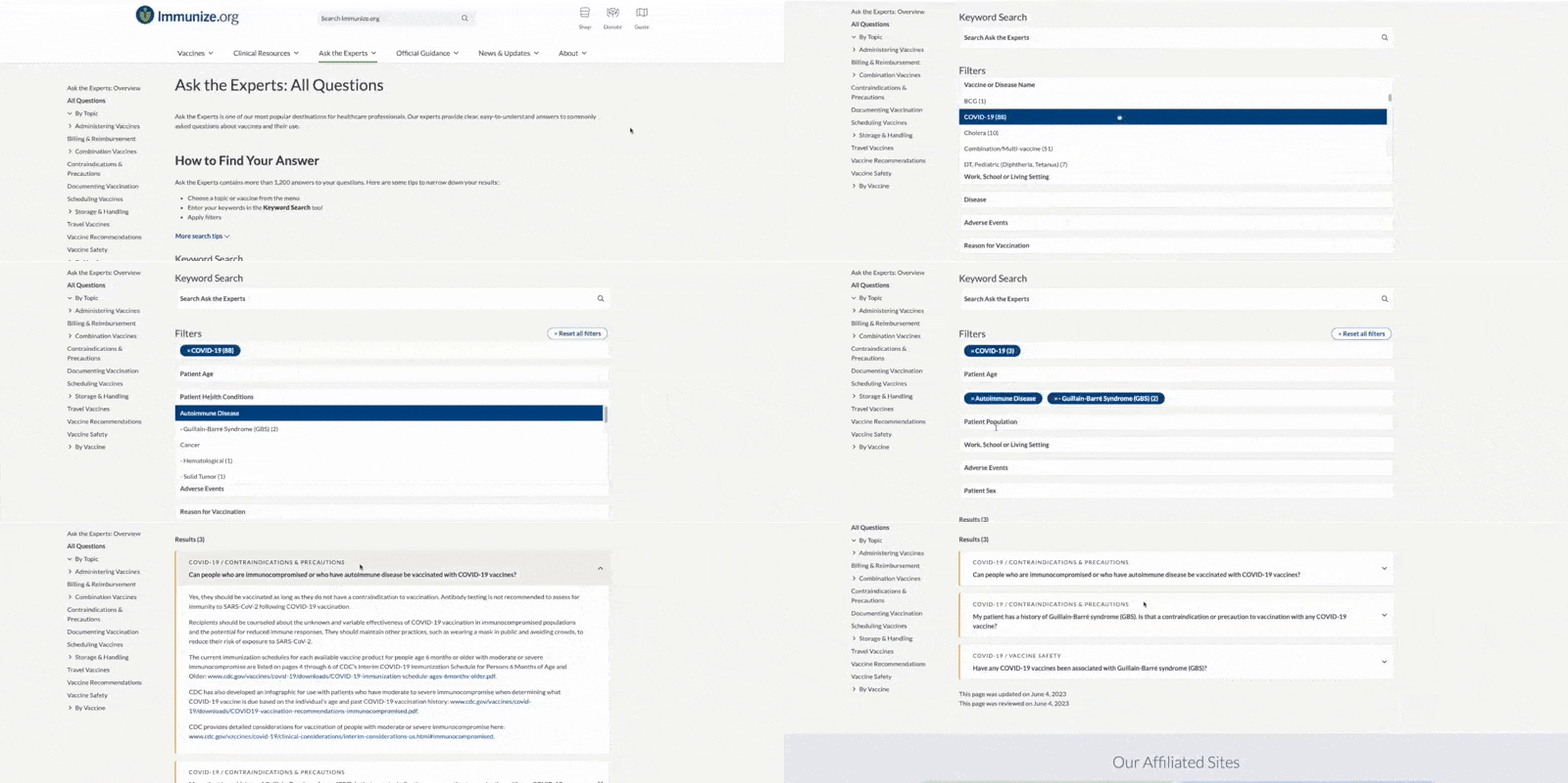


- CDC publishes "Interim Clinical Considerations for Use of COVID-19 Vaccines in the United States"
- Immunize.org launches new Clinical Resources topic page compiling its clinical resources for seasonal vaccines (influenza, RSV, and COVID-19)
- Immunize.org posts updated translations of six popular patient handouts in seven languages, in addition to 13 new Spanish translations
- October 1 marks the traditional resumption of RSV preventive antibody administration for eligible infants in most of the contiguous United States; time to remind and recall eligible infants born in late spring and summer
- “Hepatitis A Outbreak Associated with Cuba—Florida, June 2024–February 2026” published in MMWR
- World Meningitis Day is Monday, October 5; American Society for Meningitis Prevention shares “Empty Chair” educational resources
- Measles 2026: Johns Hopkins University reports 3,782 confirmed measles cases; Pennsylvania reports 129 new confirmed cases this week
- Vaccines in the news
- Vaccinate Your Family launches Respiratory Season Toolkit in English and Spanish
- Learn how to tell your story about vaccines. Applications due soon for the Gerontological Society of America's Scientist-Citizen for Immunizations Storytelling Lab.
- Unity Consortium’s FACTSinnated podcast features Dr. Peter Sinton on adolescent vaccination, misinformation, and rural health
- Find vaccine resources and show your support for immunization in the Immunize.org shop!
- Virtual: The Expert Vaccine Analysis Team and Association of Health Care Journalists host webinar titled “Fact and Fiction on Measles and Respiratory Virus Vaccines” on October 6 at 12:00 p.m. (ET)
- Register for Immunize.org Website Office Hours. Join a 30-minute discussion about our resources for seasonal respiratory virus vaccines on October 7 at 4:00 p.m. (ET) or October 8 at 12:00 p.m. (ET). Recorded sessions archived.
- Virtual: North Dakota State University Center for Immunization Research and Education hosts webinar titled “From Unvaccinated to Immunologist: Using Story to Build Trust in Vaccine Conversations” on October 14 at 1:00 p.m. (ET); CE credit offered
On September 23, CDC posted updated Interim Clinical Considerations for Use of COVID-19 Vaccines in the United States. This guidance carries over previous recommendations in place following the court-ordered stay of certain ACIP decisions in early 2026. A new element is the addition of notes indicating where CDC recommendations go beyond FDA label indications for the licensed 2026–27 COVID-19 vaccines. There is no preference expressed among the four available vaccines.
CDC’s guidance is below:
- Adults: CDC recommends 2026–27 COVID-19 vaccination for all adults age 18 years and older. Two 2026–27 COVID-19 vaccine doses, spaced 6 months apart (minimum interval of 2 months, or 3 months when using mNexspike mRNA vaccine by Moderna), are recommended for adults age 65 years and older.
- Children: CDC recommends 2026–27 COVID-19 vaccination for all children age 6 months–17 years with moderate to severe immunocompromise. For all other children, CDC recommends COVID-19 vaccination through shared clinical decision-making. Only Spikevax (Moderna) is licensed for children age 6 months–4 years.
- People with moderate or severe immunocompromise: CDC’s definition of these conditions is unchanged. They continue to recommend an initial series (if not previously completed) for people with these conditions. Those who have previously completed an initial series are recommended to receive two 2026–27 doses, spaced 6 months apart (minimum interval of 2 months, or 3 months when using mNexspike mRNA vaccine by Moderna). Refer to this section of the guidance for the dose administration tables for vaccinating people with moderate or severe immunocompromising conditions who require an initial vaccination series: the dosing tables and schedule for completing an initial series is not available in the Infectious Diseases Society of America (IDSA) recommendations.
Related Links
- CDC: U.S. COVID-19 Vaccine Product Information main page
- CDC: Interim Clinical Considerations for Use of COVID-19 Vaccines in the United States main page
- Immunize.org: Vaccines A–Z: COVID-19 main page
- Immunize.org: Package Inserts & EUAs: COVID-19 web page
- Immunize.org: Clinical Resources: Seasonal Vaccines (Influenza, RSV, COVID) topic page
On September 23, Immunize.org launched a new topic area under Clinical Resources A–Z menu: Clinical Resources: Seasonal Vaccines (Influenza, RSV, COVID). This page pulls together the Immunize.org clinical resources that focus on annual seasonal respiratory virus vaccination. This web page helps users locate available provider and patient education, workflow tools, and other Immunize.org resources needed for a successful seasonal respiratory virus immunization campaign. At the bottom of the topic page, select links are also offered to partner seasonal vaccination resources.

The list of clinical resources displayed are sorted by default with the most recently updated resources at the top. Check here routinely to see when a resource you need has been reviewed and updated. The image below highlights the Sort button that displays resources in order of “Updated Date Newest.”

Visit Clinical Resources: Seasonal Vaccines (Influenza, RSV, COVID) for quick access to the seasonal resources you need. Encourage your colleagues to do the same.
Immunize.org posts updated translations of six popular patient handouts in seven languages, in addition to 13 new Spanish translations
Immunize.org is committed to supporting patient access to understandable vaccination information. We recently posted seven new translations of the current versions of six popular patient handouts. These 1-page handouts each summarize basic information about recommended vaccines. These are valuable resources for adults, pregnant patients, and families of infants, children, and adolescents.
| Immunizations for Babies – English | Vaccinations for Infants and Children, Age 0–10 Years – English | Vaccinations for Preteens and Teens – English |
| Arabic | Arabic | Arabic |
| Chinese-Simplified | Chinese-Simplified | Chinese-Simplified |
| French | French | French |
| Korean | Korean | Korean |
| Russian | Russian | Russian |
| Spanish | Spanish | Spanish |
| Vietnamese | Vietnamese | Vietnamese |
| When Do Children and Teens Need Vaccinations – English | Vaccinations for Pregnant Patients – English | Vaccinations for Adults – English |
| Arabic | Arabic | Arabic |
| Chinese-Simplified | Chinese-Simplified | Chinese-Simplified |
| French | French | French |
| Korean | Korean | Korean |
| Russian | Russian | Russian |
| Spanish | Spanish | Spanish |
| Vietnamese | Vietnamese | Vietnamese |
The following 13 translation updates are available in Spanish-only.
Related Links
- Immunize.org: Translations of clinical resources and VISs
- Immunize.org: Clinical Resources A–Z main page, where you can filter by topic, vaccine, language, or other criteria
October 1 marks the traditional resumption of RSV preventive antibody administration for eligible infants in most of the contiguous United States; time to remind and recall eligible infants born in late spring and summer
In most of the contiguous 48 states, use of RSV preventive antibody [nirsevimab (Beyfortus, Sanofi) and clesrovimab (Enflonsia, Merck)] begins October 1 and ends March 31, unless use of RSV preventive antibody outside of this interval is recommended by public health authorities in response to local RSV activity. This aligns the recommended timing of RSV preventive antibody administration with the seasonality of RSV infection, which varies geographically.
RSV circulation patterns differ in Alaska and tropical climates, so the recommended timing of RSV preventive antibody administration differs. Locations with tropical climates include southern Florida, Hawaii, Guam, Puerto Rico, U.S. Virgin Islands, and U.S.-affiliated Pacific Islands. Providers in these jurisdictions should follow state or territorial guidance on timing.
Remind and recall: Clinics need to immunize all infants less than age 8 months born in late spring or summer who were not protected from RSV disease through maternal vaccination during pregnancy or through administration of a dose of nirsevimab or clesrovimab at birth. RSV preventive antibody products may be given at the same time as vaccines. All but high-risk infants age out of eligibility for RSV preventive antibody administration at age 8 months. Infants at high risk are eligible for antibody administration for protection through their second RSV season when age 8 months through 19 months. Immunization before they age out of eligibility will ensure their protection through the coming RSV season.
Standing Orders Templates. Immunize.org recently updated all of its RSV standing orders templates to align with the 2026–27 season recommendations from the American Academy of Pediatrics (AAP), American College of Obstetricians and Gynecologists (ACOG), and the American Academy of Family Physicians (AAFP) published on September 2, 2026.
The following resources were updated:
- Standing Orders for Administering Pfizer Respiratory Syncytial Virus (RSV) Vaccine (Abrysvo) During Pregnancy
- Standing Orders for Administering Respiratory Syncytial Virus Vaccine (RSV) to Adults Age 50 Years and Older
- Standing Orders for Administering Nirsevimab RSV Preventive Antibody (Beyfortus, by Sanofi) to Infants and High-Risk Young Children
- Standing Orders for Administering Clesrovimab RSV Preventive Antibody (Enflonsia, by Merck) to Infants
Related Links
- Immunize.org: Vaccines A–Z: RSV (Respiratory Syncytial Virus) web page
- Immunize.org: Clinical Resources: Standing Orders Templates web page
- Immunize.org: Clinical Resources A–Z main page, where you can filter by topic, vaccine, language, or other criteria
CDC published Hepatitis A Outbreak Associated with Cuba—Florida, June 2024–February 2026 on September 24 in MMWR. Beginning in early 2025, the Florida Department of Health noted an unusually high number of reported hepatitis A cases among travelers to Cuba. A single dose of hepatitis A vaccine, ideally at least 2 weeks before travel, can prevent illness in most people; the second dose of the hepatitis A vaccine series, given at least 6 months later, generates long-term, likely lifelong, protection. A portion of the summary appears below.
Cuban news media have reported increased numbers of hepatitis A cases since 2024; however, official government reports about hepatitis A in Cuba have been limited. . .
During June 1, 2024–February 28, 2026, among 249 hepatitis A cases reported in Florida, 76 (31%) were associated with recent travel to Cuba. Among 18 genotyped cases, 15 shared a matching genotype IA strain, consistent with a common origin. . . .
Counseling on preventive measures including hepatitis A vaccination and immune globulin should be offered to travelers before planned trips to Cuba. Providers should consider hepatitis A among patients with clinically compatible symptoms who have recently been in Cuba.

Access the MMWR article in HTML or PDF.
Related Link
- CDC: MMWR main page providing access to the MMWR family of publications
World Meningitis Day is Monday, October 5; American Society for Meningitis Prevention shares “Empty Chair” educational resources
To recognize World Meningitis Day (WMD) on October 5, the American Society for Meningitis Prevention (ASMP) uses an empty chair to symbolize people affected by meningitis. The empty chair can represent someone lost to meningococcal meningitis or a life forever changed by it.

ASMP encourages partners to take a picture of an empty chair, share it with them, and post the picture on social media. The specifics of the campaign are available on ASMP's website, along with downloadable educational materials for parents, students, and healthcare professionals.
Related Links
- Meningitis Research Association: World Meningitis Day web page
- ASMP: Take Action web page
- ASMP: Resources web page
- Immunize.org: Vaccines A–Z: Meningococcal ACWY main page
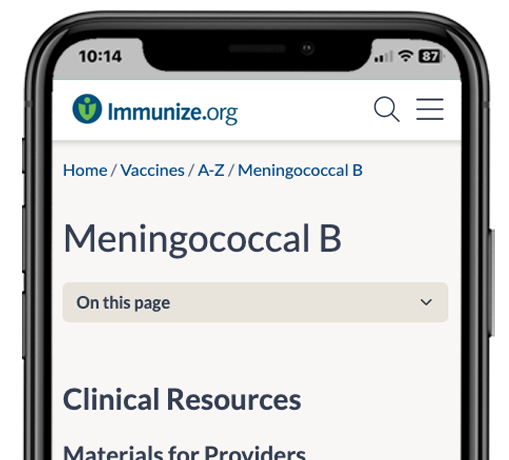
- Immunize.org: Vaccines A–Z: Meningococcal B main page
As of September 25, 2026, the U.S. Measles Tracker, operated by Johns Hopkins University (JHU), reported 3,782 measles cases for 2026. Through September 24, 2026, CDC reported 3,659 confirmed cases. Due to incomplete data on the CDC website, IZ Express leads its reporting with numbers from the U.S. Measles Tracker or directly from state public health websites.
As of September 25, the Pennsylvania Department of Health added 129 confirmed cases in the previous seven days, bringing the state’s 2026 total to 890, including 173 hospitalizations and four measles-associated deaths.
The graph below illustrates the sharp rise in cases in Pennsylvania compared to other states that have experienced large outbreaks since early 2025.

For families who are concerned about the risks of vaccination, it may be useful to show the “Understanding the Risks: Getting Measles vs. Getting Vaccinated” comparison table in the measles section of the LetsGetRealAboutVaccine website. This website is also available in Spanish.

- CDC: Measles Cases and Outbreaks main page
- Immunize.org: Vaccines A–Z: Measles main page
- LetsGetRealAboutVaccines.org: Measles web page
- VaccineInformation.org: Measles web page
- CDC: Be Ready for Measles Toolkit
- AAP: Immunization Facts for Families (MMR) (PDF)
These recent articles convey the potential risks of vaccine-preventable diseases and the importance of vaccination.
- Pittsburgh Post-Gazette: The Tragic Death of a Pennsylvania Amish Woman Stricken by Measles (9/25/26)
- Washington Post: States Can Now Access COVID Vaccines for Low-Income Children, After Delay (9/23/26)
- Washington Post, Opinion: I Attended an Anti-Vaccine Conference. The Joke Ended Quickly. (9/22/26)
- CIDRAP Op-Ed: Measles Is a Grown-Up Problem, Too. Are You at Risk? (9/21/26)
- CIDRAP: Four Measles Deaths, a Looming Policy Comment Deadline, and How to Read a Study: The State of US Vaccine Policy (9/17/26)

This week, we continue to spotlight our new Getting Started: For the New Vaccinator web pages. The second section, Getting Started Vaccinating People: Who, When, and How, is highlighted below.

This web page is rich in resources. For example, Vaccination Administration Tasks at a Glance represents just one of the sections on this web page. It includes:
- Assessment and Screening Tasks help determine who should be vaccinated and when. Find Immunization schedules, standing orders templates, and screening checklists.
- Vaccine Administration Tasks provide a comprehensive list and support learning how to administer vaccines. Find Administering Vaccines: How, Improving the Vaccination Experience, Managing Vaccine Reactions, VISs, and Improving Your Vaccine Administration Skills.
- Documentation Tasks address post-vaccination duties.
For a quick overview of the entire section, watch this short video, "Introducing Immunize.org's Getting Started: For New Vaccinators Web Pages" (2:28). Getting Started provides an easy entry point for healthcare professionals across clinical backgrounds to build confidence and skills.
Vaccinate Your Family (VYF) launched a Respiratory Season Toolkit with resources for staying healthy while seasonal viruses surge. Available in English and Spanish, the toolkit offers social media messages and images to address COVID-19, flu, RSV, and pneumococcal disease. The theme of the toolkit is "Protect, Prepare, and Prevent" this respiratory virus season.

View all resources in VYF's Respiratory Season Toolkit.
People rarely remember facts and figures, but they remember a good story. You can learn how to share vaccine science through stories. The Gerontological Society of America is launching the inaugural cohort for the GSA's Scientist-Citizen for Immunizations Storytelling Lab, a professional development opportunity to help clinicians translate their vaccine expertise into clear, engaging communications for patients and the public. The 10-week program runs from October 8 through December 11, 2026, and consists primarily of online workshops.
Participants are also encouraged to attend an in-person workshop held during the GSA 2026 meeting on November 5 in National Harbor, MD. Travel stipends are available to defray travel and lodging expenses for those selected to participate. Applications are due soon (original deadline of September 30 will be extended for a few days), so apply now. For questions, email Elana Kieffer Blass.
The Unity Consortium’s podcast, FACTSinnated, focuses on “myth-busting” commonly held vaccine misconceptions, particularly about adolescent and young adult vaccines. Unity’s most recent episode, From Scrolling to Knowing: Vaccines, Misinformation & Teen Health, features Peter Sinton, MD, FAAP, who talks about adolescent vaccination, misinformation, and the questions he hears from young people and families in his rural practice. Hear his perspective on HPV and meningitis vaccines, finding trusted health information, and helping young people take an active role in their healthcare decisions.

Visit the FACTSinnated web page for more podcast episodes.
The Immunize.org Shop offers a variety of products for your practice and to show how much you value vaccination. Items include:
- Laminated tables of QR codes linking to VISs for vaccines given to children and adults. Save paper and make it easy for patients to access a VIS from a smartphone or tablet. These are suitable for desk use as an 8.5" x 11" booklet or wall display as an 11" x 17" poster. Available in English and a Spanish translation.
- Wallet-sized Lifetime Immunization Record Cards: Printed on rip-proof, smudge-proof, waterproof paper designed to last a lifetime. Sold in boxes of 250.
- Immunization Techniques: Best Practices with Infants, Children, and Adults (CD-ROM): From the California Department of Public Health, visual training on the techniques for proper vaccine administration.
- "Save Lives. Immunize." branded T-shirts: Featuring our logo on the front. The back declares: “Save Lives. Immunize.” The fabric is a super soft, premium tri-blend that doesn’t shrink or wrinkle with washing. Three designs include:
- Vaccination Saves Lives pins make a refined statement in rich blue enamel with gold lettering and edges, measuring 1.65" x 0.75". Designs include traditional double stick-through posts and the new magnetic clasp, which holds the pin firmly in place without piercing clothing.


Visit Shop Immunize.org to view pricing information and to place an order.
For more information, call 651-647-9009 or email admininfo@immunize.org.
In its September 16 issue, JAMA Network Open published Respiratory Syncytial Virus–Associated Disease in Children Receiving Intensive Care. Portions of the Key Points section appear below.
What is the burden of respiratory syncytial virus (RSV)–associated critical illness and mortality among children aged 2 to 17 years, and are complex chronic conditions (CCCs) associated with mortality? . . .
In this multicenter cohort study of 6430 RSV-associated intensive care unit admissions, mortality was 7.5%, and children aged 2 to 17 years accounted for approximately two-thirds of RSV-associated deaths. Mortality was associated with increasing CCC burden, and multiple CCC categories and subcategories were associated with mortality. . . .
These findings suggest that older children with medical complexity are an underrecognized population with substantial RSV-associated morbidity and mortality that may benefit from prevention strategies.
In its September 21 issue, the Canadian Medical Association Journal published Reducing Distress During Vaccine Injections: 2026 Clinical Practice Guideline Update. Immunize.org's suite of materials, Clinical Resources: Improving the Vaccination Experience, is based on HELPinKids&Adults research. A portion of the Interpretation section appears below.
In 2015, the Help ELiminate Pain in Kids & Adults Collaborative (HELPinKids&Adults) — a national interdisciplinary team of clinicians, scientists, policy-makers, and lay people interested in improving practices — created a guideline on reducing distress during vaccination. An update was deemed necessary for several reasons. New research published in the interim addressed previously identified research gaps, particularly related to the applicability of guideline recommendations. New developments in guideline methodology provided opportunities to refine the presentation and improve clarity for users. Downward trends in vaccine confidence and suboptimal uptake affecting both adults and children — particularly since the COVID-19 pandemic — make this update timely for providers and organizations delivering vaccinations that want to follow best practices to promote more positive vaccination experiences for everyone. This 2026 guideline updates the 2015 HELPinKids&Adults recommendations for reducing vaccination-related distress across the lifespan.

The image above shows the authors’ summary of good practices.
Related Links
- American Association for the Advancement of Science (AAAS): Guideline to Reduce Vaccination Distress Offers Menu of Options (9/21/26)
- Immunize.org: Clinical Resources: Improving the Vaccination Experience web page
The Expert Vaccine Analysis Team (EVAT) and Association of Health Care Journalists will cohost a webinar titled Fact and Fiction on Measles and Respiratory Virus Vaccines at 12:00 p.m. (ET) on October 6. The session will feature infectious disease experts: Jesse Goodman, Georgetown University; Fiona Havers, Emory University; Paul Offit, Children’s Hospital of Philadelphia; and immunologist Elisabeth Marnik, The Evidence Collective. The webinar will discuss measles and COVID-19 vaccine recommendations, how widely vaccine will be available and at what cost, what we know about the new mRNA influenza vaccine and its safety, the best course for expectant parents, and other topics.

Register for the webinar.
Register for Immunize.org Website Office Hours. Join a 30-minute discussion about our resources for seasonal respiratory virus vaccines on October 7 at 4:00 p.m. (ET) or October 8 at 12:00 p.m. (ET). Recorded sessions archived.
To learn simple tips and tricks for using our websites efficiently, please register for our next set of Website Office Hours on Wednesday, October 7, at 4:00 p.m. (ET) or Thursday, October 8, at 12:00 p.m. (ET). The same content will be considered in both sessions.
We will open each 30-minute session with a short, live demonstration on navigating our resources for seasonal respiratory virus vaccines. You can submit questions when you register or live on Zoom during the session.

Register today for Immunize.org Website Office Hours (content is the same for both):
The archive of previous Website Office Hours content is posted at Immunize.org’s "Webinars & Videos" page. Shorter, demonstration-only recordings of previous Website Office Hours are also available in our Website Training Videos series.
Mark your calendar for future Immunize.org Website Office Hours.
The North Dakota State University (NDSU) Center for Immunization Research and Education (CIRE) will host a webinar titled From Unvaccinated to Immunologist: Using Story to Build Trust in Vaccine Conversations at 1:00 p.m. (ET) on October 14. In this webinar, Elisabeth Marnik, PhD, will draw from her own journey from being unvaccinated to becoming an immunologist. She will explore how personal experiences shape vaccine decision-making and influence responses to scientific information. Discover how storytelling can build trust, make science more memorable, and support more effective vaccine conversations.
This activity is approved for free CME and CPE credit.

Register for the webinar.
For more upcoming events, visit our Calendar of Events.
About IZ Express
IZ Express is supported in part by Grant No. NH23IP922654 from CDC’s National Center for Immunization and Respiratory Diseases. Its contents are solely the responsibility of Immunize.org and do not necessarily represent the official views of CDC.
IZ Express Disclaimer
ISSN 2771-8085
Editorial Information
-
Editor-in-ChiefKelly L. Moore, MD, MPH
-
Managing EditorJohn D. Grabenstein, RPh, PhD
-
Associate EditorSharon G. Humiston, MD, MPH
-
Writer/Publication CoordinatorTaryn Chapman, MS
Courtnay Londo, MA -
Style and Copy EditorMarian Deegan, JD
-
Web Edition ManagersArkady Shakhnovich
Jermaine Royes -
Technical ReviewerKayla Ohlde