


Connect to immunization schedules, vaccine administration job aids, and other information necessary to know who, when, and how to vaccinate.
Vaccine Administration Tasks at a Glance
The cards below outline the steps to follow when vaccinating. Click at the bottom of any section to move down the page to the resources related to those tasks.

Assessment and Screening Tasks
- Review patient’s age at this visit and dates of vaccines previously administered
- Determine which vaccines are recommended
- Understand proper spacing of doses
- Screen for contraindications and precautions to vaccines
- Advise the patient which vaccines are recommended for them and why

Vaccine Administration Tasks
- Determine who can administer vaccines (either independently or under standing orders)
- Always provide a Vaccine Information Statement (VIS) and/or Immunization Information Statement (IIS)
- Administer the vaccine properly
- Use the proper site for injection
- Prepare the vaccine (and diluent, if needed)
- Use the proper needle gauge and length
- Administer injections by the correct route – intramuscular (IM) or subcutaneous (Subcut)
- Know how to deliver nasal spray vaccine (when recommended)
- Administer all needed vaccines at the same visit
- Safely dispose of the needle and syringe and nasal sprayer
- Avoid vaccine administration errors
- Prepare and watch for an allergic reaction (anaphylaxis) after vaccination
- Always report anaphylaxis and other adverse events after vaccination to the Vaccine Adverse Event Reporting System (VAERS)
- Prepare and watch for syncope (fainting)
- Understand proper spacing of doses
- Communicate about appointments for subsequent doses

Documentation Tasks
- Record federally required information about your patient’s vaccinations in the patient’s medical record
- Follow CDC guidelines for documenting that you gave the patient current VISs
- Record specific information about each administered vaccine
- Report adverse events that occur after vaccination
- Update your patient’s personal vaccination record card or provide a record to your patient
- Update your patient’s vaccination record in your state or local Immunization Information System (IIS or registry)
Administering Vaccines: Who & When
Immunization Schedules
Immunize.org assembles schedules published by:
Immunization schedules summarize recommended vaccinations by age and medical indications. Additional notes address special situations, including minimum dosing intervals and catch-up schedules. Current CDC schedules may not match those from healthcare professional organizations. Clinicians may select the schedule they follow based upon their medical judgment or specific scope of practice, facility, or payment requirements.
Review Patient Immunization Records
Before vaccinating, it is necessary to review the patient’s immunization history from available paper records, electronic health records, or immunization information systems. Vaccination is generally recommended if records cannot be located. These resources are among the most popular downloads at Immunize.org.

Tips for Locating Old Immunization Records
This handout gives some ideas that might help for locating old immunization records
- Also available in:
- Spanish

Quick Chart of Vaccine-Preventable Disease Terms in Multiple Languages
Two-page table displays many vaccine-preventable disease terms in Bosnian, Croatian, Polish, Romanian, Russian, Serbian, Slovak, Ukrainian, Dutch, French, German, Italian, Norwegian, Portuguese, Spanish, and Swedish
Standing Orders Templates
Immunize.org offers templates for protocols that clinical facilities may adapt to allow qualified healthcare professionals (as eligible under state law) to assess the need for and administer vaccines to patients. Templates are not available for all vaccines.
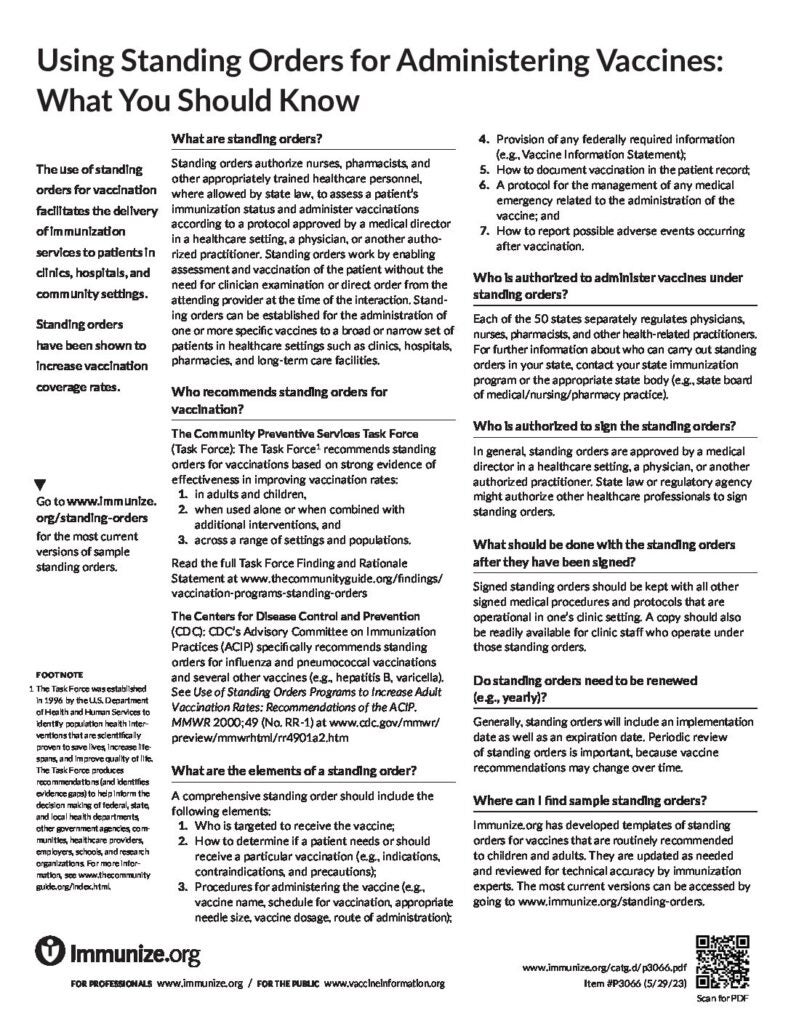
Using Standing Orders for Administering Vaccines: What You Should Know
This handout explains what are standing orders

Standing Orders for Administering Influenza Vaccine to Children and Teens
Eligible healthcare professionals may vaccinate children and teens who meet any of the criteria on this form

Standing Orders for Administering Influenza Vaccine to Adults
Eligible healthcare professionals may vaccinate adults who meet the criteria established in September 2026 by the American Academy of Family Physicians (AAFP), American College of Obstetricians and Gynecologists (ACOG), and Infectious Diseases Society of America (IDSA), and 2026–27 season clinical considerations published by the Centers for Disease Control and Prevention.
Screening Checklists for Contraindications and Precautions
These questionnaires, to be completed by patients or caregivers, screen for potential contraindications or precautions to vaccination. Each checklist includes detailed interpretation guidance for the vaccinator reviewing the responses. Two basic screening checklists plus two checklists that include travel vaccines are shown below:

Screening Checklist for Contraindications to Vaccines for Children and Teens
Form your patients (or parents) fill out to help you evaluate which vaccines (including travel vaccines) can be given at that day’s visit, includes information to help healthcare professionals evaluate responses
- Also available in:
- Arabic
- Bosnian
- Chinese-Simplified
- Dari
- French
- Haitian Creole
- Kinyarwanda
- Korean
- Nepali
- Pashto
- Punjabi
- Russian
- Somali
- Spanish
- Swahili
- Ukrainian
- Vietnamese

Screening Checklist for Contraindications to Vaccines for Adults
Form your patients (or parents) fill out to help you evaluate which vaccines (including travel vaccines) can be given at that day’s visit, includes information to help healthcare professionals evaluate responses
- Also available in:
- Arabic
- Bosnian
- Chinese-Simplified
- Dari
- French
- Haitian Creole
- Kinyarwanda
- Korean
- Nepali
- Pashto
- Punjabi
- Russian
- Somali
- Spanish
- Swahili
- Ukrainian
- Vietnamese

Screening Checklist for Contraindications to Vaccines for Children and Teens (Including Travel Vaccines)
Form your patients (or parents) fill out to help you evaluate which vaccines (including travel vaccines) can be given at that day’s visit, includes information to help healthcare professionals evaluate responses

Screening Checklist for Contraindications to Vaccines for Adults (Including Travel Vaccines)
Form your patients (or parents) fill out to help you evaluate which vaccines (including travel vaccines) can be given at that day’s visit, includes information to help healthcare professionals evaluate responses
Vaccine Information Statements (VISs)
Patients should review a VIS before vaccination for information about the vaccine, the disease it prevents, and potential side effects or risks of vaccination or disease. For most routine vaccines given to children or during pregnancy, offering a current VIS is required by law. These links connect you to everything you need to use VISs effectively.
- View All VISs
Access the index of all VISs. - VIS Translations
In addition to the official VIS from CDC, Immunize.org has a library of hundreds of VIS translations in dozens of languages. - VIS-Related Resources
Learn what you need to know about VISs, and access the QR code tables that allow for easy smartphone access. - Immunize.org Shop
In addition to free, printable QR code tables in our clinical resources section, laminated QR code tables of official VISs and Spanish translations are available for purchase.

You Must Provide Patients with Vaccine Information Statements (VISs)—It’s Federal Law!
Everything you need to know about vaccine information statements.
Administering Vaccines: How
Administering Vaccines
These Immunize.org job aids summarize the dose, route, site, and needle size needed when administering vaccines to children or adults. They also demonstrate how to administer vaccinations. The following are among our most popular resources downloaded by healthcare professionals.

Administering Vaccines: Dose, Route, Site, and Needle Size
One-page reference table.
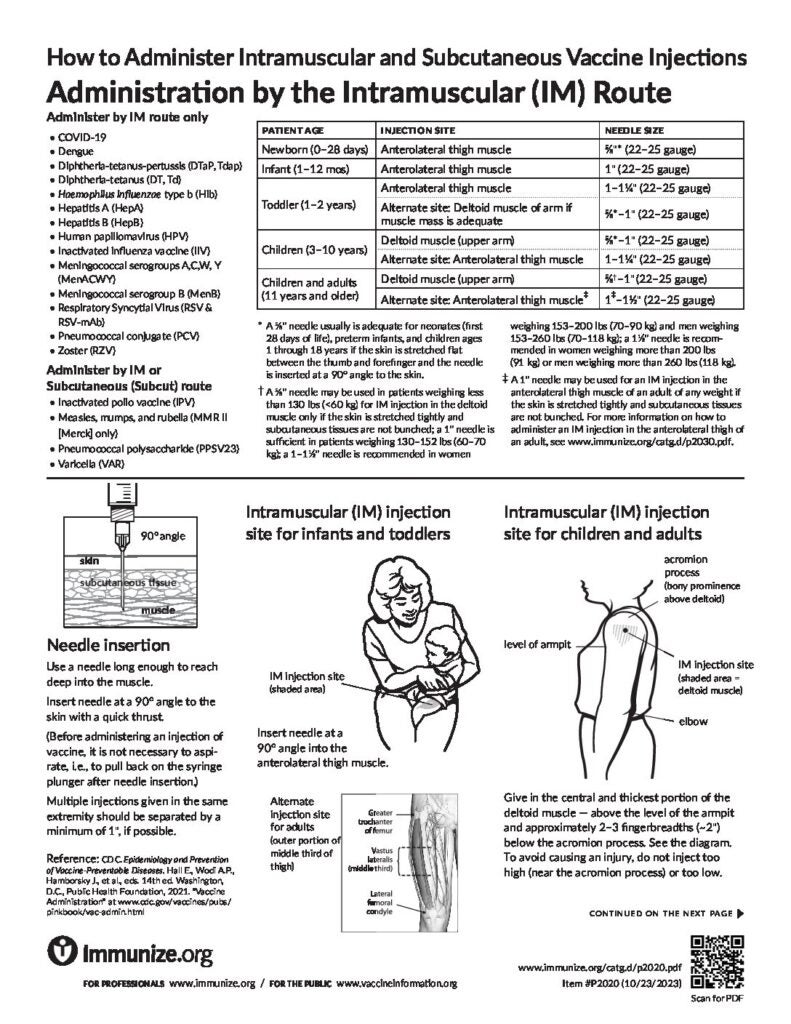
Two-sided information sheet with illustrations.

How To Administer Multiple Intramuscular Vaccines to Adults During One Visit
One-page information sheet with illustrations.

How to Administer Intranasal and Oral Vaccinations
This piece, for providers, shows how to administer intranasal and oral vaccinations.
Documenting Vaccination or Declination
These records are often downloaded for clinic use when paper records are needed.

Notification of Immunization Letter Template
Form letter to primary care clinic regarding immunization(s) provided elsewhere
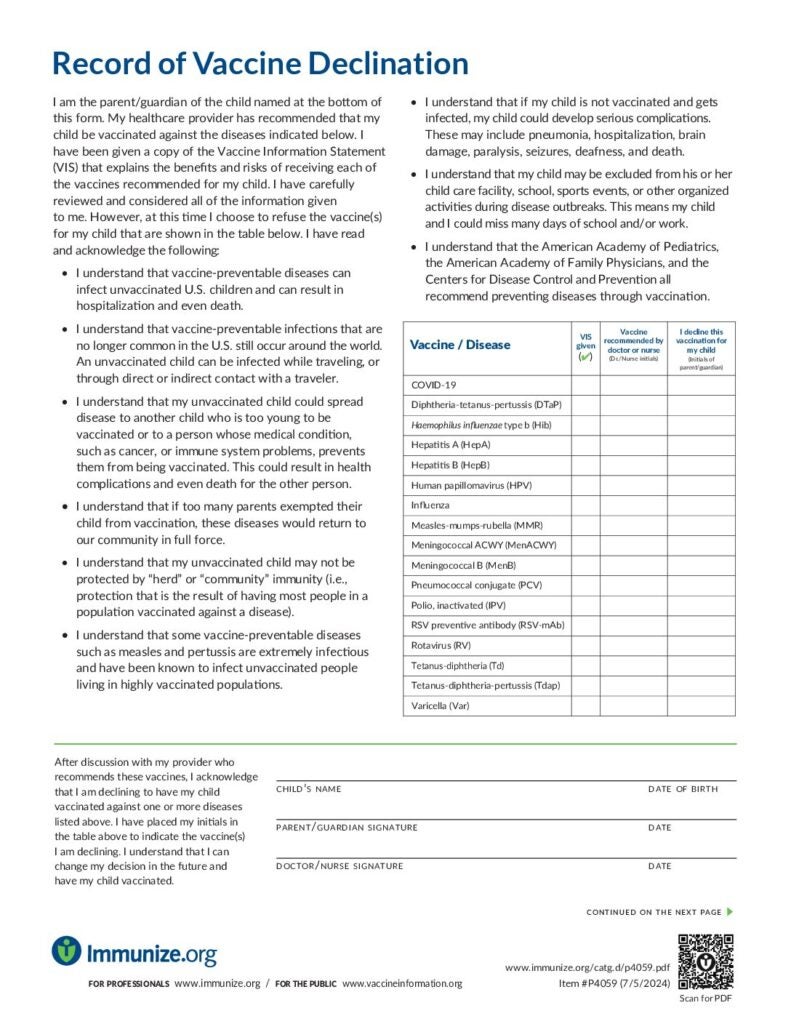
Record of Vaccine Declination
This form provides documentation of parental refusal to vaccinate

Declination of Influenza Vaccination
Form for healthcare worker signature and date, lists important reasons for annual influenza vaccination and consequences of vaccine refusal

Vaccine Administration Record for Adults
Document vaccinations using this handy form and put it in the front of each patient’s medical chart
Improving the Vaccination Experience
You can reduce vaccine hesitancy by acknowledging and addressing pain and anxiety. Patients who have better experiences have less pain and are less likely to refuse future vaccines out of fear of injection. Resources on this page include job aids, age-specific patient handouts, and brief videos.
Managing Vaccine Reactions
These specific resources are important for preparing to address rare, acute vaccine adverse reactions and syncope (fainting) that may occur immediately after vaccination.
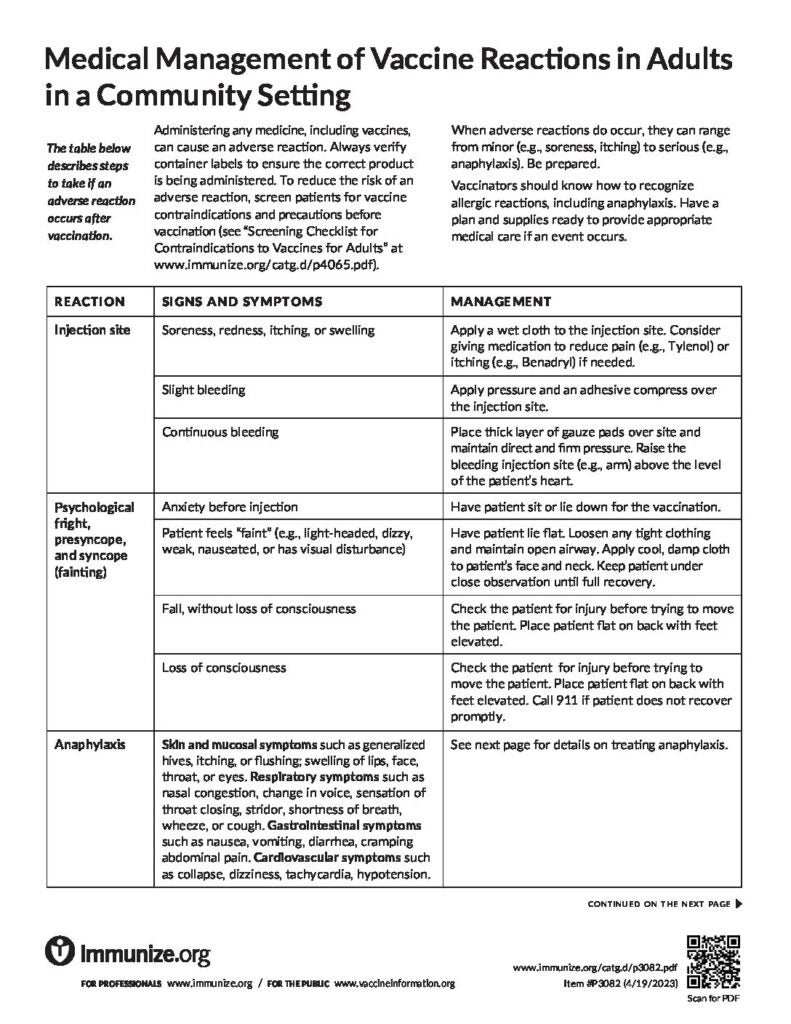
Table describes procedures to follow if various reactions occur in adult patients, includes supply list
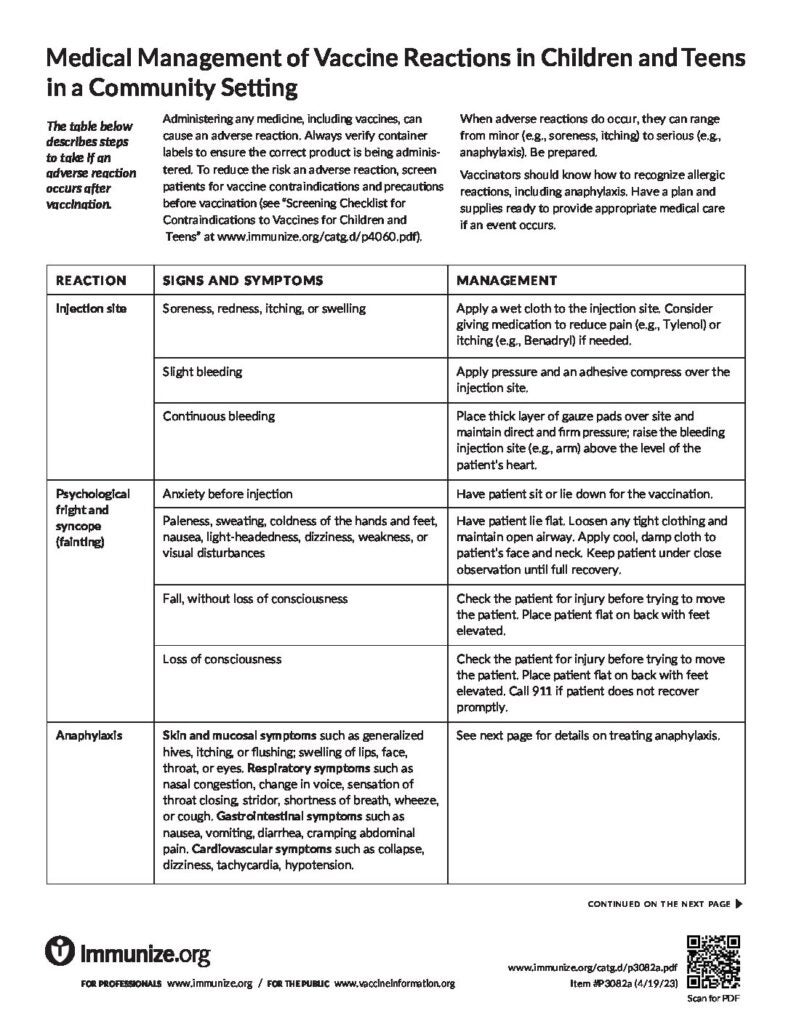
Table describes procedures to follow if various reactions occur in children and teens, includes supply list

Vaccination-Related Syncope: Information for Healthcare Personnel
This 1-page handout for healthcare personnel describes how syncope (fainting) sometimes occurs around vaccination, how practitioners can reduce the risk of occurrence, and how to respond if it does occur, plus includes useful resources
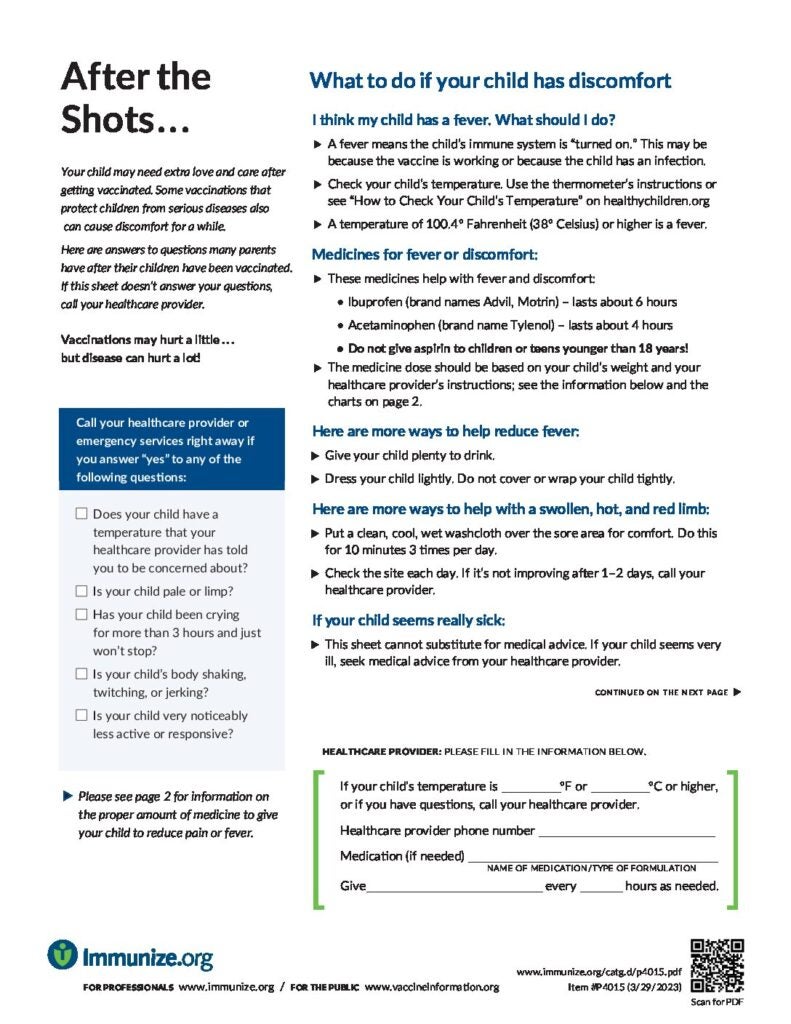
Tip sheet for parents describing how to reduce fever, including medication dosages for various ages and weights of children.
- Also available in:
- Arabic
- Chinese-Simplified
- French
- Korean
- Russian
- Spanish
- Vietnamese
Improving Your Vaccine Administration Skills
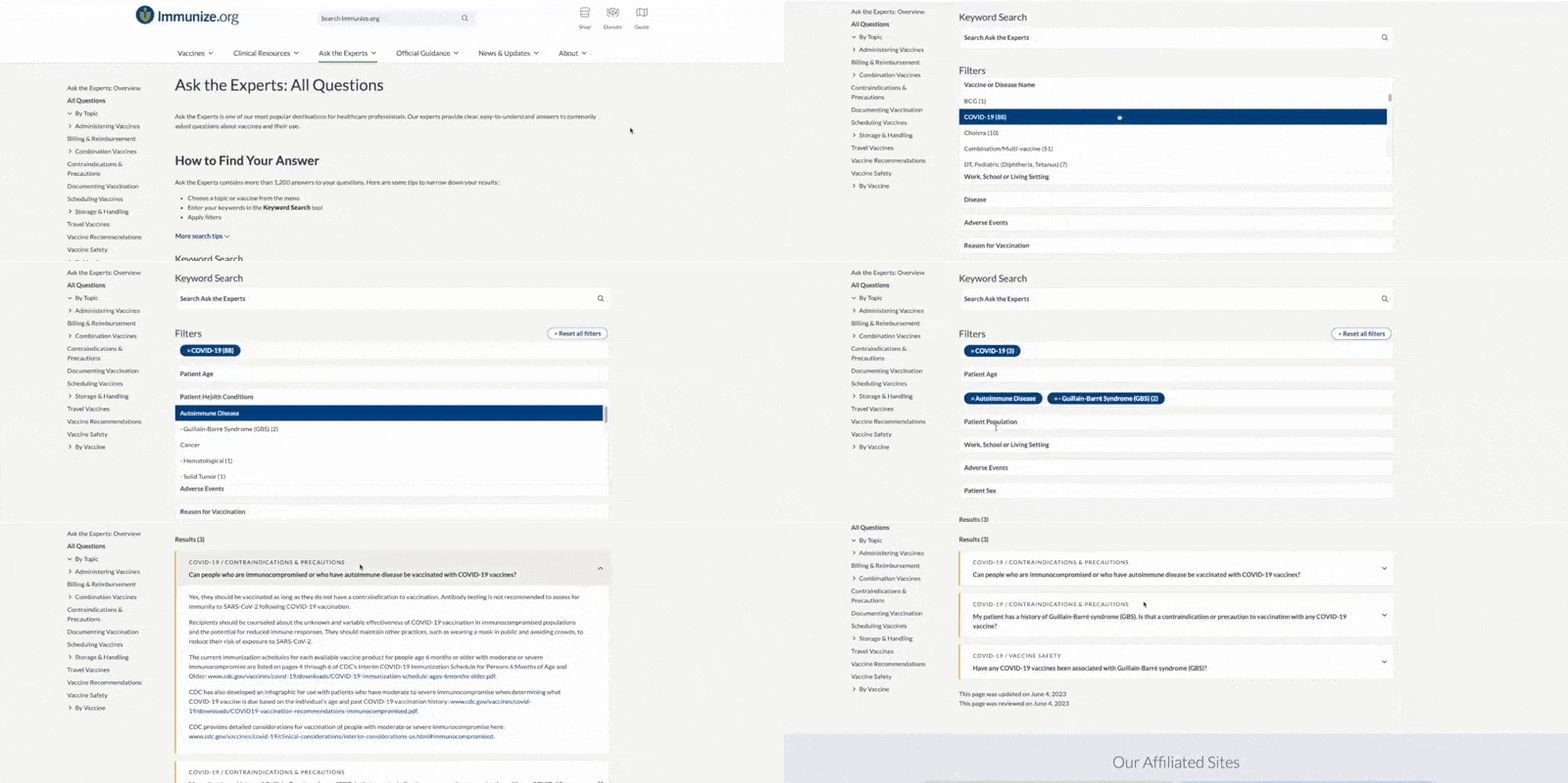
Immunize.org’s Ask the Experts questions and answers include guidance on how to address many vaccine administration errors. Search relevant sections for the answers to your questions as they arise.
More resources
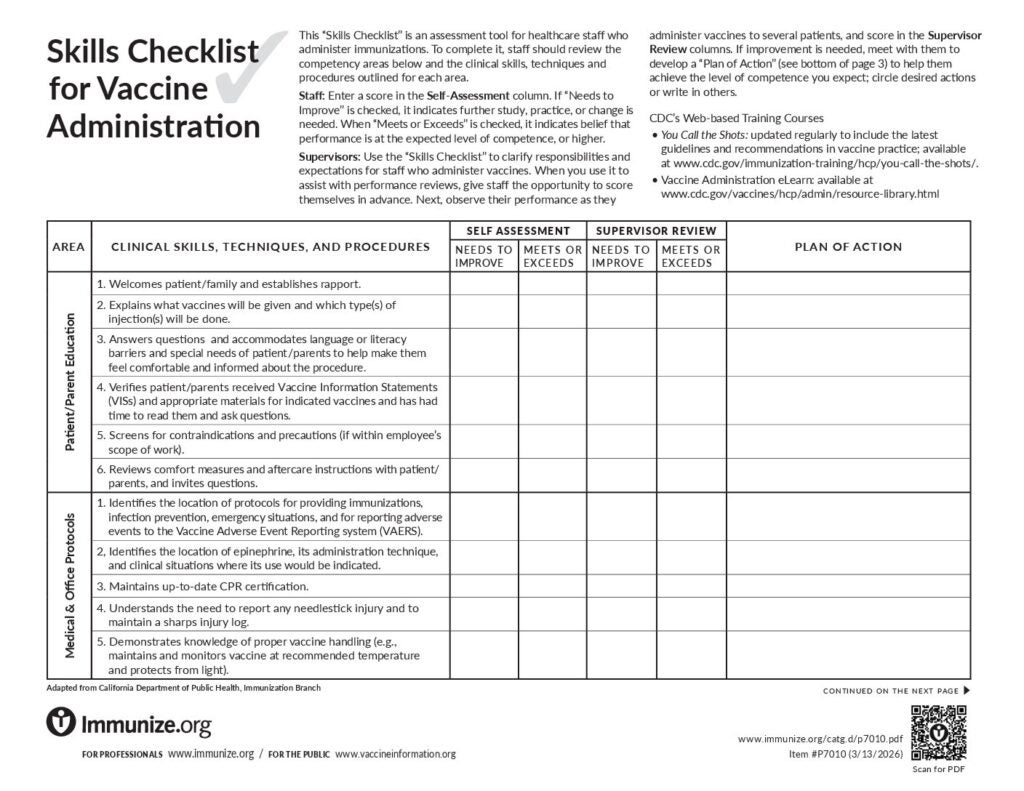
Skills Checklist for Vaccine Administration
This checklist is a tool to help supervisors assess staff members’ skills regarding vaccine administration

Don’t Be Guilty of These Preventable Errors in Vaccine Administration!
This 4-page document describes common errors in vaccine administration and provides links to resources that can help prevent them
External Resources

Centers for Disease Control and Prevention
Vaccine Administration
Find best practices, training, and resources to support vaccine administration.
You Call the Shots: Vaccine Administration: Preventing Vaccine Administration Errors
Summarizes common vaccine administration errors and strategies to prevent them.

American Academy of Pediatrics
7 Rights of Vaccine Administration
Know and practice the 7 rights of vaccine administration to prevent vaccine administration error:
- The right patient
- The right time
- The right vaccine or diluent
- The right dosage
- The right route, needle length, and technique
- The right site, and
- The right documentation