


- Major medical societies release 2026–27 season immunization recommendations for influenza, COVID-19, and RSV
- CDC publishes interim clinical considerations for use of 2026–27 influenza vaccines in the United States
- “Vaccination Coverage Among Adolescents Aged 13–17 Years—National Immunization Survey–Teen, United States, 2025” published in MMWR
- Immunize.org updates its resource on administration of injectable and intranasal influenza vaccines
- Immunize.org posts 17 updated translations of its routine screening checklists for contraindications to vaccines for children and teens and for adults
- VaccineInformation.org's Where to Get Vaccinated web page links to locations offering respiratory virus vaccines, other routine vaccines, and travel vaccines
- "If 2 Live Virus Vaccines Are Given on Different Days, Less Than 4 Weeks Apart, What Should Be Done?” New in the Ask the Experts Video Series on YouTube.
- Measles 2026: 3,134 confirmed cases; cases accelerate in Pennsylvania
- Vaccines in the news
- American Academy of Pediatrics offers archived webinar, “The Mother Tested Negative for Hepatitis B Virus—So Why Does the Newborn Still Need the Vaccine at Birth?”
- American Academy of Pediatrics offers fact sheets for families on vaccine-preventable diseases to supplement VISs
- Visit Immunize.org’s web section, Getting Started: For the New Vaccinator, with curated content organized for those new to vaccination practice
- Immunize.org lifetime immunization record cards available for patient-held records
- JAMA publishes three new evidence reviews on influenza, COVID-19, and RSV vaccine effectiveness and safety used to support medical society recommendations
- “Recombinant Shingles Vaccination and the Risk of Cardiovascular Events” published in Nature Medicine shows decrease in cardiovascular events after recombinant vaccine
- Virtual: American Academy of Pediatrics hosts webinar titled “AAP Red Book Hot Topics Live Webinar—Preparing for 2026–27 Respiratory Virus Season” on September 15 at 7:00 p.m. (ET); free CME credit offered
- Virtual: North Dakota State University Center for Immunization Research and Education hosts webinar titled “Ready for Respiratory Virus Season? Pediatric Vaccine Updates for 2026–2027” on September 15 at 1:00 p.m. (ET); CE credit offered
- Virtual: Register for Immunize.org Website Office Hours. Join a 30-minute discussion about our affiliated websites on September 16 at 4:00 p.m. (ET) or September 17 at 12:00 p.m. (ET). Recorded sessions archived.
- Virtual: Association of Immunization Managers offers webinar titled “The Science of Vaccine Communication: Research to Practice” on September 18 at 12:00 p.m. (ET)
On September 2, four leading medical organizations released immunization recommendations for the 2026–27 respiratory virus season, covering influenza, COVID-19, and RSV vaccines. The recommendations aligned with each other and are based on three evidence reviews published the same day in JAMA (described among Notable Publications, below). Immunize.org is in the process of updating its standing orders templates and other seasonal vaccine resources to be consistent with these evidence-based recommendations. Updated resources will be announced in IZ Express and on social media as they become available.
The independent evidence reviews were conducted by the Vaccine Integrity Project (VIP), based at the Center for Infectious Disease Research and Policy (CIDRAP) at the University of Minnesota. Reviewers assessed hundreds of peer-reviewed studies on influenza, COVID-19, and RSV vaccines published since August 2025. The reviews concluded that each vaccine continues to provide meaningful protection against severe illness, hospitalization, and death.
Recommendations were issued by the following groups: American Academy of Pediatrics (AAP) for children through age 18 years; American Academy of Family Physicians (AAFP) for immunocompetent adults and healthcare professionals; American College of Obstetricians and Gynecologists (ACOG) for pregnant patients; and, Infectious Diseases Society of America (IDSA) for immunocompromised people. In addition to the society-specific pages, the American Medical Association (AMA) launched a resource hub page that links to recommendations by age or condition, supporting resources, and links to each evidence review.
Consult each organization's complete recommendations
- AAP: Respiratory Virus Immunization Guidance for 2026–27
- AAFP: Fall Immunization Recommendations to Protect Patients and Communities
- ACOG: 2026–27 Respiratory Virus Season Immunization Recommendations for Pregnant and Postpartum Individuals
- IDSA: IDSA Recommends Respiratory Vaccines for People with Weakened Immune Systems
Immunize.org added these links to its Healthcare Professional Organization Vaccine Recommendations web page.

Related Links
- AMA: Respiratory Virus Season Immunization Recommendations main page
- Vaccine Integrity Project: 2026–2027 Respiratory Season Evidence Review Executive Summary web page
- Immunize.org: Healthcare Professional Organization Vaccine Recommendations main page
CDC publishes interim clinical considerations for use of 2026–27 influenza vaccines in the United States
On September 1, CDC posted Interim Clinical Considerations for the Use of Seasonal Influenza Vaccines in the United States, incorporating its updates to influenza vaccine recommendations for the 2026–27 season. The document restates last season's clinical considerations and recommendations with updated dates and virus components. Key points include:
- Recommendations for seasonal influenza vaccination from the July 2025 immunization schedule remain in effect for the 2026–27 season. CDC attributes that decision to "legal uncertainties and inquiries."
- All influenza vaccines available in the United States for 2026–27 are trivalent, containing influenza A(H1N1)pdm09, influenza A(H3N2), and influenza B/Victoria lineage components. All vaccine strains are new for the 2026–27 season.
- Products covered in the document are shown below.

See this IZ Express issue's coverage of the 2026–27 respiratory season recommendations from medical societies. Immunize.org is in the process of updating its influenza standing orders templates and related clinical resources. Updated resources will be announced in IZ Express and on social media.
Related Links
- Immunize.org: Vaccines A–Z: Influenza web page
- Immunize.org: Healthcare Professional Organization Vaccine Recommendations main page
“Vaccination Coverage Among Adolescents Aged 13–17 Years—National Immunization Survey–Teen, United States, 2025” published in MMWR
CDC published Vaccination Coverage Among Adolescents Aged 13–17 Years—National Immunization Survey–Teen, United States, 2025 on September 3 in MMWR. A portion of the summary appears below.
Human papillomavirus (HPV) vaccination coverage among U.S. adolescents aged 13–17 years has not increased since 2021. Coverage with ≥1 dose of tetanus toxoid, reduced diphtheria toxoid, and acellular pertussis vaccine (Tdap) and ≥1 dose of quadrivalent meningococcal conjugate vaccine (MenACWY) has been approximately 90% since 2019. . . .
HPV vaccination coverage did not increase for the fourth consecutive year, varied substantially by geographic area, and continues to lag behind Tdap and MenACWY coverage. Tdap and MenACWY coverage remained approximately 90%, with less geographic variation than HPV vaccination coverage. Differences in HPV and MenACWY vaccination coverage were observed among adolescents living in mostly rural areas compared with mostly urban areas. The rural–urban difference in HPV vaccination coverage was observed across poverty levels, whereas the rural–urban difference in MenACWY coverage was observed only among adolescents living below the poverty level. . . .
Health care providers can review vaccination records, use reminder and recall systems to notify parents of recommended vaccines, and at every clinical encounter, recommend vaccines that are due to ensure that adolescents are up to date with recommended vaccinations.

Access the MMWR article in HTML or PDF.
Related Link
- CDC: MMWR main page providing access to the MMWR family of publications
Immunize.org is reviewing and updating of our suite of influenza clinical resources and online content for the 2026–27 season. All reviewed resources have a new “last reviewed” date in the footer to indicate the information is current for the 2026–27 season, whether or not changes were necessary.
The following resource was updated in the past week:- How to Administer Intramuscular and Intranasal Influenza Vaccines: reference charts for needle length and injection site selection for intramuscular vaccine administration were added

These updated 2026–27 season resources were previously announced in recent editions of IZ Express:
- Declination of Influenza Vaccination
- Don’t Take Chances with Your Family’s Health—Make Sure You All Get Vaccinated
- Guide for Determining the Number of Doses of Influenza Vaccine to Give to Children Age 6 Months Through 8 Years
- How to Administer Intranasal and Oral Vaccinations
- Influenza Vaccine Products for the 2026–2027 Influenza Season
- Not Sure If You Can Get an Influenza Vaccine?
- Communicating the Benefits of Influenza Vaccination
- Standing Orders for Administering Influenza Vaccine to Children and Teens
Find each of our influenza vaccine resources for the 2026–27 season at the Vaccines A–Z: Influenza main page. Ask the Experts online content about influenza vaccines will be updated later in September.
Related Links
- Immunize.org: Vaccines A–Z: Influenza web page
- Immunize.org: Clinical Resources A–Z main page, where you can filter by topic, vaccine, language, or other criteria
Immunize.org posts 17 updated translations of its routine screening checklists for contraindications to vaccines for children and teens and for adults
Immunize.org posted 17 updated translations of its popular screening checklists for vaccine contraindications, one for children and adolescents and another for adults. The screening questionnaire to be completed by the patient is translated; the explanatory pages intended for the healthcare provider are in English. Each handout lists screening questions on the first page with explanatory notes on pages two and three.
The translations reflect changes made to the English versions dated June 24, 2026. The most substantial change was in formatting, shifting from a single page of explanatory notes in small font, to two pages of explanatory notes that are easier to read. Minor changes were made to align with the recently updated English checklists. References and links to guidance documents were also updated.


Related Links
- Immunize.org: Improving the Vaccination Experience: Using Enhanced Screening Checklists for Contraindications to Vaccination (video)
- Immunize.org: Clinical Resources: Screening Checklists main page
- Immunize.org: Clinical Resources A–Z main page, where you can filter by topic, vaccine, language, or other criteria
VaccineInformation.org's Where to Get Vaccinated web page links to locations offering respiratory virus vaccines, other routine vaccines, and travel vaccines
VaccineInformation.org, Immunize.org's website designed for patients and parents, offers a very useful Where to Get Vaccinated web page. The page lists directories and vaccine finder tools published by different organizations, including manufacturers, to help people locate a convenient spot to access vaccinations they need. Among the links are:
- Directory of federally funded health centers, which serve people regardless of insurance status.
- General vaccine locators, such as VaccineFinder.org and EasyVax.com, useful for routine vaccines across all age groups and manufacturers. Some allow direct appointment scheduling.
- Disease- and manufacturer-specific finders, including influenza, COVID-19, and RSV vaccines.
- CDC directories for travel vaccines and authorized yellow-fever vaccination clinics.
- A map and alphabetical list of immunization program contact details for all 50 states and Washington, D.C.
Some linked resources are available in Spanish.
Please share the Where to Get Vaccinated with patients, colleagues, and your social media networks.
“If 2 Live Virus Vaccines Are Given on Different Days, Less Than 4 Weeks Apart, What Should Be Done?” New in the Ask the Experts Video Series on YouTube.
This week, our featured episode from the Ask the Experts Video Series is titled If 2 Live Virus Vaccines Are Given on Different Days, Less Than 4 Weeks Apart, What Should Be Done? The video explains how live injectable and nasal vaccines should be given on the same day or at least 4 weeks apart. If live vaccines are spaced too closely, the effectiveness of the second dose may be compromised and it should be repeated 4 weeks after the first dose.
The 2-minute video is available on our YouTube channel, along with our full collection of quick video answers to popular Ask the Experts questions.

Like, follow, and share Immunize.org’s social media accounts and encourage colleagues and others interested in vaccination to do likewise.
- Facebook at ImmunizeOrg
- Instagram at ImmunizeOrg
- LinkedIn at ImmunizeOrg
- YouTube at ImmunizeOrg
- Immunize.org: Ask the Experts: all administering vaccine-related video questions (4 videos)
The U.S. Measles Tracker, operated by Johns Hopkins University, reported, as of September 4, 2026, 3,231 measles cases for 2026. CDC reported 3,134 confirmed cases by September 3, 2026.
The graphic below from the U.S. Measles Tracker web page shows the cumulative U.S. measles cases by year since 2018. This highlights the magnitude of the current outbreak relative to recent years.

With students back in school and measles cases still climbing nationally, CDC's Be Ready for Measles Toolkit now includes measles and MMR materials for K–12 schools. Resources include:
- Preparing and Responding to Measles: Checklist for K–12 Schools: practical checklist for reviewing readiness
- Measles 101 Presentation for Schools: customizable slide deck for staff and stakeholders
- School Health Alert Network (HAN) Template: adaptable template for communicating measles guidance
- Sample Measles Messages for Schools: message templates for parents and caregivers, covering routine reminders, travel-related vaccination, and local outbreaks
- AAP: Fact Checked: The MMR (Measles, Mumps and Rubella) Vaccine Is Safe and Effective web page
- CDC: Measles Cases and Outbreaks main page
- Immunize.org: Vaccines A–Z: Measles main page
- LetsGetRealAboutVaccines.org: Measles web page
- VaccineInformation.org: Measles web page
These recent articles convey the potential risks of vaccine-preventable diseases and the importance of vaccination.
- CIDRAP: Lancaster County Coroner Says Measles Caused Second Infant Death as US Cases Soar Past 3,100 (9/4/26)
- ABC: Updated COVID-19 Vaccines Are Coming This Fall. Will Insurance Cover Them? (9/2/26)
- CIDRAP Op-Ed: How We Can Hear ‘High Risk’ for Measles and Write It Off (9/1/26)

Immunize.org's “Image Library” provides images of vaccine-preventable diseases (VPDs). These will be useful in training staff to recognize VPDs or educating families. Most images included are in the public domain and can be reproduced without permission. If an image is copyrighted, information is provided so you can obtain permission from the copyright holder.
To view images, select the Clinical Resources tab atop each Immunize.org web page. Then click “Image Library” on the left. Choose one of the 22 galleries from the right menu to view available images.

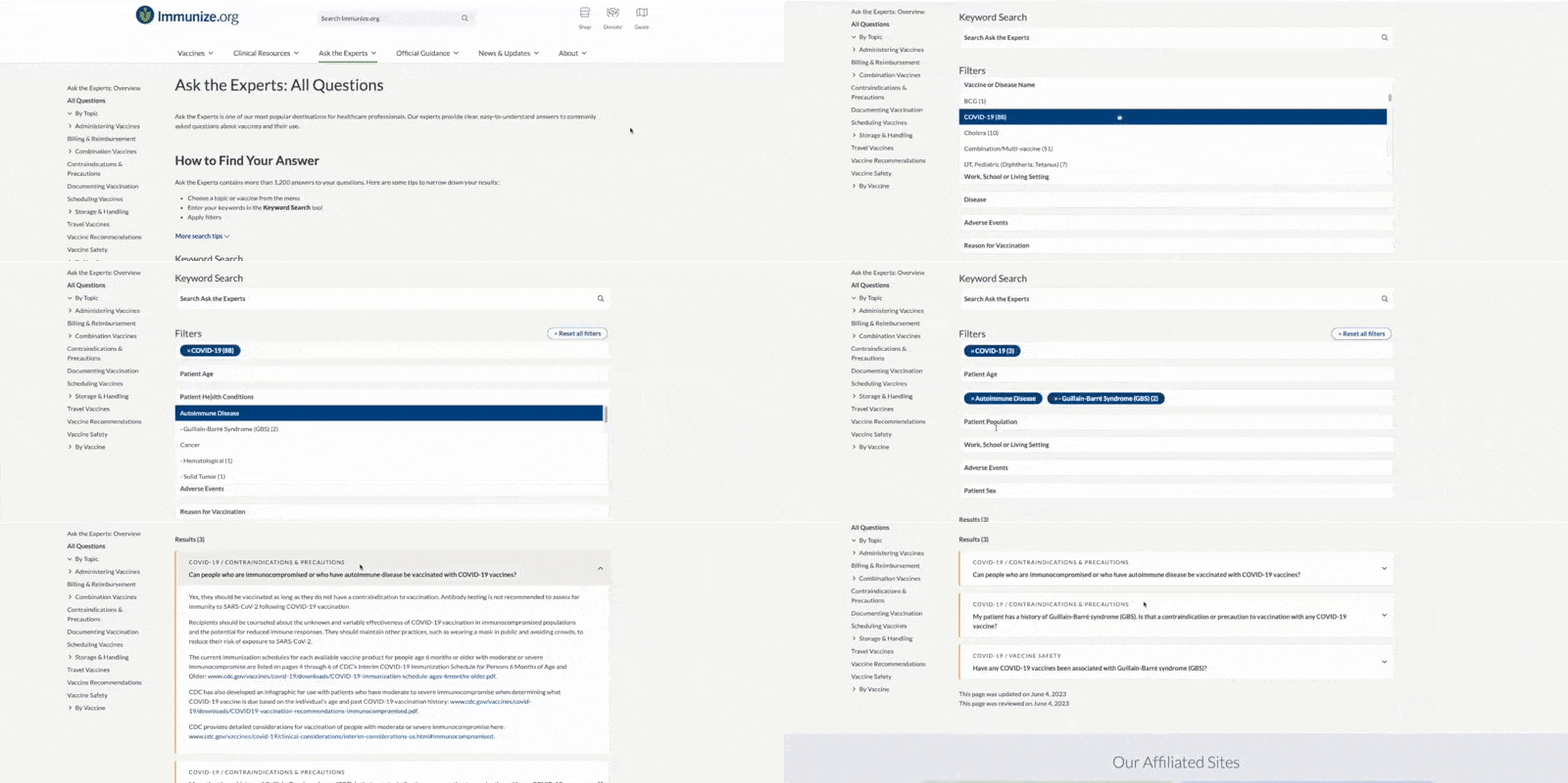
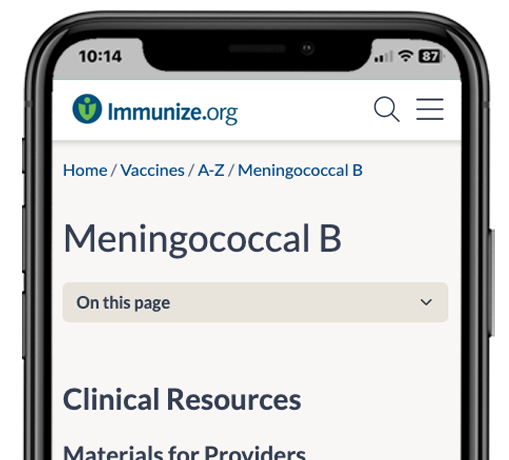
Each disease’s “Vaccines A–Z” page offers convenient access to the “Image Library.” The example below shows how to access the measles photos. The right menu (under “On This Page”) features a quick link to “Photos & Videos.”
Each page of the Image Library shows a preview of available images. Select thumbnail to view the full image, its description, and a button to download the image or copyright information.

Related Links
- Immunize.org: Website Office Hours: Image Library, Webinars, Videos, and Social Media web page
- Immunize.org: Website Training Video: Image Library, Webinars, Videos, and Social Media web page
Immunize.org updated the questions and answers in its Ask the Experts web section for Varicella (Chickenpox) vaccination. Answers were updated with current disease epidemiology and now indicate differences between CDC and American Academy of Pediatrics (AAP) recommendations regarding the use of MMRV vaccine.
Immunize.org updated its popular document for families, titled Tips for Locating Old Immunization Records. Revisions include updated information on immunization information systems, preserving old patient records, the availability of consumer portals for individuals to access their own records in some states, and some updates to terminology.
Featured Resources
On July 23, the American Academy of Pediatrics (AAP) hosted a free webinar titled The Mother Tested Negative for Hepatitis B Virus—So Why Does the Newborn Still Need the Vaccine at Birth? In it, Neelima Agrawal, MD, MPH, AAP Section on Gastroenterology and Hepatology, reviewed the epidemiology, morbidity and mortality, and transmission of hepatitis B virus infection, and offered practical tips for answering common questions about the safety and effectiveness of HepB.

AAP's Red Book Online on-demand webinars offer a range of educational topics available for viewing at any time. Some require AAP membership. View all archived webinars.
American Academy of Pediatrics offers fact sheets for families on vaccine-preventable diseases to supplement VISs
AAP offers a growing series of one-page immunization fact sheets designed to help clinicians facilitate immunization conversations with families. These fact sheets can accompany a Vaccine Information Statement (VIS), but do not replace them. Federal law requires healthcare professionals to provide the current VIS to the patient, parent, or legal representative before each dose of a vaccine. AAP's fact sheets serve as supplemental educational materials.
Each handout covers disease severity, transmission, vaccine side effects, and reflects the latest AAP immunization guidance. AAP developed the series with input from subject matter experts and families. The influenza, COVID-19, and RSV sheets are available in English and Spanish; the other fact sheets are currently in English. Each includes a QR code linking to related information on the affiliated AAP website for the public, HealthyChildren.org. Clinicians can print the sheets or share them digitally.

Related Links
- AAP: Immunization Fact Sheets web page
- AAP: Respiratory Virus Immunization Guidance for 2026–27 main page
- Immunize.org: Vaccine Information Statements (VISs) Overview main page
- Immunize.org: You Must Provide Patients with Vaccine Information Statements—It's the Law! (PDF)
Visit Immunize.org’s web section, Getting Started: For the New Vaccinator, with curated content organized for those new to vaccination practice
Immunize.org offers a section of its website designed for healthcare professionals new to our website or new to vaccination practice, called Getting Started: For the New Vaccinator. A link to the section can be found at the Clinical Resources menu at the top of each page. The wide range of resources available at Immunize.org can feel overwhelming to someone new to vaccination practice. This section connects new vaccinators of any clinical background to the basic resources that support each step of successful vaccine delivery.

The Getting Started section is organized into six topic areas:
- Vaccines and the Diseases They Prevent: basic vaccine information, including federal government documents like package inserts
- Vaccinating People Who, When, and How: immunization schedules, vaccine administration job aids, VISs, and vaccination records
- Responding to Adverse Events: websites and resources needed to address and report a health issue after vaccination, such as an allergic reaction
- Patient Education and Communication: basic sources for patient education and communication resources for healthcare professionals
- Vaccine Storage and Handling: connects to resources essential for proper vaccine storage and handling and responding to vaccine storage problems
- Learn More: immunization information and free resources beyond the basics to get started
Immunize.org offers Getting Started: For New Vaccinators Web Pages video to learn more.

Visit Getting Started: For the New Vaccinator today and share with anyone new to immunizations or involved in training new staff.
Immunize.org offers wallet-sized Lifetime Immunization Record Cards, printed on rip-proof, smudge-proof, waterproof paper designed to last a lifetime. Sold in boxes of 250.

To purchase record cards, please visit the Immunize.org Shop.
Related Link
- Immunize.org: Shop Immunize.org main page
The conclusions and relevance summaries for each article are reprinted below:
Influenza Vaccine Effectiveness and Safety for the 2026–2027 Respiratory Season: This systematic review found that evidence published August 1, 2025, through June 30, 2026, continued to demonstrate that influenza vaccines were associated with reduced risk of severe disease and hospitalization, especially among older adults, infants, children, and young adults. No new safety concerns were identified.
COVID-19 Vaccine Effectiveness and Safety for the 2026–2027 Respiratory Season: COVID-19 vaccines were consistently associated with a reduction in the risk of hospitalization and other outcomes, including among individuals at high risk of severe COVID-19, such as infants, and those who were pregnant. No new safety concerns were identified.
RSV Immunization Effectiveness and Safety for the 2026–2027 Respiratory Season: RSV immunizations were associated with reduced risk of severe RSV and RSV-related hospitalizations; evidence among older adults suggests that RSV VE may be lower in subsequent seasons. Reported adverse events of special interest (including GBS and preterm birth) were consistent with prior reviews. The results of this updated review are both consistent with previously reported evidence and provide new insight into several aspects of RSV immunizations.
The reviews informed the 2026–27 respiratory season immunization recommendations released the same day by four major medical societies, described in the top story of this issue of IZ Express.
Related Links
- Vaccine Integrity Project: 2026–27 Respiratory Season Evidence Review web page
- Vaccine Integrity Project: 2026–2027 Respiratory Season Evidence Review Executive Summary web page
- Immunize.org: Healthcare Professional Organization Vaccine Recommendations main page
“Recombinant Shingles Vaccination and the Risk of Cardiovascular Events” published in Nature Medicine shows decrease in cardiovascular events after recombinant vaccine
In its August 26 issue, Nature Medicine published Recombinant Shingles Vaccination and the Risk of Cardiovascular Events. A portion of the abstract appears below.
We conducted a natural experiment created by the rapid transition from the live attenuated to the recombinant shingles vaccine in the United States. We compared incidences of a composite cardiovascular endpoint (ischemic heart disease, heart failure or ischemic stroke) among adults aged ≥60 years vaccinated immediately before versus immediately after this transition. The recombinant vaccine was associated with a 9% decrease in cardiovascular burden over 7 years . . . The association attenuated over time and was significant for ischemic heart disease (10% decrease in burden . . . ) and heart failure (12% decrease . . .) in both sexes and ischemic stroke in males (12% decrease . . .). An association was also seen for atrial fibrillation (7% decrease . . .) but not other cardiac, peripheral and cerebrovascular outcomes. Results were consistent in secondary analyses.

American Academy of Pediatrics (AAP) will host a webinar titled AAP Red Book Hot Topics Live Webinar—Preparing for 2026–27 Respiratory Virus Season at 7:00 p.m. (ET) on September 15. During the webinar, the AAP president and leadership from the Committee on Infectious Diseases will discuss AAP immunization guidance to protect pediatric patients during the 2026–27 respiratory virus season. AAP presenters will outline new recommendations for prevention of influenza, COVID-19, and RSV, which will be followed by a facilitated question and answer session.
Following the webinar, free CME credit will be provided to attendees.
Register for the webinar and submit your questions.
Virtual: North Dakota State University Center for Immunization Research and Education hosts webinar titled “Ready for Respiratory Virus Season? Pediatric Vaccine Updates for 2026–2027” on September 15 at 1:00 p.m. (ET); CE credit offered
The North Dakota State University (NDSU) Center for Immunization Research and Education (CIRE) will host a webinar titled Ready for Respiratory Virus Season? Pediatric Vaccine Updates for 2026–2027 at 1:00 p.m. (ET) on September 15. This webinar will provide an evidence-based review of the latest developments in pediatric RSV, influenza, and COVID-19 for the 2026–2027 respiratory virus season, including current trends, children at greatest risk for severe disease, and updated guidance on vaccination, prevention, and treatment.
This activity is approved for free CME and CPE credit.
Register for the webinar.
Virtual: Register for Immunize.org Website Office Hours. Join a 30-minute discussion about our affiliated websites on September 16 at 4:00 p.m. (ET) or September 17 at 12:00 p.m. (ET). Recorded sessions archived.
To learn simple tips and tricks for using our affiliated websites efficiently, please register for our next set of Website Office Hours on Wednesday, September 16, at 4:00 p.m. (ET) or Thursday, September 17, at 12:00 p.m. (ET). The same content will be covered in both sessions.
We will open each 30-minute session with a short, live demonstration on navigating our popular affiliated websites for healthcare personnel, including our recently launched Getting Started: For the New Vaccinator web page. You can submit questions when you register or live on Zoom during the session.

Register today for Immunize.org Website Office Hours (content is the same for both):
The archive of previous Website Office Hours content is posted at Immunize.org’s "Webinars & Videos" page. Shorter, demonstration-only recordings of previous Website Office Hours are also available in our Website Training Videos series.
Mark your calendar for future Immunize.org Website Office Hours.
The Association of Immunization Managers will host a webinar titled The Science of Vaccine Communication: Research to Practice at 12:00 p.m. (ET) on September 18. The webinar will focus on strategies for building vaccine confidence through evidence-based and effective vaccine communication. Attendees will gain practical insights to communicate intentionally, build trust, and support vaccine confidence in their communities. The speakers include Xiaoli Nan, PhD, professor, Department of Communication, University of Maryland, and Elisabeth Marnik, PhD, executive director, The Evidence Collective.
For more upcoming events, visit our Calendar of Events.
About IZ Express
IZ Express is supported in part by Grant No. NH23IP922654 from CDC’s National Center for Immunization and Respiratory Diseases. Its contents are solely the responsibility of Immunize.org and do not necessarily represent the official views of CDC.
IZ Express Disclaimer
ISSN 2771-8085
Editorial Information
-
Editor-in-ChiefKelly L. Moore, MD, MPH
-
Managing EditorJohn D. Grabenstein, RPh, PhD
-
Associate EditorSharon G. Humiston, MD, MPH
-
Writer/Publication CoordinatorTaryn Chapman, MS
Courtnay Londo, MA -
Style and Copy EditorMarian Deegan, JD
-
Web Edition ManagersArkady Shakhnovich
Jermaine Royes -
Technical ReviewerKayla Ohlde