


- Immunize.org and Association of Immunization Managers update “Communicating the Benefits of Influenza Vaccination” for the 2026–27 season
- Vaccine exemptions among U.S. kindergartners reach record high in 2025–26 school year; coverage drops in most states
- Immunize.org reviews and updates Ask the Experts web section on measles, mumps, rubella, and MMR vaccination
- Most states resume offering RSV vaccination during pregnancy weeks 32 through 36 on September 1 and prepare to resume immunization of eligible infants and toddlers with RSV preventive antibodies by October
- “Monkeypox Virus Surveillance—United States, 2024–2025” published in MMWR
- Measles 2026: 2,777 confirmed measles cases in 45 states and DC; national public health and medical costs estimated at $58,000 per case in 2025
- Journalists interview Immunize.org experts
- Vaccines in the news
- Spotlight on the website: External Resources
- Recap: Immunize.org issues statement on August 10 Presidential Order on childhood immunization
- Recap: Immunize.org updates 2026–27 season "Standing Orders for Administering Influenza Vaccine to Children and Teens" based on American Academy of Pediatrics recommendations
- Recap: Immunize.org posts popular 1-page reference, “Influenza Vaccine Products for the 2026–2027 Influenza Season”
- Recap: Immunize.org updates 1-page reference “Administering Vaccines: Dose, Route, Site, and Needle Size” and the version focused on vaccines for adults
- Johns Hopkins University and state health officials launch U.S. disease tracker with interactive display of state and county-level vaccine-preventable disease data
- CDC updates HPV, influenza, and laboratory support chapters of its Manual for the Surveillance of Vaccine-Preventable Diseases
- National Immunization Awareness Month concludes August 31; revisit these featured campaigns and keep promoting vaccination year-round
- From the Immunize.org shop! Laminated VIS QR code tables deliver CDC VISs directly to your patients’ smartphones (Spanish translation available).
- Immunize.org's elegant "Vaccination Saves Lives" blue enamel pins make wonderful holiday gifts or workplace recognitions
- “Serologic Immunity to Hepatitis A and B in U.S. Adults and High-Risk Populations” published in JAMA Internal Medicine
- “A national programme of bivalent prefusion F vaccination in pregnancy and protection against respiratory syncytial virus hospitalisation in infants until age 6 months in the UK: a multicentre, prospective, test-negative, case–control study” published in Lancet Child and Adolescent Health
- "First- and Second-Year Outcomes After Nirsevimab Immunization” published in JAMA Pediatrics
- Today! Virtual: Hepatitis B Foundation hosts webinar titled “Understanding the HepB Birth Dose’s Impact on Series Completion Amid Declining Infant HepB Vaccination Rates” on August 26 at 3:00 p.m. (ET).
- Virtual: Decera Clinical Education offers webinar titled “Ahead of the Curve: Purposeful Solutions to Power Up Influenza Vaccine Uptake” on September 8 at 2:15 p.m. (ET); free CE credit offered
- Virtual: Register for Immunize.org Website Office Hours. Join a 30-minute discussion about our affiliated websites for healthcare personnel on September 16 at 4:00 p.m. (ET) or September 17 at 12:00 p.m. (ET). Recorded sessions archived.
Immunize.org and the Association of Immunization Managers (AIM) updated Communicating the Benefits of Influenza Vaccination to reflect current disease epidemiology and statistics.

Related Links
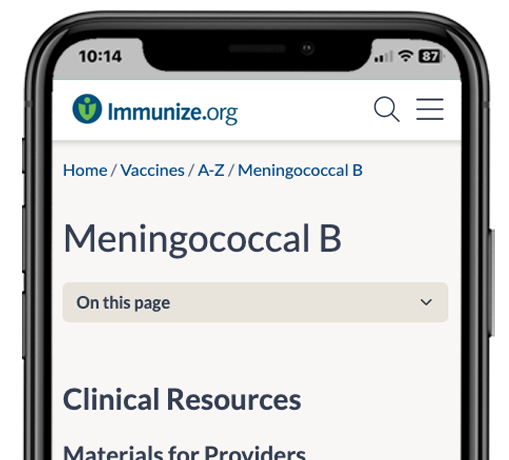
- Immunize.org: Vaccines A–Z: Influenza web page
- Immunize.org: Clinical Resources A–Z main page, where you can filter by topic, vaccine, language, or other criteria
Vaccine exemptions among U.S. kindergartners reach record high in 2025–26 school year; coverage drops in most states
School entry immunization requirements are established by each state government and are measured in an annual survey of kindergarten students conducted by states with support from CDC. On August 17, CDC updated its SchoolVaxView dashboard with vaccination coverage and exemption data reported by states for children entering kindergarten during the 2025–26 school year. Nationally, coverage decreased from the previous school year for every vaccine evaluated. Exemptions from one or more required vaccines reached 4.2%, the highest level ever reported, up from 3.6% in 2024–25.
Key findings for the 2025–26 school year include:
- Nonmedical exemptions rose from 3.4% to 4.0% of kindergartners and medical exemptions remained stable at 0.2%
- About 155,000 kindergartners were exempted from one or more required vaccines during the 2025–26 school year
- Exemptions increased in 41 states and the District of Columbia; 24 states reported exemption rates exceeding 5%
- Coverage with MMR, DTaP, poliovirus, and varicella vaccines decreased in more than half of states
- National coverage was 92.4% for MMR, below the 95% coverage level needed to prevent sustained measles transmission
- Approximately 280,000 kindergartners began school without documentation of a complete MMR vaccine series, an estimate that includes children with exemptions and those with incomplete or missing immunization records
View national and state-level school vaccination coverage and exemption estimates using the SchoolVaxView dashboard.

Related Links
- CDC: SchoolVaxView dashboard
- Immunize.org: School and Childcare Immunization Exemption Policies main page
- Immunize.org: Exemptions Permitted for State Childcare and School (K–12) Immunization Requirements, 2026 web page
- Washington Post: Kindergarten Vaccine Exemptions Jump to Another Record High (8/17/26)
Immunize.org reviews and updates Ask the Experts web section on measles, mumps, rubella, and MMR vaccination
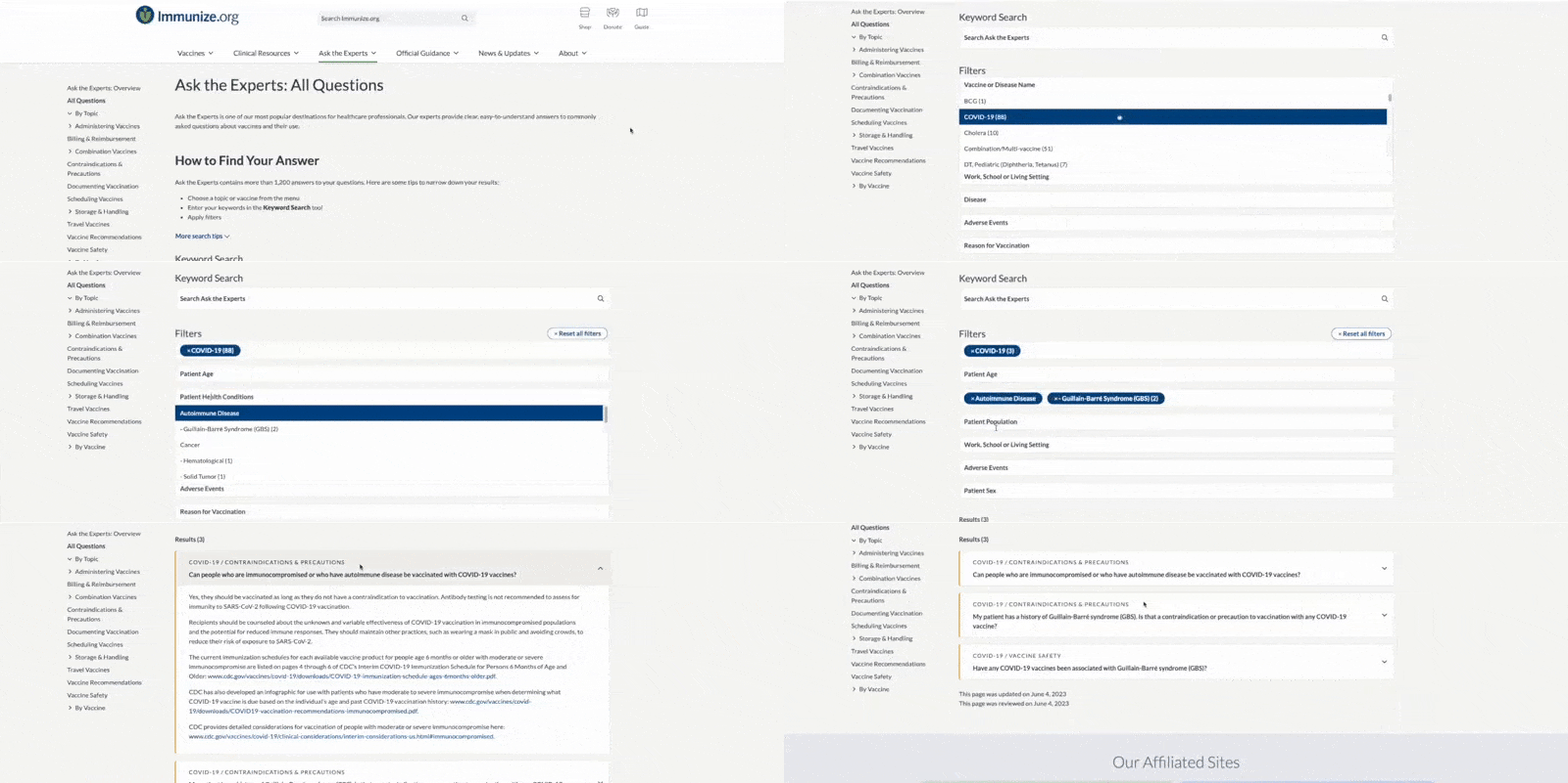
Immunize.org updated the questions and answers in its Ask the Experts web section for MMR (Measles, Mumps, and Rubella) vaccination. Answers were updated with current disease epidemiology, links to new resources, and additional information for outbreak response, in light of the surge in measles cases that began in 2025. There were no changes to basic vaccination schedules or recommendations since the section was last updated in 2023.

Immunize.org's Ask the Experts main page leads you to 30 distinct web pages on dozens of topics with more than 1,300 common or challenging questions and answers (Q&As) about vaccines and their administration. Immunize.org's team of experts includes Kelly L. Moore, MD, MPH (team lead); Carolyn B. Bridges, MD, FACP; Iyabode Beysolow, MD, MPH; and Jane R. Zucker, MD, MSc.
Related Links
- Immunize.org: Ask the Experts: MMR (Measles, Mumps, and Rubella) main page
- Immunize.org: Ask the Experts main page to access more than 1,300 questions and answers in narrative or video format
As RSV season approaches, use of maternal RSV vaccination with Abrysvo (Pfizer) will resume in most of the contiguous United States in September. For those who choose maternal vaccination, a single vaccine dose is recommended during pregnancy between 32 and 36 6/7 weeks’ gestation. Abrysvo is not recommended if the mother has received a previous RSV vaccine dose for any reason. If Abrysvo is not given or if the baby is born less than 14 days after Abrysvo is given, the infant should receive an RSV preventive antibody (nirsevimab [Beyfortus] or clesrovimab [Enflonsia]) for protection.
In general, the time to administer RSV preventive antibody products to infants younger than 8 months of age begins in October in most areas in the United States, unless otherwise advised by state or territorial public health authorities in response to local RSV activity patterns. All infants younger than 8 months, 0 days, whose mothers were not effectively vaccinated against RSV during pregnancy are eligible.
Preparation should begin now to recall eligible infants born in the spring or summer who will need an RSV preventive antibody product for the coming season. Keep in mind the following:
- Two product options are available for infants younger than 8 months: nirsevimab (Beyfortus, Sanofi) or clesrovimab (Enflonsia, Merck), given as a single dose.
- Infants younger than 8 months whose mothers were effectively vaccinated against RSV with Abrysvo during pregnancy or who received a dose of RSV preventive antibody last spring should not be given an RSV preventive antibody now.
- Only Beyfortus is currently recommended for designated children age 8 through 19 months at increased risk for severe RSV in their second RSV season. For specific guidance on high-risk children, refer to the forthcoming American Academy of Pediatrics (AAP) 2026–27 RSV season guidelines anticipated in early September. IZ Express will announce the publication.
- Prepare now for reminders and scheduling of infants born during the spring and summer who are due for RSV preventive antibody in October; evidence from coverage rates last season indicates that these infants are often missed and could benefit from specific outreach.
- An unprotected infant who is not at high risk and turns 8 months of age is no longer eligible to receive RSV preventive antibody protection.
- In regions with atypical RSV seasonality, such as Alaska, Hawaii, southern Florida, and certain U.S. territories, RSV activity patterns differ from most of the contiguous United States and those who offer Abrysvo or preventive antibody products should follow the timing recommended by state or local public health officials.
Immunize.org standing order templates for RSV preventive antibody products will be released in September, as soon as feasible following publication of the AAP 2026–27 RSV guidelines.
Related Links
- ACOG: Maternal Respiratory Syncytial Virus Vaccination Practice Advisory (Updated 10/2025)
- Pediatrics: Recommendations for the Prevention of RSV Disease in Infants and Children: Policy Statement (10/20/25)
- Immunize.org: Vaccines A–Z: RSV (Respiratory Syncytial Virus) main page
CDC published Monkeypox Virus Surveillance—United States, 2024–2025 on August 20 in MMWR. As this virus appears to be settling into a pattern of endemic (ongoing) transmission in the United States, increasing the vaccination coverage rate among people already recommended to receive 2 doses of Jynneos (Bavarian Nordic) is important to reduce the severity and burden of disease. A portion of the summary appears below.
Clade IIb monkeypox virus (MPXV) has continued to circulate in the United States since a 2022 outbreak. . . .
The number of reported cases of MPXV infection during September–October 2025 was double that during the same period in 2024, although cases returned to background levels by December 2025. Cases continued to disproportionately affect men who have sex with men. Unvaccinated patients accounted for 76.1% of cases and had 9.7 times the odds of hospitalization, as did those who completed the 2-dose JYNNEOS vaccination series. . . .
Persistent low-level transmission of clade IIb MPXV in the United States suggests a likely transition toward endemic circulation. CDC recommends that persons at risk for MPXV exposure complete the recommended 2-dose JYNNEOS vaccination series.
Access the MMWR article in HTML or PDF.

Related Links
- Immunize.org: Vaccines A–Z: Mpox web page
- CDC: MMWR main page providing access to the MMWR family of publications
Measles 2026: 2,777 confirmed measles cases in 45 states and DC; national public health and medical costs estimated at $58,000 per case in 2025
CDC reported, as of August 21, 2026:
- 211 new measles cases in the previous week, reaching 2,777 confirmed measles cases for 2026
- 45 states, New York City, and the District of Columbia reported measles cases in 2026
- Pennsylvania reported a jump of 89 cases this week, with at least 181 (48%) of the state's 379 cases this year in Lancaster County, the state’s hardest-hit county
- In Ohio, health officials confirmed 73 cases this week, more than doubling its previous total, now with 142 cases this year; 15 Ohio counties affected, four more than last week
In its October 3, 2026, issue, Vaccine published Quantifying the Cost of Measles Outbreak in the U.S. and How Costs Scale with Outbreak Size. Johns Hopkins researchers used national data to estimate that each measles case in the 2025 U.S. outbreak was associated with $43,200 in medical costs, rising to $58,600 when the cost of the public health response was included. The team gathered outbreak costs from 19 studies and 8 reports across 18 states, with outbreak size ranging from 1 to 802 cases. Simply launching a public health response, including a case investigation, contact tracing, quarantine, and vaccination campaigns, carried an estimated fixed cost of $297,747, regardless of the eventual size of the outbreak, with costs of about $16,300 per additional case and $443 per contact.
The authors state the important conclusion:
These outbreaks are largely preventable through inexpensive and highly effective measles vaccination paired with system-level preparedness for effective containment.

Related Links
- CIDRAP: Each Measles Case in 2025 US Outbreak Cost Almost $60,000, Study Estimates, or $134 Million Total (8/20/26)
- AAP: Fact Checked: The MMR (Measles, Mumps and Rubella) Vaccine Is Safe and Effective web page
- CDC: Measles Cases and Outbreaks main page
- Immunize.org: Vaccines A–Z: Measles main page
- LetsGetRealAboutVaccines.org: Measles web page
- VaccineInformation.org: Measles web page
Journalists seek out Immunize.org experts to help explain vaccines to the public and policy makers. We help the media understand and communicate the complex work vaccinators do. Here is a recent citation.
- USA Today: Kindergarten Vaccine Coverage Falls; Exemptions on the Rise (8/18/26)
These recent articles convey the potential risks of vaccine-preventable diseases and the importance of vaccination.
- Washington Post, Opinion: I Helped Develop the Rotavirus Vaccine. Trump’s Overhaul Makes Me Sick. (8/20/26)
- CIDRAP: Ebola Outbreak Now Deadliest Ever in DR Congo as Death Rate Reaches 46% (8/17/26)
- CNN: Record Share of Kindergartners Missed Required Vaccines Last Year as Trump Executive Order Takes Aim at State Mandates (8/17/26)
- NPR: Is There a Summer COVID-19 Surge This Year? Yep, It’s Ramping Up Again (8/14/26)

Today, we turn the spotlight on Immunize.org's External Resources main page, where content from credible partners dedicated to immunization is showcased. You will find links to:
- Immunize.org Partners: alphabetical list of key organizations and professional societies with descriptions and links to websites
- Vaccine Apps: a selection of immunization-related apps (available via Apple or Google Play) for providers or patients to use on phones or tablets
- Email News Services: links to respected publications covering vaccine-preventable diseases and more
- Vaccine Manufacturers: includes contact information for manufacturers and listings of their vaccines

If you are aware of resources that we should include on these pages, please email admin@immunize.org or complete the contact form.
Immunize.org does not endorse new federal guidance that conflicts with the best available medical evidence.
We encourage you to read our full statement on the August 10, 2026, Presidential Executive Order and explanation of the principles we follow in developing clinical resources.
View our statement.
Related Link
- Immunize.org: Sources of Guidance for Clinical Resources
Immunize.org published its Standing Orders for Administering Influenza Vaccine to Children and Teens for the 2026–27 season based on the newly published recommendations of the American Academy of Pediatrics (AAP). There are no substantial changes to the basic recommendation that all children age 6 months and older should be vaccinated against influenza annually.
Updates include:- AAP recommends offering influenza vaccine to all children as soon as it becomes available, especially those who require two doses
- Due to the new detailed AAP guidance on timing and dosing of influenza vaccination for children with specific causes of moderate or severe immunocompromise, the standing order template recommends referral of these patients for clinical evaluation of timing, product, and dose, according to the 2026–27 AAP recommendations
- The template dose table notes that for children age 3–17 years in the first year after hematopoietic cell transplant, two doses of high-dose IIV are recommended (off-label use)
- The presence of thimerosal in a vaccine continues to be listed as neither a contraindication nor a precaution to the use of influenza vaccine unless the recipient had a serious systemic or anaphylactic reaction to thimerosal
- Because gelatin is specified in the AAP recommendations as an LAIV component, a previous serious allergic (anaphylactic) reaction to it is noted as a contraindication to LAIV
Immunize.org will publish its updated standing orders template for adult influenza vaccination (and other updated influenza vaccination resources) as soon as feasible following publication of the recommendations of the American Academy of Family Physicians (AAFP) in early September. Additional updates to seasonal vaccine standing orders templates, including RSV and COVID-19, will also follow publication of relevant medical society recommendations in September.
Recap: Immunize.org posts popular 1-page reference, “Influenza Vaccine Products for the 2026–2027 Influenza Season”
Immunize.org published its updated Influenza Vaccine Products for the 2026–2027 Influenza Season, our popular 1-page reference document, listing all available products, presentations, ages, and billing codes. The resource was updated to include mFlusiva (mRNA influenza vaccine, Moderna), licensed by FDA on August 5, 2026, as a vaccine option for recipients age 50 years and older. Afluria (a standard egg-based inactivated vaccine) was removed because it is not available this season. And footnotes were updated to reflect the current influenza season.
Recap: Immunize.org updates 1-page reference “Administering Vaccines: Dose, Route, Site, and Needle Size” and the version focused on vaccines for adults
Immunize.org recently updated two 1-page clinical resources used as at-a-glance references for the dose, route, site, and needle sizes needed to administer licensed vaccines (not including travel vaccines).
- Both documents were revised to include mFlusiva (mRNA influenza vaccine, Moderna), which was licensed by FDA on August 5, 2026.
- Administering Vaccines: Dose, Route, Site, and Needle Size was revised to remove dengue vaccine (Dengvaxia is no longer produced and all remaining product expires in August) and to add clesrovimab RSV preventive antibody (Enflonsia, Merck). Influenza vaccine listings were simplified and organized to indicate that only one product (Fluzone, Sanofi) has a dose that changes based on the age of the recipient (either 0.25 mL or 0.5 mL at age 6 months through 35 months).
- Administering Vaccines to Adults: Dose, Route, Site, and Needle Size was revised to simplify organization of the influenza vaccine product options.
The U.S. Disease Tracker website is a new collaboration among Johns Hopkins University, the Council of State and Territorial Epidemiologists (CSTE), and the Association of State and Territorial Health Officials (ASTHO). It displays state and county-level data on measles, invasive meningococcal disease, and pertussis. Additional diseases and conditions will be added.
Data from the U.S. CDC-led National Notifiable Disease Surveillance System (NNDSS) is used for nonparticipating states. Cases are tracked at the state and substate level, with detailed visualizations that depict disease transmission patterns across the United States and over time. Cases are also reported by age group to illustrate which populations are most affected by these diseases.
Those interested in U.S. disease surveillance from state public health officials should bookmark and explore this site. It is currently providing more detailed and interactive data than the CDC website.

View the U.S. Disease Tracker website.
CDC updated its Manual for the Surveillance of Vaccine-Preventable Diseases, which provides current guidance for those involved in tracking, investigating, and controlling vaccine-preventable diseases (VPD), including personnel in public health departments. Recently updated chapters appear below:
- Chapter 5: Human Papillomavirus (HPV):
- The Disease Description section includes an updated understanding of HPV latency and estimates of HPV-associated cancer rates
- The Screening and Treatment section includes recent cervical cancer screening recommendations and a new section on anal cancer screening
- Laboratory and Enhanced Surveillance sections include more details on laboratory testing of HPV, vaccination impact on cervical precancer and cancer, and other vaccine impact monitoring activities
- Chapter 6: Influenza:
- Updated statistics (e.g., burden estimates) and references
- Added conjunctival swabs as an approved specimen type for use with CDC's Influenza A/H5 subtyping kit only
- The national influenza surveillance system components and methods describe how surveillance was conducted during the 2025–26 season
- Chapter 22: Laboratory Support: Includes updated influenza and HPV information

National Immunization Awareness Month concludes August 31; revisit these featured campaigns and keep promoting vaccination year-round
Throughout August, IZ Express highlighted organizations offering campaigns and resources to help you observe National Immunization Awareness Month (NIAM). Although NIAM ends August 31, many of these materials are available and relevant for your immunization outreach all year long. Here is the roundup:
- American Immunization Registry Association: toolkit with ready-to-use graphics and social media messages
- Immunize Kansas Coalition: sample social media posts
- Vaccinate Your Family: #FirstDayVax 2026 back-to-school immunization campaign, available in English and Spanish
- Voices for Vaccines: customizable social media graphics and video templates, sample captions, and a weekly posting schedule


Thank you for your dedication to protecting people of all ages from vaccine-preventable diseases during NIAM and throughout the year!
From the Immunize.org shop! Laminated VIS QR code tables deliver CDC VISs directly to your patients’ smartphones (Spanish translation available).
VISs explain both risks and benefits of vaccination. Federal law requires you to document provision of CDC’s current VIS before administering any vaccine covered by the Vaccine Injury Compensation Program. CDC recommends VISs accompany other vaccines, too. An easy, paperless way to comply with the law is for patients to scan a QR code and access the VIS from a smartphone or tablet.
These tables belong in any room where vaccinations are given.
Learn more in our 2-minute Laminated VIS QR Code Tables video. The video is available in the Immunize.org shop and on our YouTube channel.

Pricing (includes all shipping and handling costs)
| Laminated CDC VIS QR Code Table (English) | Bundle: Laminated CDC (English) + Spanish Translation VIS QR Code Tables (includes 1 CDC VIS table and 1 table of translations) |
| 1 copy: $14.00 | 1 bundle: $20.00 |
| 2 copies: $9.00 each | 2 bundles: $16.00 each |
| 3–4 copies: $6.50 each | 3–4 bundles: $12.00 each |
| 5–9 copies: $5.00 each | 5–9 bundles: $8.50 each |
| 10–19 copies: $4.00 each | 10–19 bundles: $7.00 each |
| 20–59 copies: $3.00 each | 20–59 bundles: $6.00 each |
| 60+ copies: $2.50 each | 60+ bundles: $5.00 each |
Visit the Shop Immunize.org: Laminated VIS QR Code Tables web page to view images and order today! For additional information, call 651-647-9009 or email admininfo@immunize.org.
Our 2025 Vaccination Saves Lives pins are meaningful gifts for people who understand that lives are not saved by vaccines on a shelf, but by the act of vaccination. The pin makes a refined statement in rich blue enamel with gold lettering and edges, measuring 1.65" x 0.75".


Select the design that best suits how you plan to use your pin:
- Double stick-through posts: Two posts slide through fabric and are held securely by either rubber or locking-metal backings. Both types of backing are provided in the package.
- New! Magnetic clasp: Hold the pin firmly in place without piercing clothing.


Be first in your office to wear these elegant new pins on clothing, white coats, backpacks, or tote bags to remind everyone you meet of the value of vaccination.
Click here for Vaccination Saves Lives pin pricing and ordering information.
In its August 17 issue, JAMA Internal Medicine published Serologic Immunity to Hepatitis A and B in U.S. Adults and High-Risk Populations. This cross-sectional study used data from the National Health and Nutrition Examination Survey (NHANES) from January 2017 to August 2023 and included adults age 20 years or older with available hepatitis A virus (HAV) and hepatitis B virus (HBV) serologic test results. The sample included 13,514 people, representing an estimated 226.1 million US adults (mean age 49 years; 52% female).
- Serologic immunity to HAV: 39.5%.
- HAV immunity was associated with
- younger age (e.g., 20–29 vs ≥65 years);
- lower educational attainment (e.g., less than grade 9 vs college graduate);
- race and ethnicity: non-Hispanic Black, Mexican American, other Hispanic, non-Hispanic Asian, and multiracial or other race and ethnicity;
- being born outside the United States.
- Serologic immunity to HBV: 27.1%, based on anti-HBs positivity. Among this group, the vast majority had vaccine-derived immunity.
- Vaccine-derived HBV immunity was associated with younger age, female sex, non-Hispanic Asian and non-Hispanic Black race and ethnicity, and higher educational attainment.
This study found that most American adults lack immunity to HAV and HBV. This highlights the need for targeted, systematic vaccination strategies for HAV and HBV, especially among high-risk populations.
“A national programme of bivalent prefusion F vaccination in pregnancy and protection against respiratory syncytial virus hospitalisation in infants until age 6 months in the UK: a multicentre, prospective, test-negative, case–control study” published in Lancet Child and Adolescent Health
In its September issue, Lancet Child and Adolescent Health published A national programme of bivalent prefusion F vaccination in pregnancy and protection against respiratory syncytial virus hospitalisation in infants until age 6 months in the UK: a multicentre, prospective, test-negative, case–control study. This study was performed in “BronchStop hospitals,” a group of hospitals included in a large previous study. Results show real-world effectiveness of this RSV prevention strategy. A portion of the summary appears below.
In late summer, 2024, the UK introduced the maternal bivalent respiratory syncytial virus (RSV) prefusion F (RSVpreF) [Abrysvo, Pfizer] vaccine for all pregnant individuals at a gestation of 28 weeks or more. . . .
We conducted a national, multicentre, prospective, test-negative, case–control study at 37 BronchStop hospital sites in the UK. Patient and public involvement from a group of parents informed study protocol design. . . .
. . . The mothers of 161 (38%) RSV-positive infants and 175 (66%) RSV-negative infants had received the RSVpreF vaccine before delivery. The adjusted vaccine effectiveness of maternal RSVpreF vaccination for preventing infant hospital admission was 61% . . . for infants aged up to 6 months, and 76% . . . for infants aged up to 3 months. . . .
In the real-world setting of the UK's maternal vaccination programme, RSVpreF vaccination was effective up until the age of 6 months in reducing the risk of hospital admission with RSV-associated ALRI [acute lower respiratory infection], as was the UK's infant RSV prevention programme.
In its August 10 issue, JAMA Pediatrics published First- and Second-Year Outcomes After Nirsevimab Immunization. Results show real-world effectiveness of this RSV prevention strategy. A portion of the abstract appears below.
This cohort study analyzed 2 nationwide matched cohorts using the French National Health Data System, including infants born in metropolitan France before the 2023 and 2024 immunization campaigns. Infants receiving nirsevimab [Beyfortus, Sanofi] were matched 1:1 to unimmunized infants. Both cohorts were followed up for 1 year after immunization, with an additional second year of follow-up for the 2023 cohort. Data analysis was performed from February 2023 to August 2025. . . .
. . . Nirsevimab was associated with a lower rate of RSV-LRTI [lower respiratory tract infection]–related hospitalization in both the 2023 and 2024 cohort during the first year of follow-up, with effectiveness estimates of 66% . . . and 72% . . . respectively. . . .
This study found that nirsevimab was associated with a substantial reduction in RSV-LRTI–related hospitalizations during the first year across both the 2023-2024 and 2024-2025 seasons.
As expected, nirsevimab was not associated with reduced hospitalizations due to non-RSV infections or asthma. Nor did a single dose of nirsevimab protect during the second year of follow-up.
The Hepatitis B Foundation will host a webinar titled Understanding the HepB Birth Dose’s Impact on Series Completion Amid Declining Infant HepB Vaccination Rates at 3:00 p.m. (ET) on August 26. The speakers will include Joshua Williams, MD, pediatrician, Denver Health and Hospital Authority, and #justB Storyteller Steve, a person living with hepatitis B. They will discuss the effect of the HepB birth dose on vaccine series completion, current trends in birth dose uptake, and why the birth dose remains a critical tool for lifelong protection against hepatitis B. Steve will talk about his lived experiences and why he believes each child should receive HepB.
Register for the webinar.
Virtual: Decera Clinical Education offers webinar titled “Ahead of the Curve: Purposeful Solutions to Power Up Influenza Vaccine Uptake” on September 8 at 2:15 p.m. (ET); free CE credit offered
Decera Clinical Education will host a webinar titled Ahead of the Curve: Purposeful Solutions to Power Up Influenza Vaccine Uptake at 2:25 p.m. (ET) on September 8. Speakers include Paul G. Auwaerter, MD, MBA, professor of infectious diseases, Johns Hopkins University School of Medicine, and Ravi Jhaveri, MD, division head, pediatric infectious diseases, Children’s Hospital of Chicago. During the webinar, the speakers will discuss influenza viral activity and vaccine uptake for the 2026–27 season, as well as ways to integrate clinical solutions into practice to increase vaccine uptake and advance adult and pediatric public health.
After the webinar, free CME, CNE, and CPE credits will be provided to attendees.
Virtual: Register for Immunize.org Website Office Hours. Join a 30-minute discussion about our affiliated websites for healthcare personnel on September 16 at 4:00 p.m. (ET) or September 17 at 12:00 p.m. (ET). Recorded sessions archived.
To learn simple tips and tricks for using our affiliated websites efficiently, please register for our next set of Website Office Hours on Wednesday, September 16, at 4:00 p.m. (ET) or Thursday, September 17, at 12:00 p.m. (ET). The same content will be covered in both sessions.
We will open each 30-minute session with a short, live demonstration on navigating our popular affiliated websites for healthcare personnel, including our recently launched Getting Started: For the New Vaccinator web page. You can submit questions when you register or live on Zoom during the session.

Register today for Immunize.org Website Office Hours (content is the same for both):
The archive of previous Website Office Hours content is posted at Immunize.org’s "Webinars & Videos" page. Shorter, demonstration-only recordings of previous Website Office Hours are also available in our Website Training Videos series.Mark your calendar for future Immunize.org Website Office Hours.
For more upcoming events, visit our Calendar of Events.
About IZ Express
IZ Express is supported in part by Grant No. NH23IP922654 from CDC’s National Center for Immunization and Respiratory Diseases. Its contents are solely the responsibility of Immunize.org and do not necessarily represent the official views of CDC.
IZ Express Disclaimer
ISSN 2771-8085
Editorial Information
-
Editor-in-ChiefKelly L. Moore, MD, MPH
-
Managing EditorJohn D. Grabenstein, RPh, PhD
-
Associate EditorSharon G. Humiston, MD, MPH
-
Writer/Publication CoordinatorTaryn Chapman, MS
Courtnay Londo, MA -
Style and Copy EditorMarian Deegan, JD
-
Web Edition ManagersArkady Shakhnovich
Jermaine Royes -
Technical ReviewerKayla Ohlde