

- World Rabies Day is September 28. Refresh your knowledge of human rabies prevention.
- Measles 2026: Johns Hopkins University reports 3,568 confirmed measles cases in 45 states and DC; four have died in Pennsylvania measles outbreaks
- What does not vaccinating cost us? Try Emory University’s VaxImpactMap.org, an interactive tool showing health and economic costs of declining childhood vaccination.
- Immunize.org's Influenza Vaccination Honor Roll for healthcare worker vaccination requirements welcomes a new facility
- “Addressing Vaccination Anxiety for Children: Strategies for Vaccine Recipients and Caregivers”: watch the 3-minute video, part of the Improving the Vaccination Experience Video Series on YouTube
- Vaccines in the news
- Spotlight on the website: Getting Started: Vaccines and the Diseases They Prevent
- Recap: Immunize.org posts adult influenza standing orders template and other resources in its 2026–27 suite of influenza vaccination resources
- Recap: Immunize.org posts all RSV immunization standing orders templates, incorporating relevant medical society guidance for the 2026–27 season
- American Academy of Pediatrics publishes timely new resource explaining the difference between “died with” and “died of”
- American Academy of Pediatrics summarizes its resources for the 2026–27 respiratory virus season
- Immunize.org's elegant "Vaccination Saves Lives" blue enamel pins make wonderful holiday gifts or workplace recognitions
September 28 is World Rabies Day. This date marks the anniversary of the 1895 death of Louis Pasteur, the French chemist and microbiologist who developed the first rabies vaccine. Around the world, about 59,000 people die of rabies each year, 40% of whom are children. Globally, most rabies deaths result from dog bites, although the most common mammal vectors in the United States are bats, skunks, and raccoons.
Earlier this summer, an 11-year-old boy died of rabies in Ontario, after waking up on a family camping trip to find a bat on his face. His father released the bat. The family did not notice any scratches or bite marks and did not seek medical attention. The avoidable tragedy of his death illustrates the importance of everyone having a basic understanding of rabies and its prevention.
The observance of World Rabies Day, established by the Global Alliance for Rabies Control, is recognized by the World Health Organization. This year’s theme is "Stronger Together," emphasizing that rabies elimination requires human and animal health systems to work together to expand access to vaccination, strengthen surveillance, and support community-led solutions. Pre-exposure vaccination of pets and people at elevated risk, as well as appropriate post-exposure vaccination and treatment, remains essential to prevent transmission of the virus.

On September 10, CDC issued a Health Alert Network (HAN) advisory titled Nationwide Increase in Reported Human Rabies Exposures: Rabies Post-Exposure Prophylaxis Administration, reporting a 17% increase in rabies-related inquiries from July through August 2026 compared with the same period in 2025. At least eight state health departments reported increases in use of rabies post-exposure prophylaxis (PEP), PEP administration errors, or both. The errors CDC described include:
- Vaccine or human rabies immune globulin (HRIG) administration at the wrong anatomic site
- Combining vaccine and HRIG in the same syringe or anatomic site
- Failing to give HRIG when needed
- Giving HRIG to someone previously vaccinated against rabies, which is unnecessary
- Using an incorrect rabies vaccine schedule
- Unnecessarily restarting the rabies vaccine series after a schedule deviation
Take time to refresh your team’s understanding of human rabies prophylaxis. Rabies: Questions and Answers from Immunize.org is a great place to start.
Related Links
- Pan American Health Organization: World Rabies Day website
- CDC: Rabies main page
- Institut Pasteur: Pasteur Museum (Musée Pasteur) website
- Immunize.org: Vaccines A–Z: Rabies main page
- Immunize.org: Ask the Experts: Rabies main page
As of September 18, 2026, the U.S. Measles Tracker, operated by Johns Hopkins University (JHU), reported, 3,568 measles cases for 2026. Through September 17, 2026, CDC reported 3,471 confirmed cases. Due to incomplete data on the CDC website, IZ Express leads its reporting with numbers from the U.S. Measles Tracker or directly from state public health websites.
Pennsylvania Department of Health added 93 confirmed cases in the previous seven days, bringing the state’s total to 767, including 141 hospitalizations and four measles-associated deaths. The first two deaths were unvaccinated infants in Lancaster County. The next two were an unvaccinated 40-year-old woman in Jefferson County and an unvaccinated 18-year-old in Mifflin County who died of acute disseminated encephalomyelitis, a rare complication of measles. In response to the outbreak, Pennsylvania healthcare providers administered more than 46,000 doses of MMR in August 2026, 84% more than the usual 25,000 doses.The graphic below comes from the U.S. Disease Tracker web page. This is a separate interactive tracking website operated by JHU in collaboration with the Association of State and Territorial Health Officials and the Council of State and Territorial Epidemiologists. It shows waves of U.S. measles cases since 2025, including the 2025 South Carolina outbreak, the early 2026 Utah outbreak, and the currently rising cases in Pennsylvania, Ohio, and Wisconsin. The sharp drop in the gray zone at the graph’s right side reflects incomplete data. Those values may be revised upward.

Children with complex medical needs: Anxiety is growing among families of children with complex medical needs as vaccination rates decline and outbreaks become more frequent. For children who are immunocompromised, have rare genetic conditions, or cannot be protected by vaccination themselves, falling community vaccination rates remove the protection they depend on, leaving families to weigh participation in school, therapy, and ordinary childhood experiences against infection risk.
The Academy of Pediatrics recently released on YouTube a basic 1-minute measles video for families, suitable for sharing.
Related Links
- CDC: Measles Cases and Outbreaks main page
- Immunize.org: Vaccines A–Z: Measles main page
- LetsGetRealAboutVaccines.org: Measles web page
- VaccineInformation.org: Measles web page
- CDC: Be Ready for Measles Toolkit
- AAP: Immunization Facts for Families (MMR) (PDF)
What does not vaccinating cost us? Try Emory University’s VaxImpactMap.org, an interactive tool showing health and economic costs of declining childhood vaccination.
Emory University's Rollins School of Public Health recently updated VaxImpactMap.org, an interactive tool projecting the health and economic costs of declining childhood vaccination across all 50 states. The tool models six vaccine-preventable diseases: rotavirus, pertussis, invasive pneumococcal disease, varicella, invasive Haemophilus influenzae type b (Hib), and RSV-associated disease in infants.
Users select a state, a disease, and an estimated decline in vaccine uptake. The map generates projected outcomes. Results are expressed as cases, hospitalizations, deaths, and healthcare and productivity costs.
Users can toggle between “Additional” burden of the disease attributable to a decline in uptake and “Total” burden, which includes disease that would occur if vaccination is sustained at current rates. The tool also models vaccine-associated adverse events, such as intussusception after rotavirus vaccination, as well as disease outcomes.

Visit VaxImpactMap.org and share this tool with your networks to better understand and communicate the price we may pay in disease, suffering, and dollars as changing vaccination trends affect our communities.
Immunize.org's Influenza Vaccination Honor Roll for healthcare worker vaccination requirements welcomes a new facility
Immunize.org's Influenza Vaccination Honor Roll recognizes facilities that take a stand for patient safety by implementing policies requiring vaccination for healthcare personnel. Immunize.org welcomes Subacute at Autumn Lake Healthcare, Voorhees, NJ, to our honor roll.

Eligibility
- Eligible organizations: hospitals, long-term care facilities, medical practices, pharmacies, professional organizations, health departments, and other government entities
- Requirements:
- Your policy must require influenza vaccination for all staff
- The application must describe measures to prevent transmission of influenza from unvaccinated personnel to patients (e.g., masking for the entire shift)
- Immunize.org: Honor Roll Honorees: Influenza
- About the Influenza Vaccination Honor Roll
“Addressing Vaccination Anxiety for Children: Strategies for Vaccine Recipients and Caregivers”: watch the 3-minute video, part of the Improving the Vaccination Experience Video Series on YouTube
As families across the nation bring anxious children into clinics for annual influenza vaccinations, our featured video is Addressing Vaccination Anxiety for Children: Strategies for Vaccine Recipients and Caregivers. The video is part of Immunize.org’s Improving the Vaccination Experience Video Series. This video explains how parents and caregivers can help children better cope with fear and pain related to vaccination and how older children can participate in strategies to help themselves feel better. The video highlights the guidance in our 1-page resource for parents and caregivers of children: Addressing Vaccination Anxiety for Children: Strategies for Vaccine Recipients and Caregivers.
The 3-minute video is available on our YouTube channel, along with our full Improving the Vaccination Experience Video Series.

Like, follow, and share Immunize.org’s social media accounts and encourage colleagues and others interested in vaccination to do likewise.
- Facebook at ImmunizeOrg
- Instagram at ImmunizeOrg
- LinkedIn at ImmunizeOrg
- YouTube at ImmunizeOrg
- Immunize.org: Improving the Vaccination Experience main page
- Immunize.org: Clinical Resources: Vaccine Confidence & Addressing Concerns main page
- VaccineInformation.org: Improving the Vaccination Experience main page (for families)
These recent articles convey the potential risks of vaccine-preventable diseases and the importance of vaccination.
- CIDRAP: For Some Americans, Vaccines Aren’t About Science but Faith (9/17/26)
- The Atlantic: Pennsylvania’s Measles Outbreak Is Enormous (9/16/26)
- New York Times: Covid Vaccines Delayed for Half of U.S. Children (9/16/26)
- Reuters: Wiping Out Measles Impossible Due to Vaccine Hesitancy in Rich Countries, Says Gates (9/15/26)
- AAP: Lack of Insurance Coverage for RSV Immunization in Hospitals Leaves Newborns Unprotected (9/14/26)

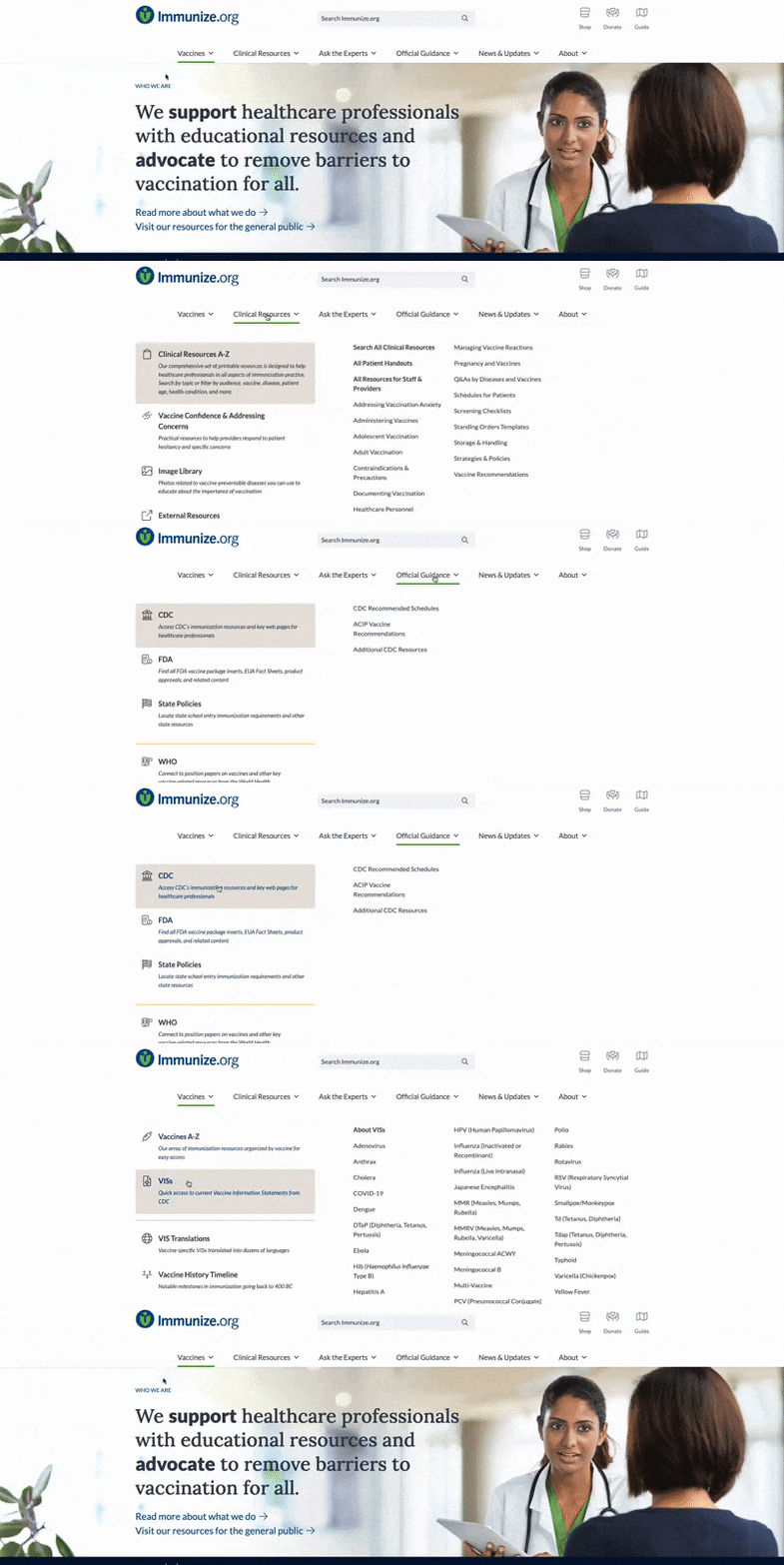
This week, we continue to spotlight our Getting Started: For the New Vaccinator web pages, focusing on the first content section, Vaccines and the Diseases They Prevent. This page can be found in the Clinical Resources – Getting Started menu.
These resources provide an accessible starting point for healthcare professionals across clinical backgrounds.
For an overview of this web section, watch this short video, Introducing Immunize.org's Getting Started: For New Vaccinators Web Pages (2:28).

The Vaccines and the Diseases They Prevent page provides links to basic vaccine information for healthcare professionals, including federal government documents. This topic has five sections:
- Vaccine Recommendations: find detailed vaccination guidance from CDC and healthcare professional organizations, along with vaccine-specific clinical resources
- Package Inserts & Emergency Use Authorizations (EUAs): access FDA-licensed package inserts, product approvals, and EUAs containing essential information about vaccine indications, administration, precautions, and clinical studies
- Vaccine Manufacturers: locate contact information for vaccine manufacturers and review the vaccines each company licenses in the United States
- Other Immunize.org Websites: explore trusted vaccine information for the public, families, and healthcare professionals through VaccineInformation.org and LetsGetRealAboutVaccines.org
- External Resources: connect with authoritative references addressing routine and travel vaccination, including CDC’s Pink Book and Yellow Book and the Children’s Hospital of Philadelphia Vaccine Education Center
Recap: Immunize.org posts adult influenza standing orders template and other resources in its 2026–27 suite of influenza vaccination resources
Immunize.org continues to update our suite of influenza clinical resources and online content for the 2026–27 season. The adult influenza vaccine standing orders template is now available, along with the pediatric standing orders template posted earlier. All reviewed resources include a new “last reviewed” date in the footer to indicate the information is current for the 2026–27 season, whether or not changes were necessary.
The following resources were updated most recently:- Standing Orders for Administering Influenza Vaccine to Adults: Updated to incorporate 2026–27 season guidance, published September 2 by the American Academy of Family Physicians (AAFP), including addition of the new mRNA influenza vaccine, mFlusiva (Moderna), licensed for age 50 years or older.
- Screening Checklist for Contraindications to Injectable Influenza Vaccine (Inactivated “IIV,” Cell Culture “ccIIV,” Recombinant “RIV,” or mRNA): Incorporates mRNA influenza vaccine (mFlusiva). The package insert of mFlusiva does not indicate any contraindication or precaution to its use in people who have had a severe allergic reaction to a previous dose of IIV, ccIIV, or RIV.
- Screening Checklist for Contraindications to Live Attenuated Intranasal Influenza Vaccination: Minor wording updates for greater clarity.
- Talking with Your Patient about Contraindications and Precautions to Influenza Vaccination: Incorporates considerations for the mRNA influenza vaccine, including not using it during pregnancy because it has not yet been studied, and the absence of a contraindication or precaution to its use based on a history of severe allergic reaction to a previous dose of IIV, ccIIV, or RIV.
These updated 2026–27 season resources were previously announced in IZ Express:
- Declination of Influenza Vaccination
- Don’t Take Chances with Your Family’s Health—Make Sure You All Get Vaccinated
- Guide for Determining the Number of Doses of Influenza Vaccine to Give to Children Age 6 Months Through 8 Years
- How to Administer Intramuscular and Intranasal Influenza Vaccines
- How to Administer Intranasal and Oral Vaccinations
- Influenza Vaccine Products for the 2026–2027 Influenza Season
- Not Sure If You Can Get an Influenza Vaccine?
- Communicating the Benefits of Influenza Vaccination
- Standing Orders for Administering Influenza Vaccine to Children and Teens
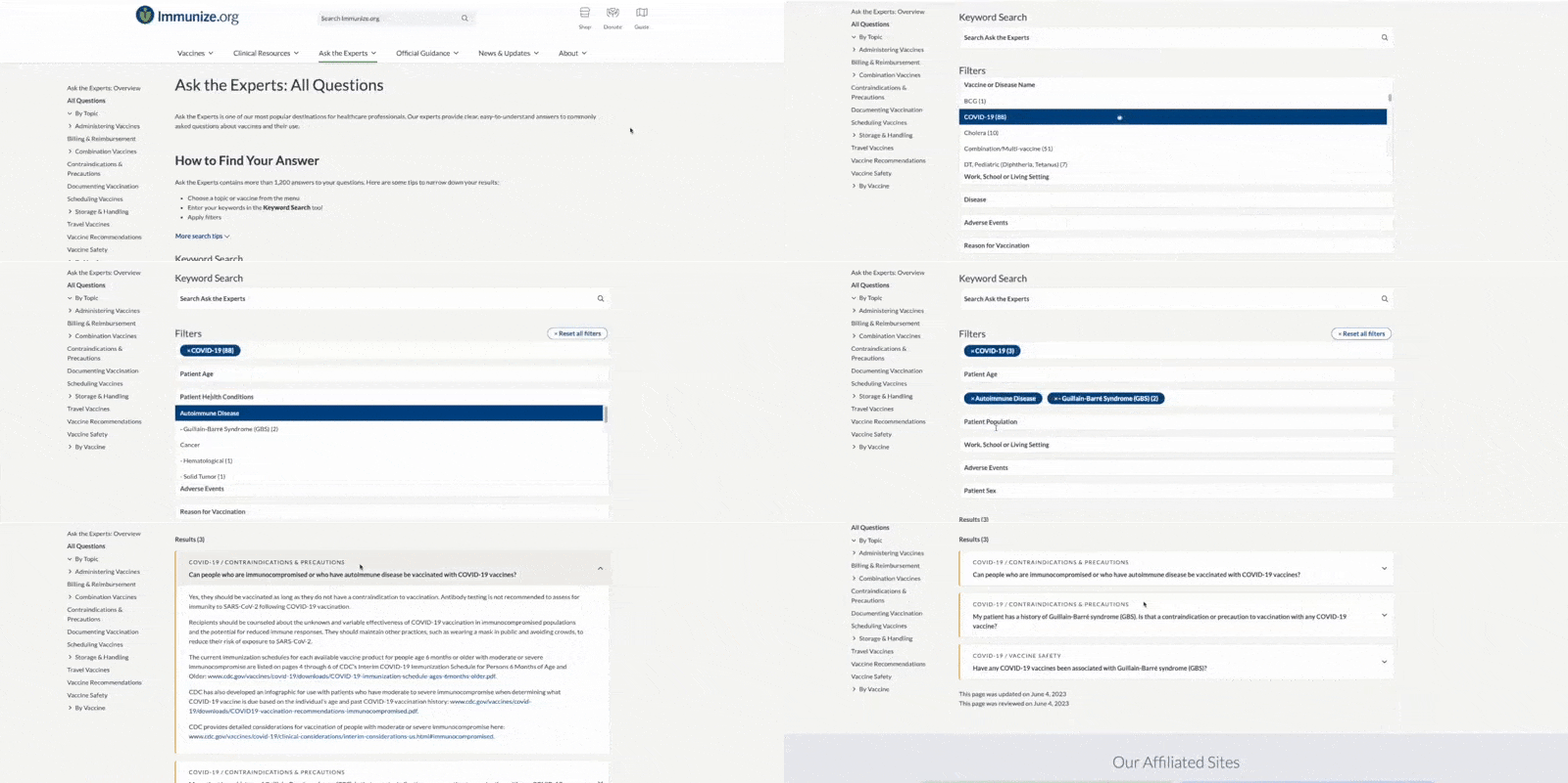
Find each of our influenza vaccine resources for the 2026–27 season at the Vaccines A–Z: Influenza main page. The Ask the Experts web section on influenza vaccines will be updated later in September.
Recap: Immunize.org posts all RSV immunization standing orders templates, incorporating relevant medical society guidance for the 2026–27 season
Immunize.org updated its RSV standing orders templates to align with the 2026–27 season recommendations from the American Academy of Pediatrics (AAP), American College of Obstetricians and Gynecologists (ACOG), and the American Academy of Family Physicians (AAFP) published on September 2, 2026. Due to the clinical evaluation required by the guidance produced by the Infectious Diseases Society of America (IDSA) for RSV vaccination of people younger than age 50 years with immunocompromising conditions, relevant standing orders templates recommend referral of these individuals for clinical assessment.
The following resources were updated:
- Standing Orders for Administering Pfizer Respiratory Syncytial Virus (RSV) Vaccine (Abrysvo) During Pregnancy: References updated ACOG guidance, including ACOG’s option to continue using Abrysvo through March 1, while CDC recommends discontinuing its use as an option (and instead using monoclonal antibodies) after January 31 each season.
- Standing Orders for Administering Respiratory Syncytial Virus Vaccine (RSV) to Adults Age 50 Years and Older: References AAFP guidance, including routine one-time use age 75 years or older and one-time use among high-risk individuals age 50 through 74. Data remains inadequate to establish revaccination recommendations.
- Standing Orders for Administering Nirsevimab RSV Preventive Antibody (Beyfortus, by Sanofi) to Infants and High-Risk Young Children: Added referral for clinical consideration of special cases where RSV immunization may be indicated outside the public health-recommended months. Referral for consideration of a repeat dose following antibody-depleting medical procedures (e.g., cardiopulmonary bypass) was added. The substantial update includes the new AAP recommendations for expanded categories of high-risk children age 8 through 19 months recommended to receive nirsevimab before or during their second RSV season. Existing CDC criteria for this age group are also included as a reference for facilities that follow CDC guidance.
- Standing Orders for Administering Clesrovimab RSV Preventive Antibody (Enflonsia, by Merck) to Infants: Updated to be consistent with new AAP recommendations. In this age group, the primary change is to recommend referral for clinical consideration of special cases where RSV immunization may be indicated outside the public health-recommended months. Referral for consideration of a repeat dose following antibody-depleting medical procedures (e.g., cardiopulmonary bypass) was added.
The American Academy of Pediatrics (AAP) published Died with vs. Died Of: Understanding Death Statistics, a new resource in its Fact Checked series. The web page addresses the claim that a child who dies of complications from measles or another vaccine-preventable disease "died with" the disease rather than "of" it. Such claims can mislead people about the seriousness of the disease.
The resource describes that death is commonly the result of a sequence of events rather than a single isolated condition. Death certificates document both an immediate cause and an underlying cause, that is, the disease or condition that began the chain leading to death, with potentially several intermediate conditions in between. Because mortality statistics generally rely on the underlying cause, incomplete or inaccurate certification can result in undercounting or misclassifying deaths.

View AAP's Fact Checked series.
Related Link
- AAP: AAP Immunization FAQs main page
After a recent webinar, the American Academy of Pediatrics released a list of its resources on the theme of “Preparing for the 2026–27 Respiratory Virus Season.” These include:
Clinician Resources
General
- Respiratory Virus Immunization Guidance for 2026–27 main page
- Recommended Child and Adolescent Immunization Schedule for Ages 18 Years or Younger (PDF)
- Immunization FAQs web page
- Liability Considerations for Immunizations web page
Influenza-Specific
- Patient Care: Influenza main page
COVID-19-Specific
RSV-Specific
- Patient Care: Respiratory Syncytial Virus (RSV) Prevention main page
- RSV Immunization Administration: Visual Guide (PDF)
Family Resources
Our 2025 Vaccination Saves Lives pins are meaningful gifts for people who understand that lives are not saved by vaccines on a shelf, but by the act of vaccination. The pin makes a refined statement in rich blue enamel with gold lettering and edges, measuring 1.65" x 0.75".


Select the design that best suits how you plan to use your pin:
- Double stick-through posts: Two posts slide through fabric and are held securely by either rubber or locking-metal backings. Both types of backing are provided in the package.
- New! Magnetic clasp: Hold the pin firmly in place without piercing clothing.


Be first in your office to wear these elegant new pins on clothing, white coats, backpacks, or tote bags to remind everyone you meet of the value of vaccination.
Click here for Vaccination Saves Lives pin pricing and ordering information.
To learn simple tips and tricks for using our websites efficiently, please register for our next set of Website Office Hours on Wednesday, October 7, at 4:00 p.m. (ET) or Thursday, October 8, at 12:00 p.m. (ET). The same content will be covered in both sessions.
We will open each 30-minute session with a short, live demonstration on navigating our resources for seasonal respiratory virus vaccines. You can submit questions when you register or live on Zoom during the session.

Register today for Immunize.org Website Office Hours (content is the same for both):
The archive of previous Website Office Hours content is posted at Immunize.org’s "Webinars & Videos" page. Shorter, demonstration-only recordings of previous Website Office Hours are also available in our Website Training Videos series.
Mark your calendar for future Immunize.org Website Office Hours.
For more upcoming events, visit our Calendar of Events.
About IZ Express
IZ Express is supported in part by Grant No. NH23IP922654 from CDC’s National Center for Immunization and Respiratory Diseases. Its contents are solely the responsibility of Immunize.org and do not necessarily represent the official views of CDC.
IZ Express Disclaimer
ISSN 2771-8085
Editorial Information
-
Editor-in-ChiefKelly L. Moore, MD, MPH
-
Managing EditorJohn D. Grabenstein, RPh, PhD
-
Associate EditorSharon G. Humiston, MD, MPH
-
Writer/Publication CoordinatorTaryn Chapman, MS
Courtnay Londo, MA -
Style and Copy EditorMarian Deegan, JD
-
Web Edition ManagersArkady Shakhnovich
Jermaine Royes -
Technical ReviewerKayla Ohlde