

- PAHO issues report on loss of measles elimination status in the United States, Mexico, and Bolivia. U.S. public health and medical organizations issue statements.
- NEJM Evidence Public Health Alert reports on 112 women infected with measles during pregnancy and 13 infants with congenital measles, 2025–26
- Measles 2026: Johns Hopkins University reports 6,083 confirmed cases; Virginia reports its first measles death since 1978
- Respiratory diseases: Influenza activity continues to rise in the United States. CDC reports on respiratory virus activity during July 2025–June 2026 in MMWR.
- “Zoster Vaccination of a 45-Year-Old Adult About to Start Chemotherapy”: See this 1-minute video, part of the Ask the Experts Video Series on YouTube.
- Vaccines in the news
- Immunize Kansas Coalition shares new edition of Vaccine Fears Overturned by Facts and free continuing education modules in Provider Education and Communication Hub
- Association of Health Care Journalists and Expert Vaccine Analysis Team offer archived webinar on how losing measles elimination status could affect public health and families
- National Influenza Vaccination Week starts next week, November 30–December 12; prepare your social media messaging
- Needle anxiety is common at any age. Use Immunize.org’s clinical resources to offer a positive vaccination experience.
- Immunize.org's elegant "Vaccination Saves Lives" blue enamel pins make wonderful holiday gifts or workplace recognitions
- “Risk of Shoulder Injury Related to Vaccine Administration for COVID-19 and Influenza Vaccinations” published in JAMA Internal Medicine
- "Effectiveness of the 2025–2026 COVID-19 Vaccine Against COVID-19–Associated Emergency Department Visits and Hospitalizations Among U.S. Veterans: An Observational Study" published in Vaccine
- “Protecting Infants from Measles: Understanding the Zero Dose” published by Vaccine Integrity Project
Upcoming Events
- Virtual: North Dakota State University Center for Immunization Research and Education hosts webinar titled “Is Dementia a Vaccine-Preventable Illness?” on December 8 at 1:00 p.m. (ET); CME and CPE credit offered
- Virtual: Four national organizations host webinar titled “United States Measles Elimination Status: The Current Landscape and Path Toward Prevention” on December 9 at 1:00 p.m. (ET)
- Register for Immunize.org Website Office Hours. Join a 30-minute discussion about the Clinical Resources web section on December 16 at 4:00 p.m. (ET) or December 17 at 12:00 p.m. (ET). Recorded sessions archived.
On November 17, the Pan American Health Organization (PAHO) announced that Bolivia, Mexico, and the United States lost their measles elimination status this year. Each country experienced uninterrupted measles transmission for 12 months or more. PAHO’s independent Measles and Rubella Elimination Regional Monitoring and Re-Verification Commission reached this conclusion at its November 10–13 meeting. All three countries are taking steps to strengthen vaccination, surveillance, and outbreak response.
Canada lost its elimination status in November 2025. Since then, it stopped the outbreak that led to its loss of status and is now working to regain its elimination status. Before Canada lost its status, the entire region of the Americas was classified as having eliminated measles. However, cases in North and Central America climbed sharply since 2025. As of November 13, the region reported 58,213 confirmed measles cases in 2026, up from 12,806 during the same period in 2025.
PAHO’s measles epidemiological dashboard tracks cases and deaths by country. Guatemala reported the most cases in 2026, with 34,860 and 53 deaths, although its outbreak duration does not meet the 12-month criteria to lose elimination status at this time.

A PAHO questions-and-answers document explains how countries lose and regain status, why measles returned to the region, and what the public can do. To regain status, the United States must provide evidence that it has strengthened the systems needed to prevent transmission from becoming established again. This includes:
- Achieving and maintaining high, consistent, and widespread vaccination uptake
- Strengthening epidemiological and laboratory surveillance
- Improving the capacity to detect and investigate suspected cases
- Ensuring rapid and effective outbreak response
- Implementing a corrective action plan aligned with the regional elimination framework
CDC issued a joint statement with the Association of State and Territorial Health Officials (ASTHO), the Council of State and Territorial Epidemiologists (CSTE), and the National Association of County and City Health Officials (NACCHO), and others committing to stop outbreaks and regain elimination status.
Professional organizations representing healthcare providers and public health professionals, in addition to nonprofit organizations that advocate for vaccines, also issued statements, available at the links below.
- Adult Vaccine Access Coalition (AVAC)
- American Academy of Pediatrics (AAP)
- American College of Obstetricians and Gynecologists (ACOG)
- American Medical Association (AMA)
- American Public Health Association (APHA)
- Association of Immunization Managers (AIM)
- Association of State and Territorial Health Officials (ASTHO)
- Infectious Diseases Society of America (IDSA)
- National Foundation for Infectious Diseases (NFID)
- Partnership to Fight Infectious Disease (PFID)
- Pediatric Infectious Diseases Society (PIDS)
- Vaccinate Your Family (VYF)
- Voices for Vaccines (VFV)
- PAHO: PAHO Urges Countries to Step Up Efforts to Stop Measles Outbreaks and Move Towards Elimination in the Americas (11/17/26)
- PAHO: Measles in the Americas: Questions and Answers—Technical Reference for Journalists and the Public (11/17/26)
- PAHO: Remarks by Dr. Jarbas Barbosa at the Media Briefing on Measles in the Americas (11/17/26)
- Immunize.org: Vaccines A–Z: Measles main page
NEJM Evidence Public Health Alert reports on 112 women infected with measles during pregnancy and 13 infants with congenital measles, 2025–26
On November 16, NEJM Evidence published a CDC-led analysis as a Public Health Alert, titled Outcomes Among Pregnant Women with Measles and Their Infants in the United States—Preliminary Analysis, 2025–2026. The publication characterizes the condition of measles in pregnancy that has occurred with unusual frequency during the current U.S. outbreaks. From January 1, 2025, to September 28, 2026, 16 U.S. jurisdictions reported 112 confirmed measles cases among pregnant women and 13 cases of congenital measles. Nearly all the women (98%) had not received MMR before pregnancy or had unknown vaccination status.
Measles infection during pregnancy is associated with severe maternal illness and adverse pregnancy outcomes such as preterm delivery. Twenty-six of the 112 cases (23%) were hospitalized for reasons unrelated to labor, including 11 with pneumonia. Among 19 live births within 14 days of the mother’s rash onset, 8 infants were born preterm. Thirteen newborns met the definition of congenital measles, and 6 of them developed symptoms. Two miscarriages and one stillbirth were also reported. Outcomes were unknown for many of the pregnancies, so these figures may underestimate the full effect of measles infection during pregnancy.
Health systems and clinicians should be ready to care for pregnant women and infants with measles, especially in communities with low vaccination rates. Newborns exposed to measles before birth should receive immune globulin intravenous (IGIV) at birth to lower the risk of complications from congenital measles, which can include severe neurologic disease, such as subacute sclerosing panencephalitis (SSPE). Little is known about long-term outcomes, particularly when infection happens early in pregnancy. The authors stress the need for long-term surveillance linking mothers and infants, as missing data limited the conclusions of this preliminary report.
Because MMR vaccine is not given during pregnancy, the authors emphasize making sure women of reproductive age are vaccinated before they become pregnant. Pregnant women without prior documented MMR vaccination or evidence of immunity who are exposed to measles should receive postexposure prophylaxis with IGIV.
Related Link
- CIDRAP: At Least 194 Pregnant Americans Have Been Infected with Measles Since 2025 (11/16/26)
As of November 20, 2026, the U.S. Measles Tracker, operated by Johns Hopkins University (JHU), reported 6,083 measles cases for 2026. In the past 2 weeks, there were 680 confirmed cases. Through November 19, 2026, CDC reported 5,838 confirmed cases, up 426 from last week.
Virginia announces first measles-associated death since 1978
The Virginia Department of Health announced on November 20 the measles-associated death of a child younger than age 5 years. No additional information about the child was provided. This marks the twelfth measles-associated death reported by state health departments in 2026.
The Pennsylvania Department of Health confirmed that an unvaccinated resident of Clinton County tested positive for measles and died. This is the state’s eighth measles-associated death of 2026, bringing the U.S. total for this year to 11. As of November 18, Pennsylvania’s outbreak reached 1,589 confirmed cases across 46 of its 67 counties, with 315 hospitalizations and 8 deaths.
A November 2026 survey of more than 1,000 adults from the Annenberg Public Policy Center at the University of Pennsylvania shows gaps in what Americans understand about measles. Results include:
- Only 9% correctly chose “about 1 in 1,000,” the response that is closest to the CDC’s estimate (1 to 3 per 1,000) for the proportion of children infected with measles who will die from respiratory and neurologic complications
- Most respondents (64%) rejected the false claim that MMR vaccine causes autism, while 17% agreed and 19% were unsure
- Only about one-third knew that two MMR doses are needed, and nearly half were unsure
As measles cases rise across the United States, many healthcare professionals are seeing cases of measles for the first time. The following organizations offer new resources that can help healthcare professionals prepare for measles cases, care for patients, and talk with families about vaccination:
- NFID Measles Collaborative: Resources and Workgroups main page gathers clinical and public health materials, organized by topic, on diagnosis and care, neurological complications, pregnancy and newborn care, infection control, post-exposure prophylaxis, and vaccine conversations
- Vaccine Resource Hub: This searchable library offers materials to help answer measles and MMR vaccine questions, filterable by audience, including parents, pregnant or postpartum people, older adults, and medically high-risk people, and available in many languages
- Vaccinate Your Family (VYF): The new Congenital Measles web page explains the risks of measles during pregnancy, symptoms and treatment in newborns, and why MMR vaccination is needed before pregnancy

Related Links
- CDC: Measles Cases and Outbreaks main page
- CDC: Be Ready for Measles Toolkit
- Immunize.org: Vaccines A–Z: Measles main page
- LetsGetRealAboutVaccines.org: Measles web page
- NFID: Measles Collaborative Resources and Workgroups main page
- Pennsylvania Department of Health: Guidance for Measles in Pregnancy and Congenital Measles
- AAP: Congenital Measles: Frequently Asked Questions
- AAP: Immunization Facts for Families (MMR) (PDF)
Respiratory diseases: Influenza activity continues to rise in the United States. CDC reports on respiratory virus activity during July 2025–June 2026 in MMWR.
For the week ending November 14, influenza activity continues to increase in many parts of the country, with two more childhood deaths reported, for a total of seven so far this season.
- Among patient visits reported through ILINet, 3.8% were due to influenza-like illness (ILI), an increase from the previous week and is above the national baseline of 2.9%
- 11,734 laboratory-confirmed, influenza-associated hospitalizations were reported
- According to new FluVaxView information, estimates of vaccination coverage as of October 31, 2026, show influenza vaccination coverage: 37.4% of adults had received an influenza vaccination and 32.4% of children
- Only 29.1% of pregnant people reported receiving an influenza vaccine as of November 7
The map below shows the levels of influenza-like illness (ILI) activity by state as of November 14.

Vaccination takes 2 weeks to induce immunity, so vaccinate now, before families gather for the holidays. Influenza vaccination offers an opportunity to receive or schedule other vaccinations that may be needed, such as COVID-19, pneumococcal, and RSV vaccines.
Respiratory Virus Activity—United States, July 2025–June 2026
On November 19, CDC published Respiratory Virus Activity—United States, July 2025–June 2026 in MMWR. A portion of the summary appears below.
CDC monitors the timing and severity of respiratory viral illnesses using data from six complementary public health surveillance systems. . . .
Respiratory syncytial virus (RSV) and SARS-CoV-2 continue to cause severe health outcomes, especially among young children and older adults. During 2025–2026, RSV activity occurred later and cumulative RSV-associated hospitalization rates were lower than those during 2022–2025. SARS-CoV-2 circulated nationally with bimodal peaks in most regions. Most U.S.-sequenced SARS-CoV-2 viruses were JN.1-lineage descendants; this is the second consecutive year during which a major SARS-CoV-2 strain replacement did not occur. . . .
Annually, RSV and SARS-CoV-2 circulate with distinct timing and varying severity. Effective prevention, treatment, and preparedness strategies require continued monitoring; staying current with recommended vaccinations can prevent severe respiratory virus infections.
Access the MMWR article in HTML or PDF.
Related Links
- CDC: Weekly National Flu Vaccination Dashboard main page
- CDC: FluView main page
- CDC: RESP-NET main page
- CDC: RespVaxView main page
- Immunize.org: Clinical Resources: Seasonal Vaccines (Influenza, RSV, COVID-19) main page
- VaccineInformation.org: Where to Get Vaccinated web page
“Zoster Vaccination of a 45-Year-Old Adult About to Start Chemotherapy”: See this 1-minute video, part of the Ask the Experts Video Series on YouTube.
This week, our featured episode from the Ask the Experts Video Series is titled Zoster Vaccination of a 45-Year-Old Adult About to Start Chemotherapy. The video explains that immunosuppressed people are at higher risk for shingles and its complications, so they should complete the two-dose Shingrix (GSK) series as soon as possible, ideally before chemotherapy.
Shingrix, which is not a live vaccine, is safe for immunocompromised patients. It is indicated for prevention of zoster (shingles):
- In adults age 50 years and older and
- In adults age 18 years and older who are or will be at increased risk of zoster due to immunodeficiency or immunosuppression caused by known disease or therapy
The 1-minute video is available on our YouTube channel, along with our full collection of quick video answers to popular Ask the Experts questions.

Like, follow, and share Immunize.org’s social media accounts and encourage colleagues and others interested in vaccination to do likewise.
- Facebook at ImmunizeOrg
- Instagram at ImmunizeOrg
- LinkedIn at ImmunizeOrg
- YouTube at ImmunizeOrg
- Immunize.org: Ask the Experts: all zoster-related video questions (2 videos)
These recent articles convey the potential risks of vaccine-preventable diseases and the benefits of vaccination.
- News Medical Life Science: Survey: Most Americans Remain Unaware of Mpox Vaccine and Transmission Risks (11/20/26)
- CIDRAP: The Return of Endemic Measles Is a Likely Harbinger of Future Crises (11/19/26)
- Medscape: When Misinformation Comes from Inside the Family (11/19/26)

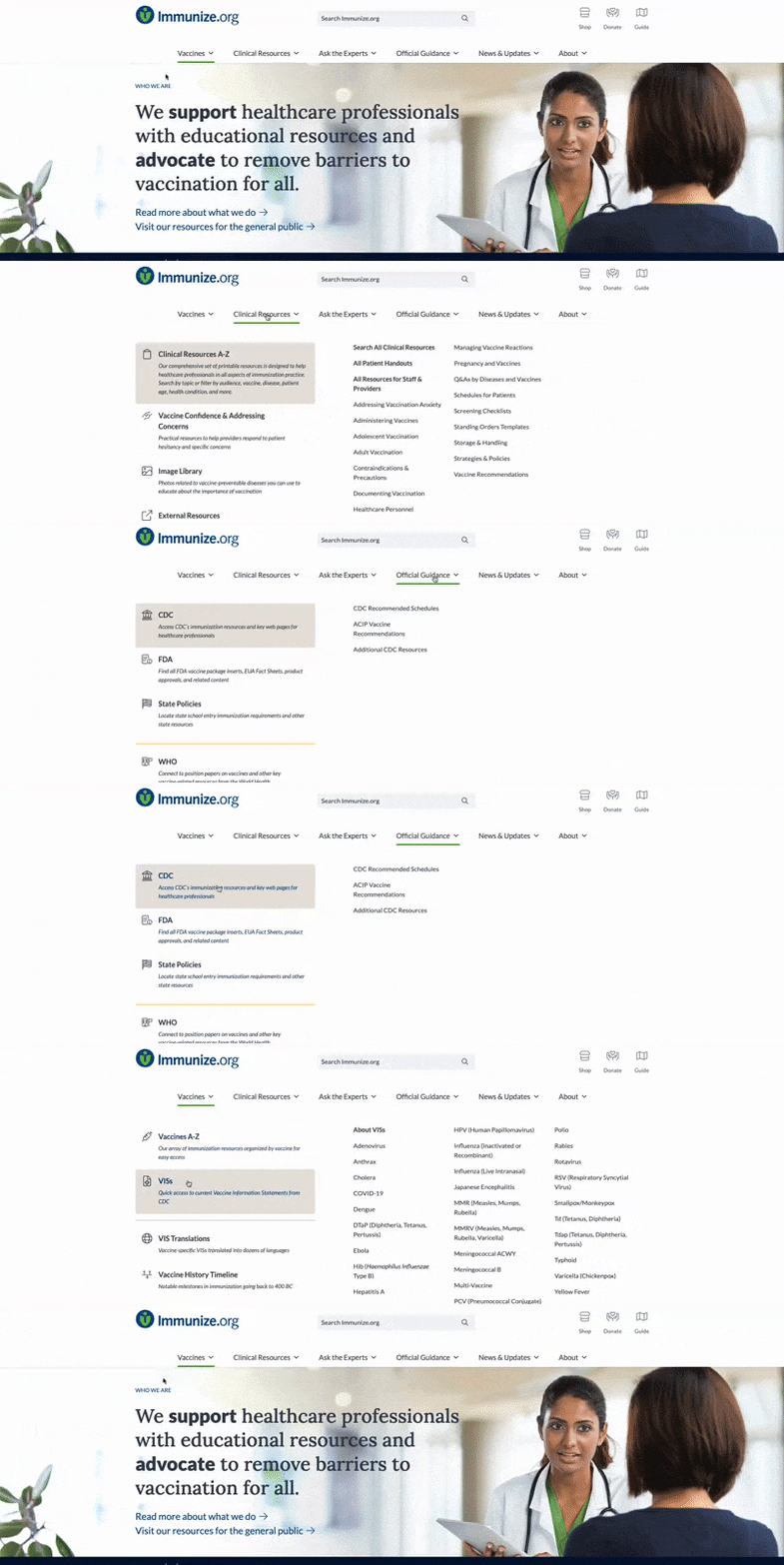
Access Immunize.org’s clinical resources for seasonal respiratory virus vaccination with just one click. Launched in September, this topic page appears under the Clinical Resources A–Z menu as Clinical Resources: Seasonal Vaccines (Influenza, RSV, COVID).

The seasonal vaccines page features more than 20 resources, including provider and patient education materials and other Immunize.org tools to support immunization against these diseases. By default, results are sorted by revision date; you can also sort by title. Use additional filters to narrow your results. Links to high-quality seasonal vaccination resources from partners appear toward the bottom of the page.

Visit Clinical Resources: Seasonal Vaccines (Influenza, RSV, COVID) for quick access to the seasonal resources you need and encourage your colleagues to do the same. For a more detailed tour, watch the archived webinar, Website Office Hours: Resources for Seasonal Respiratory Virus Vaccines.
Recap: Immunize.org updates Ask the Experts web section on RSV to incorporate 2026 guidance from medical societies and CDC
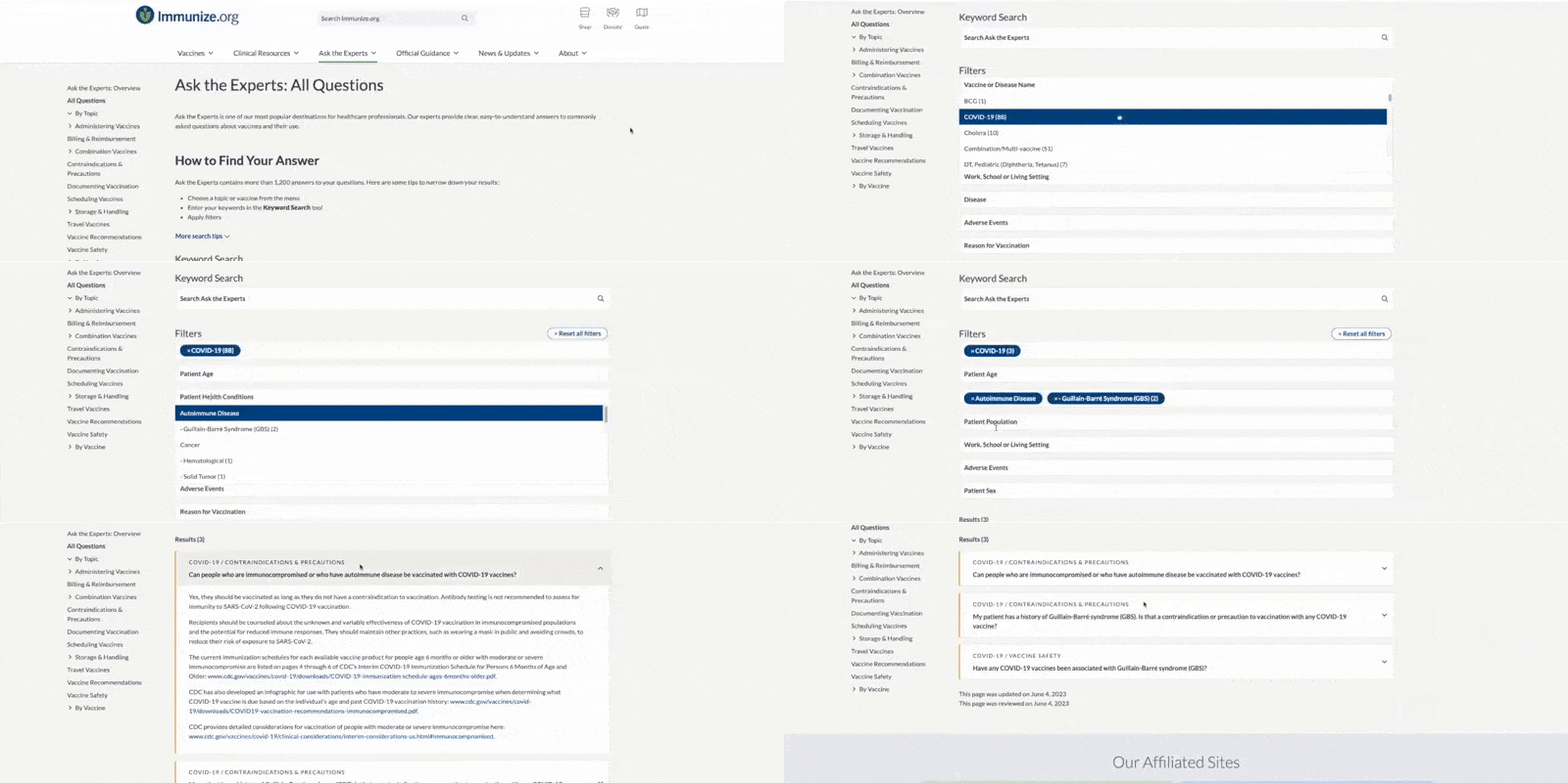
In its final set of updates to the seasonal respiratory virus web sections of Ask the Experts, Immunize.org updated its Ask the Experts web section for Ask the Experts: RSV (Respiratory Syncytial Virus). Updated answers incorporate current recommendations for the 2026–27 season from the American Academy of Pediatrics (AAP), American Academy of Family Physicians (AAFP), American College of Obstetricians and Gynecologists (ACOG), and Infectious Diseases Society of America (IDSA), as well as the current clinical considerations and recommendations from CDC. Sources of guidance cited in answers are clearly indicated. Where CDC guidance remains scientifically sound, it continues to be used. Among the new and updated questions and answers are:
- How do AAP’s September 2026 recommendations for the use of RSV preventive antibodies differ from CDC’s current clinical considerations?
- How do AAFP’s RSV recommendations for the 2026–27 season differ from CDC’s current clinical considerations?
- How do ACOG’s RSV recommendations for the 2026–27 season differ from CDC’s current clinical considerations?
- How do IDSA’s September 2026 RSV recommendations differ from CDC’s current clinical considerations?
Immunize.org's Ask the Experts main page leads you to 30 distinct web sections on dozens of topics with more than 1,400 common or challenging questions and answers about vaccines and their administration. Immunize.org's team of experts includes Kelly L. Moore, MD, MPH (team lead); Carolyn B. Bridges, MD, FACP; Iyabode Beysolow, MD, MPH; and Jane R. Zucker, MD, MSc.
Immunize Kansas Coalition (IKC) invites you to explore new and featured resources:
Vaccine Fears Overturned by Facts, 2nd Edition: This booklet, developed in collaboration with Back to the Vax, combines factual responses and personal stories to address common vaccine concerns and misinformation. The new edition features eight new topics and refreshed content. IKC also released supporting resources and educational modules for providers and parents. The booklet is also available in Spanish, along with a Key Facts handout and single-topic handouts.
Provider Education and Communications Hub: This includes communications resources, nine provider-focused education modules for no-cost continuing medical education, and more. These educational modules were created in collaboration with Immunize.org’s Sharon Humiston, MD, MPH.
- Featured education modules for providers:
- New modules for parents and caregivers:
Kansas Fights Flu: Explore flu resources and campaigns, a provider-focused education module, social media toolkits, and printable activity sheets for kids. Many resources are also available in Spanish.

On November 12, the Association of Health Care Journalists and the Expert Vaccine Analysis Team hosted a webinar titled How Losing Measles Elimination Status Could Affect Public Health and Families. The webinar took place during the Pan American Health Organization’s November 10–13 meeting and was updated after the announcement that the United States lost its measles elimination status. Panelists discussed what losing elimination status means, how rebuilding community immunity could help the United States regain it, and what eliminating measles again would require. The panel also previewed an excerpt from the Vaccine Makers Project’s upcoming documentary, Community Immunity: Caring About Our Neighbors.
The archived webinar page includes the recording and a list of resources.

Watch the recording.
National Influenza Vaccination Week (NIVW) runs November 30–December 12. The observance reminds everyone that it’s not too late for everyone 6 months and older to get a flu shot this season. Now is a good time to schedule social media posts and gather materials to share with patients and your community.
For campaign ideas and resources, see last week’s IZ Express story.
Needle anxiety is common at any age. Use Immunize.org’s clinical resources to offer a positive vaccination experience.
In Clinical Resources: Improving the Vaccination Experience, Immunize.org provides print and video tools to create a positive vaccination experience and ease injection anxiety in children and adults. Links to additional resources from trusted partner organizations are also provided.
The web page links to eight printable resources on addressing vaccination anxiety (four for providers, four for recipients; each available in English and Spanish), two in-depth webinars, and six brief videos (listed below). As with all Immunize.org resources, these are free to download, link, copy, and share.

The video topics include:
- How to Administer Multiple Intramuscular Vaccines to Adults During One Visit (3:47)
- Using Enhanced Screening Checklists for Contraindications to Vaccination (3:10)
- Addressing Vaccination Anxiety for Infants: Strategies for Vaccine Recipients and Caregivers (3:24)
- Addressing Vaccination Anxiety: Strategies for Healthcare Professionals (4:07)
- Fainting Related to Vaccination: What You Need to Know (3:29)
- Addressing Vaccination Anxiety for Children: Strategies for Vaccine Recipients and Caregivers (3:26)
Related Links
- Immunize.org: Clinical Resources: Addressing Vaccination Anxiety main page
- Immunize.org: Clinical Resources: Vaccine Confidence main page
Our Vaccination Saves Lives pins are meaningful gifts for people who understand that lives are not saved by vaccines on a shelf, but by the act of vaccination. The pin makes a refined statement in rich blue enamel with gold lettering and edges, measuring 1.65" x 0.75".


Select the design that best suits how you plan to use your pin:
- Double stick-through posts: Two posts slide through fabric and are held securely by either rubber or locking-metal backings. Both types of backing are provided in the package.
- New! Magnetic clasp: Hold the pin firmly in place without piercing clothing.


Be first in your office to wear these elegant new pins on clothing, white coats, backpacks, or tote bags to remind everyone you meet of the value of vaccination.
Click here for Vaccination Saves Lives pin pricing and ordering information.
In its November 4 issue, JAMA Internal Medicine published Risk of Shoulder Injury Related to Vaccine Administration for COVID-19 and Influenza Vaccinations. In this study of 1.8 million vaccinations, shoulder injury related to vaccine administration (SIRVA) appeared rare but may occur more frequently after COVID-19 vaccination than influenza vaccination. Among adults 65 years or older, SIRVA risk did not differ significantly between COVID-19 and high-dose influenza vaccination. The conclusions section appears below.
Results of this population-based cohort study suggest that SIRVA was rare after both COVID-19 and influenza vaccination. COVID-19 vaccination was associated with approximately 7 additional cases per 100 000 vaccinations compared with influenza vaccination. Among adults 65 years or older, COVID-19 vaccination was not associated with a significantly different SIRVA risk compared with high-dose influenza vaccination, a recommended formulation. SIRVA incidence was associated with an increase across standard-dose influenza, high-dose influenza, and COVID-19 vaccines; however, estimates for standard-dose influenza in older adults may be imprecise because of few cases. This pattern may suggest that immune-mediated inflammatory responses contribute to SIRVA pathophysiology in addition to injection technique, although this interpretation is hypothesis-generating. The benefits of COVID-19 and influenza vaccination in preventing severe disease and hospitalization may outweigh the small absolute risk of SIRVA.
- CIDRAP: Shoulder Injuries Rare but Slightly More Common After COVID Vaccines than Flu Shots, Study Finds (11/16/26)
In its January 15, 2027, issue (ahead of print), Vaccine published Effectiveness of the 2025–2026 COVID-19 Vaccine Against COVID-19–Associated Emergency Department Visits and Hospitalizations Among U.S. Veterans: An Observational Study. This study compared 114,911 veterans who got a COVID-19 vaccine and an influenza vaccine on the same day to 817,032 who received only influenza vaccine. Over 180 days, COVID-19 vaccination was associated with a 31.7% lower risk of emergency department visits and a 43.6% lower risk of hospitalization. A portion of the abstract appears below.
In this national cohort of US veterans presenting for seasonal influenza vaccination, receipt of the 2025–2026 Covid-19 vaccine was associated with lower risks of Covid-19-associated emergency department visits and hospitalizations. Absolute risk reductions were modest, but they quantify the benefit of vaccination in a lower-incidence season and can inform shared clinical decision making and seasonal vaccine policy.

On November 16, the Vaccine Integrity Project at the University of Minnesota’s Center for Infectious Disease Research and Policy (CIDRAP) published a special report titled Protecting Infants from Measles: Understanding the Zero Dose. The report explains the risks of measles for infants. It also reviews the value of giving an early (zero dose) of MMR for infants age 6 to 11 months who are at risk of exposure or already exposed.
Infants face higher risk of severe measles and complications such as encephalitis and subacute sclerosing panencephalitis (SSPE), but they do not routinely receive their first dose until 12 months, to avoid interference from maternal antibodies and to ensure a strong immune response. The report finds that measles vaccine effectiveness is 58% before age 9 months and 83% at age 9 to 11 months, versus 93% for a single dose at age 12 months.
Studies show an early dose may lower long-term antibody levels with an unclear effect on future vaccine effectiveness. Safety data show no clear age-related difference in adverse events. In a randomized trial of 6,540 Danish infants vaccinated at age 5 to 7 months, adverse reactions were no more common than with placebo.
The report concludes that the available evidence demonstrates that, when there is a risk of early exposure to measles, early (zero dose) measles vaccination is safe and can be an effective tool to protect at-risk infants age 6 to 11 months old. CDC and AAP recommend an early MMR dose for healthy infants age 6 through 11 months who are at risk of exposure due to international travel or residence in or travel to an outbreak area. Infants who receive a zero dose still need the routine first dose at least 28 days later, at age 12 months or older. The routine second dose, typically given at age 4 through 6 years, may be given as soon as 28 days after the first, if desired.

The North Dakota State University Center for Immunization Research and Education will host a webinar titled Is Dementia a Vaccine-Preventable Illness? at 1:00 p.m. (ET) on December 8. In this webinar, Dawn Bowdish, PhD, executive director of the Firestone Institute for Respiratory Health at McMaster University, will review emerging evidence that vaccines against shingles, influenza, and other infections may reduce dementia risk, and discuss what this could mean for future vaccine recommendations.
This activity is approved for free CME and CPE credit.

Register for the webinar.
Virtual: Four national organizations host webinar titled “United States Measles Elimination Status: The Current Landscape and Path Toward Prevention” on December 9 at 1:00 p.m. (ET)
The Association of Immunization Managers (AIM), Infectious Diseases Society of America (IDSA), Trust for America’s Health (TFAH), and Vaccinate Your Family (VYF) will host a webinar titled United States Measles Elimination Status: The Current Landscape and Path Toward Prevention on December 9 at 1:00 p.m. (ET). Speakers include Robin LaCroix, MD, pediatric infectious diseases specialist, University of South Carolina School of Medicine–Greenville; Tom McCleaf, director, Bureau of Immunizations, Pennsylvania Department of Health; and J. Nadine Gracia, MD, MSCE, president and CEO, Trust for America’s Health.
During the webinar, presenters will explain how measles elimination status was reviewed, discuss the challenges of falling vaccination rates, show what measles costs people and health systems, and discuss how community-level engagement can help the United States regain elimination status.

Register for Immunize.org Website Office Hours. Join a 30-minute discussion about the Clinical Resources web section on December 16 at 4:00 p.m. (ET) or December 17 at 12:00 p.m. (ET). Recorded sessions archived.
To learn simple tips and tricks for using our websites efficiently, please register for our next set of Website Office Hours on Wednesday, December 16, at 4:00 p.m. (ET) or Thursday, December 17, at 12:00 p.m. (ET). The same content will be discussed in both sessions.
We will open each 30-minute session with a short, live demonstration on navigating the popular Clinical Resources website section on Immunize.org. You can submit questions when you register or live on Zoom during the session.

Register today for Immunize.org Website Office Hours (content is the same for both):
The archive of previous Website Office Hours content is posted at Immunize.org’s "Webinars & Videos" page. Shorter, demonstration-only recordings of previous Website Office Hours are also available in our Website Training Videos series.
Mark your calendar for future Immunize.org Website Office Hours.
For more upcoming events, visit our Calendar of Events.
About IZ Express
IZ Express Disclaimer
ISSN 2771-8085
Editorial Information
-
Editor-in-ChiefKelly L. Moore, MD, MPH
-
Managing EditorJohn D. Grabenstein, RPh, PhD
-
Associate EditorSharon G. Humiston, MD, MPH
-
Writer/Publication CoordinatorTaryn Chapman, MS
Courtnay Londo, MA -
Style and Copy EditorMarian Deegan, JD
-
Web Edition ManagersArkady Shakhnovich
Jermaine Royes -
Technical ReviewerKayla Ohlde