


- Four specialty medical societies endorse recent professional recommendations for COVID-19, influenza, and RSV vaccines
- Immunize.org updates “Checklist of Current Versions of U.S. COVID-19 Vaccination Guidance and Clinic Support Tools”
- Measles 2026: Johns Hopkins University reports 5,400 confirmed cases; 3 measles deaths reported, including a pregnancy-related maternal death
- Respiratory diseases: influenza activity climbs nationwide; Louisiana leads nation in influenza activity
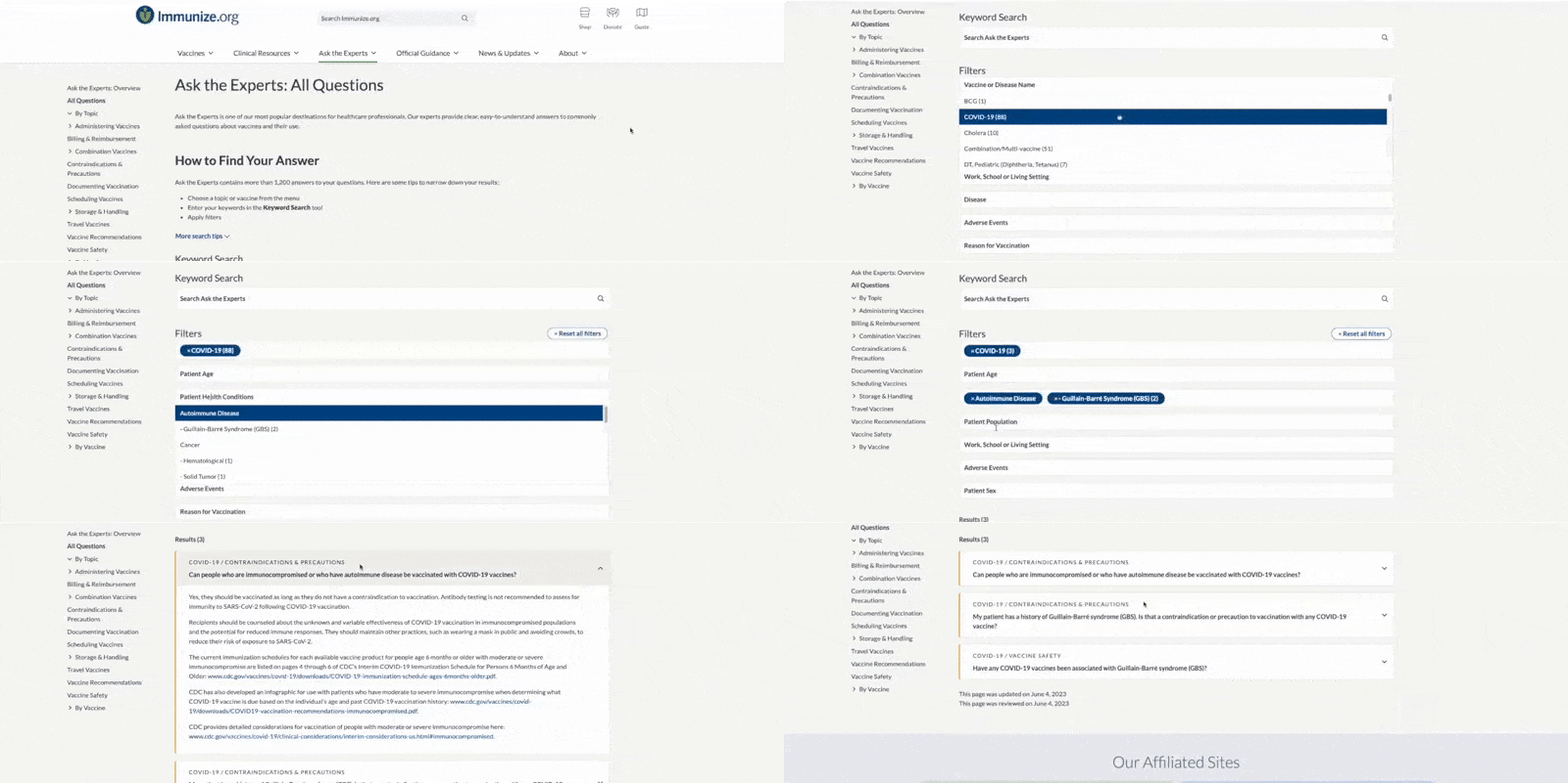
- “If a 50-Year-Old Gets a Dose of Varicella Vaccine, Should We Give Shingles Vaccine as Dose 2?” New in the Ask the Experts Video Series on YouTube.
- Vaccines in the news
- Avalere Health publishes “A Guide to Vaccine Coverage Policies,” explaining gaps in vaccine coverage, timing, and access across insurance programs
- CDC’s county-level transmission model now depicts influenza and RSV, in addition to COVID-19 disease trends
- Needle anxiety is common at any age. Use Immunize.org’s clinical resources to offer a positive vaccination experience.
- Immunize.org lifetime immunization record cards available for patient-held records
- Help Immunize.org reach more vaccinators through your social media networks. Follow us and share our posts on Facebook, Instagram, and LinkedIn!
- “Estimating the Incidence and Duration of Diagnostic Delays for Measles” published in Infection Control & Hospital Epidemiology
- “Shared Clinical Decision-Making for Rotavirus Vaccination and Future Health Care Use in Infants” published in JAMA
- “SARS-CoV-2 mRNA Vaccination in Pregnancy and Child Neurodevelopment at 18 to 30 Months” published in JAMA Pediatrics
- Virtual: Register for Immunize.org Website Office Hours. Join a 30-minute discussion about the VIS web section on November 11 at 4:00 p.m. (ET) or November 12 at 12:00 p.m. (ET). Recorded sessions archived.
- Virtual: NFID hosts webinar titled “Measles 101: Something Old – Infection in Children and Adults, Something New – Congenital Measles” on November 30 at 1:00 p.m. (ET), CME credit offered
On November 4, four medical specialty societies announced their endorsement of the September 2 COVID-19, influenza, and RSV recommendations from key primary-care medical societies. The specialty organizations joined to provide clinicians focused on respiratory health with a single, up-to-date reference for these vaccinations. A portion of the press release appears below.

Experts from the American Thoracic Society; the American Academy of Allergy, Asthma & Immunology (AAAAI); the American College of Chest Physicians (CHEST); and the Society of Critical Care Medicine (SCCM) reviewed and unanimously endorsed the vaccination-development process and resulting guidance from the American Academy of Pediatrics (AAP), American Academy of Family Physicians (AAFP), American College of Obstetricians and Gynecologists (ACOG), and Infectious Diseases Society of America (IDSA), and reached consensus guidance aligned with Advisory Committee on Immunization Practices (ACIP) recommendations issued prior to June 2025.
The changes in CDC and ACIP processes in 2025 resulted in potential harmful updates to the vaccine schedule. Seeing this alarming departure from evidence-based vaccine guidance, the multi-society panel was moved to collaborate to protect respiratory health, as well as ensure, among other measures, that COVID-19 vaccine recommendations aligned with the AAP, ACOG, AAFP and the IDSA.
Access the guidance: Interim Joint Guidance for 2026–27 Respiratory Virus Vaccines: COVID-19, Influenza and RSV.
Related Links
- American Thoracic Society: Press Release: Multi-Society Panel Endorses Vaccine Recommendations to Protect Respiratory Health (11/4/26)
- American Thoracic Society: Interim Joint Guidance for 2026–27 Respiratory Virus Vaccines: COVID-19, Influenza and RSV
- AAP: Respiratory Virus Immunization Guidance for 2026–27
- AAFP: Fall Immunization Recommendations to Protect Patients and Communities
- ACOG: 2026–27 Respiratory Virus Season Immunization Recommendations for Pregnant and Postpartum Individuals
- IDSA: IDSA Recommends Respiratory Vaccines for People with Weakened Immune Systems
- Immunize.org: Healthcare Professional Organization Vaccine Recommendations main page
On November 4, Immunize.org updated its Checklist of Current Versions of U.S. COVID-19 Vaccination Guidance and Clinic Support Tools to include its newest resource, 2026–2027 COVID-19 Vaccination of People with Moderate or Severe Immunocompromise. (See related story below.)
Review this checklist to ensure you are using the latest resources for the 2026–27 season. The checklist includes revision dates and links to new standing orders templates, current American Academy of Pediatrics (AAP), American Academy of Family Physicians (AAFP), American College of Obstetricians and Gynecologists (ACOG), and Infectious Diseases Society of America (IDSA) recommendations, and other essential 2026–27 resources.

Immunize.org's standing orders templates for administering 2026–27 COVID-19 vaccine are available here:
- Standing Orders for Administering 2026–2027 COVID-19 Vaccine to Children 6 Months Through 18 Years
- Standing Orders for Administering 2026–2027 COVID-19 Vaccine to Adults 19 Years and Older
This season, Immunize.org’s two COVID-19 standing orders templates are organized by age. Each template incorporates all available products. The templates are based on the recommendations of AAP, AAFP, and ACOG. Supplemental information from CDC’s updated interim clinical considerations is also included as needed.
Related Link
- Immunize.org: Vaccines A–Z: COVID-19 main page
As of November 6, 2026, the U.S. Measles Tracker, compiled by Johns Hopkins University, reported 5,400 measles cases for 2026. Through November 5, 2026, CDC reported 5,182 confirmed cases. Three additional deaths in three states were reported. Media outlets report one as a 21-year-old woman with measles who had just given birth. For important clinical guidance on prevention and management of measles during pregnancy and congenital measles, see the Pennsylvania Department of Health’s Health Alert Network (PAHAN) Advisory, entitled Guidance for Measles in Pregnancy and Congenital Measles. Because MMR is contraindicated during pregnancy, susceptible people exposed to measles during pregnancy are recommended to receive intravenous immunoglobulin (IVIG) within 6 days of exposure to prevent or reduce the severity of measles illness.

Measles deaths in New York, Pennsylvania, and Wisconsin
Three measles deaths were recently reported in New York, Pennsylvania, and Wisconsin.
On November 2, the New York State Department of Health and Lewis County Public Health issued a joint statement on the first known measles-associated death in New York State in more than 30 years. As of October 24, 178 confirmed cases were reported in New York state this year: 170 outside of New York City and eight in New York City.
On November 4, the Pennsylvania Department of Health confirmed its sixth measles death in 2026, this one in an unvaccinated resident of Jefferson County later identified by media outlets as a 21-year-old woman who had recently given birth at home. As of November 4, the 2026 measles case count includes 1,467 total cases across 45 of its 67 counties.
On November 5, the Wisconsin Department of Health Services reported the death of an infant associated with the ongoing measles outbreak in southwestern Wisconsin. This is the first measles death reported in Wisconsin since 1990. As of November 3, the 2026 count includes 431 confirmed cases in 13 of its 72 counties, the highest number of cases in Wisconsin in more than 35 years.
Canadian measles outbreak controlled
On October 19, the Public Health Agency of Canada (PHAC) announced that Canada's multi-jurisdictional measles outbreak is over, based on time elapsed since the last case linked to the outbreak was reported. A portion of the press release from PHAC appears below.
Responding to the outbreak required close cooperation across federal, provincial, territorial, and local public health systems. Preventing and controlling vaccine-preventable diseases is a shared responsibility, and all levels of government responsible for public health worked together to manage the outbreak.
Throughout the outbreak, provinces and territories led public health measures to limit the spread of measles, with support from PHAC. These measures included identifying cases and contacts, improving disease monitoring and reporting, conducting laboratory testing, working with communities, and increasing access to vaccination.
Related Links
- CDC: Measles Cases and Outbreaks main page
- Immunize.org: Vaccines A–Z: Measles main page
- LetsGetRealAboutVaccines.org: Measles web page
- CDC: Be Ready for Measles Toolkit
- Pennsylvania Department of Health: Guidance for Measles in Pregnancy and Congenital Measles
- AAP: Congenital Measles: Frequently Asked Questions
- AAP: Immunization Facts for Families (MMR) (PDF)
Respiratory diseases: influenza activity climbs nationwide; Louisiana leads nation in influenza activity
For the week ending October 31, influenza activity continues to increase in many parts of the country and is greater than typically observed at this time of year. CDC’s website reports two additional childhood influenza-associated deaths during the 2026–27 season.
Vaccination takes 2 weeks to induce immunity, so vaccinate now, before families gather for the holidays. Influenza vaccination offers an opportunity to receive or schedule other vaccinations that may be needed, such as COVID-19, pneumococcal, and RSV vaccines.
The map below shows the levels of influenza-like illness (ILI) activity by state as of October 31. For the week ending October 31, overall, 2.8% of patient visits reported through ILINet were due to ILI. Compared to the previous week, this represents a small increase but remains below the national baseline of 2.9%.

COVID-19 vaccination is recommended annually for all adults, children age 6 months through 23 months, and older children who are immunocompromised, have other high-risk conditions, live with people with high-risk conditions, or who just want protection.
RSV vaccination is recommended for all adults age 75 years and older, as well as adults age 50 through 74 years at high risk of severe RSV disease. RSV vaccination between 32 and 36 6/7 weeks’ gestation is an option for RSV protection of newborns. If RSV vaccine is not administered during pregnancy, infants through age 8 months, 0 days, should receive RSV preventive antibodies (nirsevimab or clesrovimab). Remember that adults, including pregnant patients, who previously received RSV vaccine should not receive another dose.
Related Links
- CDC: Weekly National Flu Vaccination Dashboard main page
- CDC: FluView main page
- CDC: RESP-NET main page
- Immunize.org: Clinical Resources: Seasonal Vaccines (Influenza, RSV, COVID-19) main page
- VaccineInformation.org: Where to Get Vaccinated web page
“If a 50-Year-Old Gets a Dose of Varicella Vaccine, Should We Give Shingles Vaccine as Dose 2?” New in the Ask the Experts Video Series on YouTube.
This week, our featured episode from the Ask the Experts Video Series is titled If a 50-Year-Old Gets a Dose of Varicella Vaccine, Should We Give Shingles Vaccine as Dose 2? The answer depends on why a dose of varicella vaccine was given in the first place. The video explains when to administer Varivax or Shingrix to adults age 50 years and older based on their varicella immunity and vaccination history.
The 1-minute video is available on our YouTube channel, along with our full collection of quick video answers to popular Ask the Experts questions.

Like, follow, and share Immunize.org’s social media accounts and encourage colleagues and others interested in vaccination to do likewise.
- Facebook at ImmunizeOrg
- Instagram at ImmunizeOrg
- LinkedIn at ImmunizeOrg
- YouTube at ImmunizeOrg
These recent articles convey the potential risks of vaccine-preventable diseases and the importance of vaccination.
- CIDRAP: Canada’s 2025 Measles Outbreak Offers a Cautionary Tale for the US (11/5/26)
- Our World in Data: Which Vaccines Do Children Around the World Receive? (11/4/2026)
- The Washington Post: Pennsylvania Reports 6th Measles-Associated Death (11/4/2026)
- The Atlantic: Doctors Say a Rare Kind of Measles Is on the Rise (10/30/2026)
- Associated Press: As a Historic Measles Outbreak Hits Pennsylvania Amish Country, More Show Openness to Vaccines (10/30/26)
- National Conference of State Legislatures: A Focus on School Immunization Policy as Vaccine Exemptions Rise (10/27/26)
- Lancaster Online: People Who Are Part of Plain Communities Do Not Have One Shared Opinion on Vaccination (9/15/26)

This week’s spotlight completes the review of our newest website, LetsGetRealAboutVaccines.org. This parent-friendly resource offers factual guidance about childhood vaccines and tools to help families and healthcare providers confidently discuss immunization.
This week’s focus is Help Patients, available at the fourth main menu tab. This section shares practical strategies for healthcare providers to communicate effectively with parents about vaccination.

The ARM approach, Act, Recommend, Motivate, is an evidence-based, provider-reviewed framework for effective vaccine conversations. It explains what makes a strong recommendation, why it matters, and how to deliver it, along with ways to address concerns and help parents make informed decisions.
Resources to use and share in this section:
- Making Effective Recommendations (PDF)
- Sample Outreach Scripts and Best Practices (PDF)
- Dr. Marcy Solomon Baker's Vaccine Story (video): shares that most parents get their kids vaccinated
- Dr. Todd Wolynn's Vaccine Story (video): explains that misinformation does not change the facts about vaccine safety and effectiveness
- Tips and Timesavers (PDF)
Share these links with colleagues. Invite families to explore LetsGetRealAboutVaccines.org for credible information about childhood vaccines.
For a closer look at the website, watch our archived webinar Website Office Hours: Websites for the Public: Vaccineinformation.org and Let'sGetRealAboutVaccines.org.
Recap: Immunize.org releases new resource summarizing COVID-19 vaccine dosing schedules for immunocompromised people
Immunize.org released a new resource titled 2026–2027 COVID-19 Vaccination of People with Moderate or Severe Immunocompromise. People of all ages who meet the conditions for moderate or severe immunocompromise require an initial COVID-19 vaccination series, followed by one or more doses each season thereafter. CDC routinely recommends all those who completed the initial series receive two current season doses 6 months apart. Infectious Diseases Society of America (IDSA) recommends a single dose, and notes that an additional dose likely extends protection. Case-by-case clinical judgment is necessary when considering timing and additional doses beyond those on the schedule. Both CDC and IDSA provide vaccination timing considerations focused on balancing the environmental risk of exposure to SARS-CoV-2 virus and the timing of immunocompromising treatments.
This resource is intended as a reference for those who vaccinate people who are moderately or severely immunocompromised. These dosing schedules are not included in the Immunize.org standing orders templates for COVID-19 vaccination. IDSA guidance refers to, but does not reproduce, the dosing tables. This downloadable 7-page resource provides the CDC dosing schedules by age and prior vaccination status for each COVID-19 vaccine.
This resource was adapted from CDC's COVID-19 Vaccination Guidance for People Who Are Immunocompromised web page (dated 9/23/26). Additional clinical considerations are also included from the IDSA 2026 Guidelines on the Use of Vaccines for the Prevention of Seasonal COVID-19, Influenza, and RSV Infections in Immunocompromised Patients (dated 9/2/26).
Immunize.org recently updated Vaccine Storage Quick Reference to include updated storage information for mpox vaccine, RSV, and 2026–27 COVID-19 vaccine formulations.
Significant edits include:
- COVID-19 vaccine storage: Incorporates 2026–27 products and updates the relevant age ranges and refrigeration instructions.
- Mpox vaccine storage: Both Jynneos (Bavarian Nordic) 1-vial and 2-vial presentations are listed with their separate storage requirements. The 1-vial presentation has an allowable-refrigeration period of 4 weeks (some now-expired lots had FDA authorization for a longer refrigeration period).
- RSV vaccine storage: mResvia (Moderna) is listed under its label-indicated freezer temperature range (−40°C to −15°C), along with specific guidance allowing refrigeration for up to 90 days.
- RSV preventive antibody products: Both Beyfortus (nirsevimab, Sanofi) and Enflonsia (clesrovimab, Merck), are listed.
- Dengue vaccine: Dengvaxia (Sanofi) was removed because it is no longer manufactured and all U.S. doses expired.
On October 2, Avalere Health published A Guide to Vaccine Coverage Policies, highlighting gaps in vaccine coverage, timing, and access across insurance programs. For each insurance type (e.g., commercial, Medicare, Medicaid, military and veterans), a table lists market and enrollment (in millions), coverage by vaccine, timing for new vaccines, and other access considerations. The conclusion section appears below.
Federal policy changes have generally expanded vaccine coverage to nearly all populations in the United States; however, an examination of the specific laws, regulations, and guidance governing vaccine coverage highlights several areas where variation exists across markets. In some cases, this variation may limit the types of products individuals can access (e.g., travel vaccines) or when and where individuals can access new products.

Download the report: A Guide to Vaccine Coverage Policies.
CDC’s county-level transmission model now depicts influenza and RSV, in addition to COVID-19 disease trends
CDC provides a tool for visualizing epidemic trends in COVID-19, influenza, and RSV. CDC expanded its epidemic trend (Rt) estimates to provide more localized insights into how these viruses are spreading.
The tool may help interpret the recent increases in influenza and RSV activity.
The interactive visualizations provide estimates at the Health Service Area (HSA) level in many communities. These local trend estimates may be helpful to public health practitioners, healthcare systems, and frontline responders. The tool uses data shared by state and local partners and CDC analytics and Rt estimates may identify outbreak peaks 2–3 weeks faster at the state-level and up to 1.5 weeks faster at the HSA-level.

Related Link
- CDC: Current Epidemic Trends (Based on Rt) web page
Needle anxiety is common at any age. Use Immunize.org’s clinical resources to offer a positive vaccination experience.
In Clinical Resources: Improving the Vaccination Experience, Immunize.org provides print and video tools to create a positive vaccination experience and ease injection anxiety in children and adults. Links to additional resources from trusted partner organizations are also provided.
The web page links to eight printable resources on addressing vaccination anxiety (four for providers, four for recipients; each available in English and Spanish), two in-depth webinars, and six brief videos (listed below). As with all Immunize.org resources, these are free to download, link, copy, and share.

The video topics include:
- How to Administer Multiple Intramuscular Vaccines to Adults During One Visit (3:47)
- Using Enhanced Screening Checklists for Contraindications to Vaccination (3:10)
- Addressing Vaccination Anxiety for Infants: Strategies for Vaccine Recipients and Caregivers (4:07)
- Addressing Vaccination Anxiety: Strategies for Healthcare Professionals (3:29)
- Fainting Related to Vaccination: What You Need to Know (3:24)
- Addressing Vaccination Anxiety for Children: Strategies for Vaccine Recipients and Caregivers (3:26)
Related Links
- Immunize.org: Clinical Resources: Addressing Vaccination Anxiety main page
- Immunize.org: Clinical Resources: Vaccine Confidence main page
Immunize.org offers wallet-sized Lifetime Immunization Record Cards, printed on rip-proof, smudge-proof, waterproof paper designed to last a lifetime. Sold in boxes of 250.

To purchase record cards, please visit the Immunize.org Shop.
Related Link
- Immunize.org: Shop Immunize.org main page
Immunize.org offers a social media program to highlight our educational resources for a broad audience of vaccinators. Our social media channels now feature our most popular printable resources and Ask the Experts questions, as well as announcements important to frontline vaccinators. Please view and share our newest feature, the Ask the Experts Video Series.


Like, follow, and share Immunize.org’s social media accounts and encourage colleagues and others interested in vaccination to do likewise:
- Facebook at ImmunizeOrg
- Instagram at ImmunizeOrg
- LinkedIn at Immunize.org
- YouTube at ImmunizeOrg
In its October 26 issue, Infection Control & Hospital Epidemiology published Estimating the Incidence and Duration of Diagnostic Delays for Measles. Understanding and preventing diagnostic delays for measles cases is critical to controlling the spread of this highly contagious virus in healthcare settings and elsewhere. Portions of the abstract appear below.
Our goal was to estimate the incidence and duration of diagnostic delays for measles and identify factors associated with delays. . . .
We used the Merative MarketScan Research Databases (2001–2023). . . .
. . . we estimated the number of healthcare visits representing possible missed opportunities to diagnose measles during a two-week period preceding the index diagnosis. . . .
We identified 4,651 measles cases. During the two-week period prior to diagnosis, 426 (9.2%) patients had healthcare visits with signs or symptoms commonly associated with measles. We estimated 381 . . . missed opportunities to diagnose measles. Delays occurred most frequently in outpatient settings (81.0%). Approximately 6.9% . . . of patients experienced at least one missed opportunity, with a mean delay of 4.05 days . . . An estimated 1.7% . . . of patients experienced a diagnostic delay lasting a week or longer. Factors associated with an increased likelihood of delays included age <2 years and receiving antibiotic prescriptions.
Related Links
- Children’s Hospital of Philadelphia (CHOP): Rash Information
- CHOP Vaccine Education Center: Rashes: What You Should Know booklet: English | Spanish
- CHOP Vaccine Education Center: “Name That Rash” poster: English | Spanish
In its October 26 issue, Pediatrics published Shared Clinical Decision-Making for Rotavirus Vaccination and Future Health Care Use in Infants. In this study, the researchers found that the number of preventable healthcare encounters and expenditures for acute gastroenteritis (AGE) among children younger than age 2 years would increase if more practices shifted from routine rotavirus vaccination to shared clinical decision making (SCDM). SCDM recommendations are generally reserved for situations in which the benefit of vaccination is not clear without a discussion; rotavirus vaccine has been routinely recommended since it was introduced. An SCDM recommendation is presumed to result in lower vaccination coverage. Portions of the research letter appear below.
In the prevaccine era, approximately 80% of children were infected by age 5 years, resulting in an estimated $1 billion annually in hospitalizations and emergency department (ED) visits . . . Routine vaccination of infants . . . led to dramatic declines in health care encounters, and reduced community transmission among unvaccinated individuals. . . .
Under current uptake of rotavirus vaccination, we projected that an annual birth cohort of infants in the US would experience more than 20 200 AGE-related hospitalizations and 126 800 AGE-related ED visits by age 2 years. If 10% to 30% of the infant population shifts from fully vaccinated to unvaccinated per the SCDM recommendation, these children would experience an additional 1500 to 4500 hospitalizations and 4400 to 13 200 ED visits for AGE by age 2 years . . . Results represent the excess burden and costs for a single annual birth cohort; thus, estimates are additive with subsequent birth cohorts. . . .
Even modest reductions in vaccination uptake may result in increased morbidity and increased clinical and economic burdens on the health care system and society.

In its November 2 issue, JAMA Pediatrics published SARS-CoV-2 mRNA Vaccination in Pregnancy and Child Neurodevelopment at 18 to 30 Months. The study found that maternal mRNA COVID-19 vaccination during pregnancy had no effect on neurodevelopmental outcomes at 18 to 30 months of age based on results of the Ages and Stages Questionnaire (ASQ-3). The results and conclusions and relevance sections appear below.
Results
Of 3956 screened, 271 exposed and 240 unexposed children were enrolled. . . . The primary outcome of ASQ-3 score was equivalent between the exposed and unexposed groups (255 vs 260, adjusted median difference, −3.4; 90% CI, −9.8 to 3.0). There were no significant differences in secondary outcomes.
Conclusions and Relevance
In this multicenter cohort study, ASQ-3 scores were equivalent between 18- to 30-month-old children whose mothers did or did not receive mRNA SARS-CoV-2 vaccination during or immediately prior to pregnancy. These findings support continued recommendations for SARS-CoV-2 mRNA vaccination during pregnancy.
To learn simple tips and tricks for using our websites efficiently, please register for our next set of Website Office Hours on Wednesday, November 11, at 4:00 p.m. (ET) or Thursday, November 12, at 12:00 p.m. (ET). The same content will be discussed in both sessions.
We will open each 30-minute session with a short, live demonstration on navigating the popular VIS website section on Immunize.org. You can submit questions when you register or live on Zoom during the session.

Register today for Immunize.org Website Office Hours (content is the same for both):
The archive of previous Website Office Hours content is posted at Immunize.org’s "Webinars & Videos" page. Shorter, demonstration-only recordings of previous Website Office Hours are also available in our Website Training Videos series.
Mark your calendar for future Immunize.org Website Office Hours.
NFID will host a webinar titled Measles 101: Something Old – Infection in Children and Adults, Something New – Congenital Measles at 1:00 p.m. (ET) on November 30. The panel includes Robert (Bob) Hopkins, Jr., MD, NFID medical director; Patsy Stinchfield, MS, PNP, executive director of NFID’s Measles Collaborative; Adam Ratner, MD, MPH, director, Division of Pediatric Infectious Diseases, Hassenfeld Children’s Hospital; and Michelle Barton, MBBS, MSc, division chief, Infectious Diseases, Children’s Hospital London Health Sciences Centre. The speakers will review measles diagnosis, treatment, complications, vaccination recommendations, and prevention strategies to increase vaccination rates.

CME credit is available. There is no fee, but preregistration is required. Register for the webinar.
NFID hosts monthly webinars to increase awareness of the importance of infectious disease prevention and treatment. CME, CNE, and CPE credits are available for select recordings. View archived NFID webinars.
For more upcoming events, visit our Calendar of Events.
About IZ Express
IZ Express Disclaimer
ISSN 2771-8085
Editorial Information
-
Editor-in-ChiefKelly L. Moore, MD, MPH
-
Managing EditorJohn D. Grabenstein, RPh, PhD
-
Associate EditorSharon G. Humiston, MD, MPH
-
Writer/Publication CoordinatorTaryn Chapman, MS
Courtnay Londo, MA -
Style and Copy EditorMarian Deegan, JD
-
Web Edition ManagersArkady Shakhnovich
Jermaine Royes -
Technical ReviewerKayla Ohlde