


- ACOG releases 2026 Maternal Immunization Schedule, endorsed by 13 medical, nursing, and pharmacy organizations
- Summit Adult Vaccine Recommendations Review (SAVRR) Council advises continuing to follow current seasonal respiratory virus vaccine recommendations until 2026–27 recommendations are published by medical societies
- Immunize.org updates “Questions and Answers” resource on zoster
- Immunize.org updates "Protect Yourself from Hepatitis A and Hepatitis B . . . A Guide for Gay and Bisexual Men"
- Measles 2026: 2,073 confirmed measles cases in 39 states, with new hot spot in Virginia; World Cup poses opportunity for measles spread
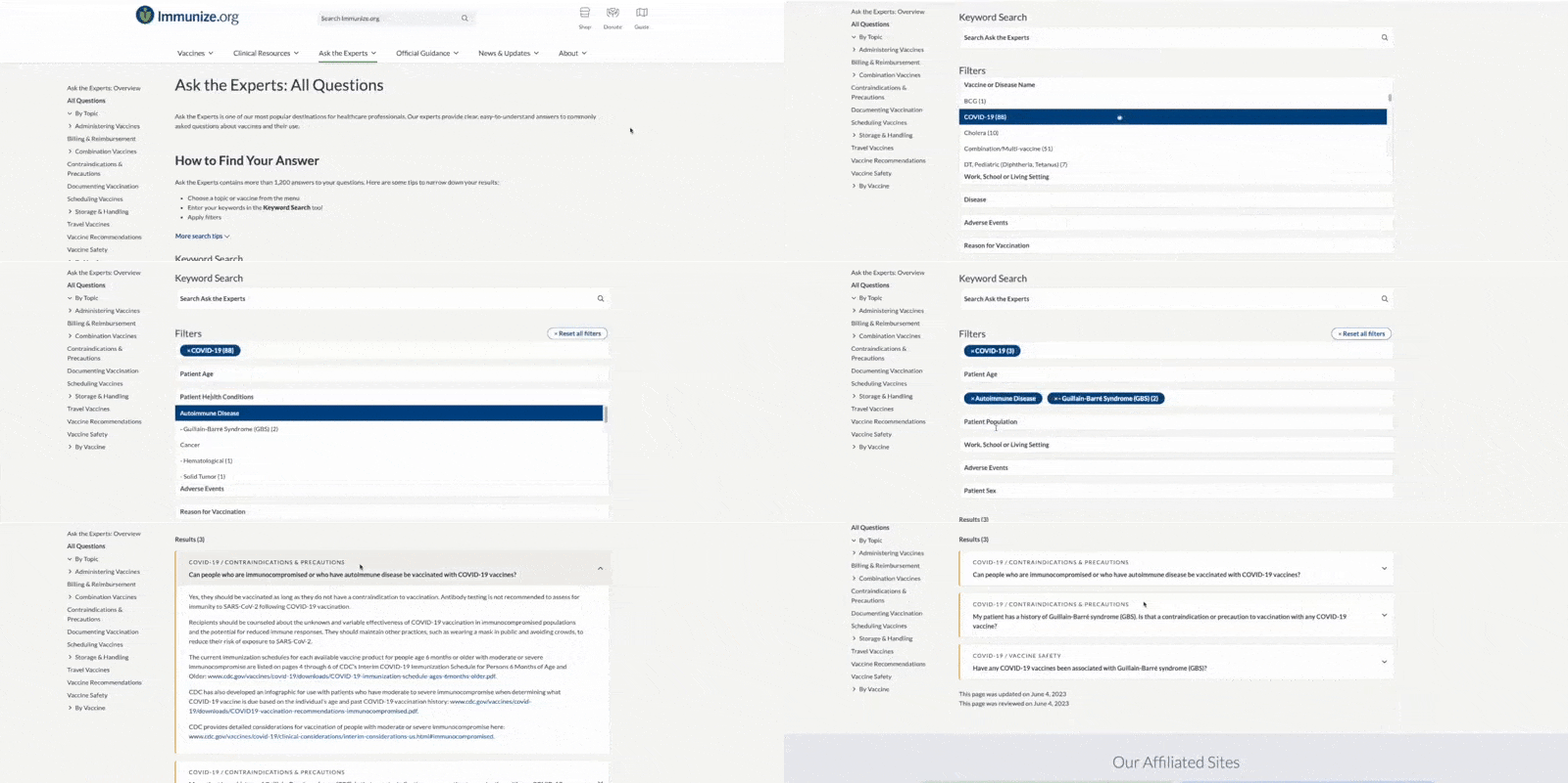
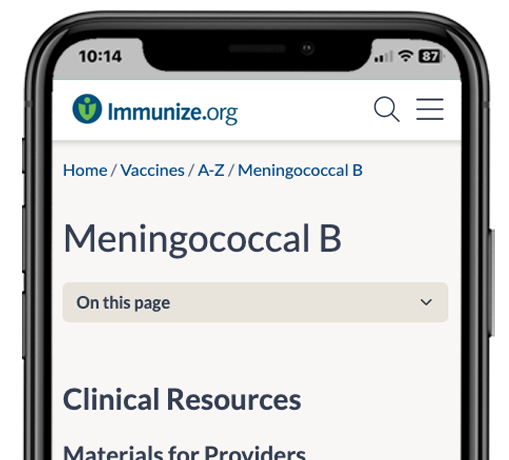
- “Introducing Travel Vaccine Information (mobile view)": the new 3-minute video, part of the Orientation Video Series for Smartphones on YouTube
- Journalists interview Immunize.org experts
- Vaccines in the news
- “One Year In: Public Views of a Changing Public Health Landscape” published by Harvard T.H. Chan School of Public Health and the de Beaumont Foundation
- “Rotavirus Vaccine Coverage and Potential Barriers Among US Children Born From 2007 to 2024” published in Pediatrics
- “Birth Order and Infant Health: Evidence from Maternal Immunisation in New Zealand” published in Social Science and Medicine
On June 10, the American College of Obstetricians and Gynecologists (ACOG) released its 2026 Maternal Immunization Schedule. ACOG’s maternal immunization schedule provides evidence-based vaccine recommendations to protect U.S.-based pregnant, postpartum, and lactating patients and their infants from vaccine-preventable illnesses.
The new ACOG guidance continues to recommend routine vaccination during pregnancy with four vaccines (influenza, COVID-19, Tdap, RSV). Vaccination during pregnancy confers protection during the pregnancy, as well as to the newborn in the early months of life. RSV vaccination is licensed and recommended for one pregnancy only; in subsequent pregnancies, infants should receive an RSV preventive antibody product.
ACOG recommends seven additional vaccines (pneumococcal, meningococcal, HepA, HepB, HPV, MMR, varicella) when indicated based on patient-specific circumstances. The recommended timing of these additional vaccines varies because some are contraindicated or not recommended during pregnancy.
All immunizations recommended on the ACOG schedule are also listed on the 2025 CDC schedule last updated July 2, 2025, which is currently in effect and published on the CDC website. A difference is that CDC currently recommends COVID-19 vaccination after shared clinical decision-making, while ACOG routinely recommends COVID-19 vaccination during pregnancy.
ACOG's 2026 Maternal Immunization Schedule was endorsed by 13 medical, nursing, and pharmacy organizations, including:
- American Academy of Family Physicians (AAFP)
- American Academy of Pediatrics (AAP)
- American Academy of Physician Associates (AAPA)
- American College of Nurse-Midwives (ACNM)
- Association of Physician Associates in Obstetrics and Gynecology (APAOG)
- American Pharmacists Association (APhA)
- Association of Women's Health, Obstetric and Neonatal Nurses (AWHONN)
- Council of Medical Specialty Societies (CMSS)
- Infectious Diseases Society of America (IDSA)
- Infectious Diseases Society for Obstetrics and Gynecology (IDSOG)
- National Medical Association (NMA)
- National Association of Nurse Practitioners in Women's Health (NPWH)
- Society for Maternal-Fetal Medicine (SMFM)


View the ACOG immunization schedule designed for healthcare professionals. A patient-friendly version of the schedule is available as an infographic or PDF. All current schedules published by healthcare professional organizations, as well as detailed vaccination recommendations are available at Immunize.org.
- ACOG: 2026 Maternal Immunization Schedule (PDF)
- ACOG: Maternal Immunization Schedule (patient version) (PDF)
- ACOG news release: ACOG Releases 2026 Maternal Immunization Schedule (6/10/26)
- Immunize.org: Official Guidance: Healthcare Professional Organizations main page
Summit Adult Vaccine Recommendations Review (SAVRR) Council advises continuing to follow current seasonal respiratory virus vaccine recommendations until 2026–27 recommendations are published by medical societies
The Summit Adult Vaccination Recommendations Review (SAVRR) Council is a group of representatives of diverse organizations that deliver vaccinations to adults who meet to discuss implementation challenges and provide implementation guidance to support vaccinators who are following recommendations issued by medical societies. In their first vote, they approved interim guidance for healthcare professionals regarding the 2026–27 fall respiratory vaccination season, advising simply that vaccinators follow the currently available 2025–26 recommendations until medical societies issue updated 2026–27 guidance.
The medical societies planning to issue updated vaccination recommendations for seasonal respiratory viruses (influenza, RSV, COVID-19) are the American Academy of Pediatrics (AAP), the American Academy of Family Physicians (AAFP), the American College of Obstetricians and Gynecologists (ACOG), and the Infectious Diseases Society of America (IDSA). These organizations are coordinating the timing of the release of their updated recommendations in early September. AAP aims to publish its childhood influenza recommendations in August, with its RSV and COVID-19 recommendations coming in September.
The topline summary of the SAVRR Council’s interim guidance appears below.
The SAVRR Council recommends that healthcare professionals follow existing 2025–26 influenza, COVID-19, and RSV immunization recommendations from relevant professional medical associations for administering 2026–27 vaccines, once they become available, until updated recommendations for 2026–27 respiratory season vaccines are released.
The SAVRR Council is a committee of the National Adult and Influenza Immunization Summit (NAIIS), known as “the Summit,” established in 2026 to support implementation of evidence-based vaccination recommendations. To maintain its independence, the SAVRR Council does not accept vaccine industry funding or industry participation in its membership. Immunize.org administers and serves as the fiscal agent for the Summit and the SAVRR Council.
The SAVRR Council hosted its first public webinar focused on describing its purpose, membership, and function on June 9. A meeting summary and presentation slides will be posted on the SAVRR Council web page and announced in IZ Express soon.
Related Links
- NAIIS main page
- SAVRR Council main page
- SAVRR Council Implementation Guidance web page
Immunize.org updated page 2 of its Shingles (Zoster): Questions and Answers resource for patients and caregivers to incorporate the American Academy of Family Physicians (AAFP) vaccine recommendations. It now states:
The American Academy of Family Physicians (AAFP) and CDC recommend that all adults age 50 years and older receive a 2-dose series of RZV (Shingrix). The doses should be given 2 to 6 months apart. People 50 years and older should receive RZV even if they previously received the live zoster vaccine or have had shingles.

Related Links
- Immunize.org: Vaccines A–Z: Zoster (Shingles) main page
- Immunize.org: Clinical Resources A–Z main page, where you can filter by topic, vaccine, language, or other criteria
- Immunize.org: Official Guidance: Healthcare Professional Organizations main page
Immunize.org recently revised its patient handout Protect Yourself from Hepatitis A and Hepatitis B . . . A Guide for Gay and Bisexual Men to include updated disease statistics.

Related Links
- Immunize.org: Clinical Resources: Adult Vaccination main page
- Immunize.org: Clinical Resources A–Z main page, where you can filter by topic, vaccine, language, or other criteria
Measles 2026: 2,073 confirmed measles cases in 39 states, with new hot spot in Virginia; World Cup poses opportunity for measles spread
As of June 11, CDC reported 43 new measles cases in the previous week, reaching 2,073 confirmed measles cases for 2026. All but 10 cases were infected while in the United States. So far, 39 states have reported measles cases in 2026.
The most rapidly growing new outbreak is underway in central Virginia, with 88 cases in Buckingham County confirmed since the outbreak was announced in early May. The Virginia Department of Health reports 111 cases statewide since January 2026.
Measles spreads easily through the air in crowds. The ongoing World Cup events are the type of events that provide ample opportunity for spread of this virus. CIDRAP published a two-part series on the diseases that may circulate during World Cup events and how public health officials respond to them.
- Part 1: The ‘Diseases of Crowds’ Experts Say Could Be at the World Cup (6/11/26)
- Part 2: The Behind-the-Scenes Work of Protecting World Cup Fans from Infectious Diseases (6/12/26)
Below is a map from CDC showing measles cases among U.S. residents as of June 11.

Useful Resources. To prepare for measles outbreaks, CDC offers its Be Ready for Measles toolkit. Childcare centers should have this resource: Preparing and Responding to Measles: Checklist for Early Care and Education Centers. This checklist provides step-by-step guidance for preparing for and responding to measles cases in these settings.

Immunize.org offers measles-related resources for the public on several of our affiliated websites:
- VaccineInformation.org: Measles web page
- LetsGetRealAboutVaccines.org: Measles web page
- Immunize.org: Vaccines A–Z: Measles main page
- AAP: Fact Checked: The MMR (Measles, Mumps and Rubella) Vaccine Is Safe and Effective web page
- CDC: Measles Cases and Outbreaks main page
- Common Health Coalition: More Illness, Greater Cost: Spotlight Brief: Childhood Immunizations (PDF)
- Johns Hopkins International Vaccine Access Center: U.S. Measles Tracker web page
- PopHIVE Dashboard (Yale School of Public Health): Infectious Diseases: Measles web page
- Health Canada: Measles and Rubella Weekly Monitoring Report
“Introducing Travel Vaccine Information (mobile view)": the new 3-minute video, part of the Orientation Video Series for Smartphones on YouTube
This week, Immunize.org shares its latest 3-minute orientation video for people who use a smartphone to access our websites: Introducing Travel Vaccine Information (mobile view). In this video, Kelly Moore, MD, MPH, reviews sections of the Immunize.org website to help you find important information on vaccination before traveling abroad.
The video is available on our YouTube channel, along with our full Orientation Video Series for Smartphones. This series is a collection of short videos to help you learn how to navigate Immunize.org resources through your smartphone.

The full Orientation Video Series can also be found on Immunize.org's website from the "Clinical Resources" menu by clicking "Webinars & Videos," then Videos, and then Orientation Video Series.
Like, follow, and share Immunize.org’s social media accounts and encourage colleagues and others interested in vaccination to do likewise.
- Facebook at ImmunizeOrg
- Instagram at ImmunizeOrg
- LinkedIn at ImmunizeOrg
- YouTube at ImmunizeOrg
- Immunize.org: Introducing Travel Vaccine Information (standard view) (3:09)
Journalists seek out Immunize.org experts to help explain vaccines to the public and policy makers. We help the media understand and communicate the complex work vaccinators do. Here is a recent citation.
- RealClearHealth: You Really Want Your Radio Operator to Be Vaccinated (6/9/26)
These recent articles convey the potential risks of vaccine-preventable diseases and the importance of vaccination.
- CIDRAP: The State of US Vaccine Policy (6/11/26)
- KFF: Anguished Parents. Doctors in Tears. Utah’s Long Measles Outbreak Takes a Toll. (6/10/26)
- Your Local Epidemiologist: New OMB Rule Could Break Science in the United States (6/10/26)
- CIDRAP: HPV Vaccines Allow Nations, States to Set Deadline for Eliminating Cervical Cancer (6/10/26)
- ProPublica: What ProPublica Found in the Genetic Code of America’s Measles Outbreaks (6/8/26)

Immunize.org offers a variety of video content for staff development, presentations, and sharing on social media or your website. Choose the Clinical Resources tab on the menu bar at the top of each page. Then select “Webinars & Videos” from the bottom of the left menu. From the “Webinars & Videos” home page, you can choose either the webinars or videos tab.
Webinars (longer form videos): The 23 available webinars cover the following topics:
- Communicating the benefits of immunization
- Improving the vaccination experience
- Vaccine safety
- Orientation to Immunize.org (in Website Office Hours webinars)
On the Videos tab you will find more than 130 short videos that can be sorted by subject into five groups:
- Ask the Experts (83 videos): Video versions of the most popular questions and answers, these are also accessible through the Ask the Experts web section.
- Improving the Vaccination Experience (6 videos): Our brief science-based lessons cover ways to reduce pain and anxiety during vaccination visits.
- Orientation Video Series (20 videos): These introduce you to our organization and guide you through the most popular sections of our website. Videos show how to navigate the website on a desktop computer or a smartphone.
- Website Training Videos (14 videos): Adapted from our Office Hours webinars, these 10- to 20-minute videos offer in-depth tutorials on how to get the most from Immunize.org and our affiliated websites.
- Partner Videos (13 videos): Vaccine information from trusted organizations, such as the Vaccine Education Center of the Children’s Hospital of Philadelphia.

Related Links
- Immunize.org: Introducing Website Office Hours (1:49)
- Immunize.org: Introducing Website Office Hours (mobile view) (1:54)
- Immunize.org: Website Office Hours: Image Library, Webinars, Videos, and Social Media (25:31)
Immunize.org updated Vaccines with Diluents: How to Use Them to remove three vaccines from the table of vaccines requiring a diluent. All available COVID-19 and rotavirus vaccines are now exclusively offered in liquid formulations. In addition, the live chikungunya vaccine (Ixchiq, Valneva) was withdrawn from the U.S. market. This reference will be updated again in coming months to remove the discontinued dengue vaccine, Dengvaxia (Sanofi), once the remaining doses expire in August 2026.
CDC’s Center for Forecasting and Outbreak Analytics and National Center for Immunization and Respiratory Diseases launched a tool for estimating epidemic trends in COVID-19, influenza, and RSV. The tool provides localized insight into how each virus is spreading at the level of health service areas, which combine one or more contiguous counties that are relatively self-contained with respect to hospital care.
Viewing the data in this way allows changes in transmission to be recognized earlier and more focally than with previous methods. This gives public health personnel and clinicians the opportunity to respond more effectively. Trend categories include growing, likely growing, not changing, likely declining, and declining.
The image below depicts the online interactive tool. Currently, you can use the online tool to explore epidemic trends for COVID-19. The influenza and RSV data will be increasingly useful as disease transmission rises.

Related Link
- CDC: Current Epidemic Trends (Based on Rt) web page
VISs explain both risks and benefits of vaccination. Federal law requires you to document provision of CDC’s current VIS before administering any vaccine covered by the Vaccine Injury Compensation Program. CDC recommends VISs accompany other vaccines, too. An easy, paperless way to comply with the law is for patients to scan a QR code and access the VIS from a smartphone or tablet.
CDC produces official VISs only in English. CDC does not produce or certify available translations, so the official CDC VIS should accompany any translation.

These new tables belong in any room where vaccinations are given. Key features include:
- Never out-of-date: Any time a VIS or translation is updated, the QR code links to the new VIS.
- Use as booklet or poster: The laminated table arrives folded like a newspaper. It is suitable for desk use as an 8.5" x 11" booklet or wall mounted as an 11" x 17" poster.
- One version for official CDC VISs and one for Spanish translations: The table of VISs in English is sold individually. The table of Spanish translations is sold as a bundle with the table of official VISs so it is easy to make both available.
- Spanish version usable by non-Spanish speakers: The Spanish QR code table has side-by-side text in English to support its use by non-Spanish speakers.
- Easy access to all available translations: Both versions include a QR code link to the Immunize.org index of all VIS translations available in dozens of languages.
- Bonus content: The reverse side of the QR code poster includes links to Immunize.org's “Addressing Vaccination Anxiety” resources and additional VIS content.
Pricing (includes all shipping and handling costs)
| Laminated CDC VIS QR Code Table (English) | Bundle: Laminated CDC (English) + Spanish Translation VIS QR Code Tables (includes 1 CDC VIS table and 1 table of translations) |
| 1 copy: $14.00 | 1 bundle: $20.00 |
| 2 copies: $9.00 each | 2 bundles: $16.00 each |
| 3–4 copies: $6.50 each | 3–4 bundles: $12.00 each |
| 5–9 copies: $5.00 each | 5–9 bundles: $8.50 each |
| 10–19 copies: $4.00 each | 10–19 bundles: $7.00 each |
| 20–59 copies: $3.00 each | 20–59 bundles: $6.00 each |
| 60+ copies: $2.50 each | 60+ bundles: $5.00 each |
Visit the Shop Immunize.org: Laminated VIS QR Code Tables web page to view images and order today! For additional information, call 651-647-9009 or email admininfo@immunize.org.
In June 2026, the Harvard T.H. Chan School of Public Health and the de Beaumont Foundation published One Year In: Public Views of a Changing Public Health Landscape. Portions of the key findings section pertinent to vaccination appear below.
- One year into new leadership of the U.S. public health system, trust in the Centers for Disease Control and Prevention (CDC) and other federal health institutions has dropped dramatically. . . .
- State and local public health agencies are now substantially more trusted than the CDC. . . .
- A slim majority disapproves of federal public health agency actions in the past year, with a high level of concern about the influence of leaders’ personal beliefs, misplaced priorities, and budget cuts. . . .
- Public support for routine childhood vaccination policies remains strong, though a substantial minority supports reductions to the routine vaccine schedule. . . .
- Views of vaccine safety have dropped closer to pre-COVID-19 levels.

In its June 8 issue, "Public Health Alerts" published Rotavirus Vaccine Coverage and Potential Barriers Among US Children Born From 2007 to 2024. Portions of the abstract and the video abstract use appear below.
Children born on or after January 1, 2007, enrolled in the New Vaccine Surveillance Network from December 2014 to August 2024 aged at least 15 weeks with rotavirus-negative acute gastroenteritis or as a healthy control, and with known vaccination status were included. We identified factors associated with not initiating or completing the RVV series and missed opportunities for vaccination. . . .
The risk factors most strongly associated with not initiating RVV [rotavirus vaccine] were receiving the diphtheria, tetanus, and pertussis vaccine at greater than or equal to age 15 weeks . . . , extremely preterm birth . . . , being born soon after RVV introduction (2007–2009) . . . , and having no health insurance . . . . More than 50% of extremely preterm infants in the NICU were not discharged until greater than or equal to age 15 weeks. . . .
Re-evaluation of the vaccine guidelines to allow RVV administration in the NICU may remove barriers to vaccination and help improve RVV coverage.

In its July 2026 issue, Social Science and Medicine published Birth Order and Infant Health: Evidence from Maternal Immunisation in New Zealand. A portion of the abstract appears below.
Drawing on administrative data from New Zealand covering more than 200,000 births between 2015 and 2023, I analyse the relationship between birth order and maternal vaccination against pertussis and influenza. I also examine subsequent infant hospitalisations for these diseases. The findings show that later-born children experience higher hospitalisation rates, likely because of increased exposure to infectious diseases through older siblings. At the same time, maternal vaccination rates decline with each pregnancy, leaving those who would benefit most from maternal immunisation the least likely to receive it. These findings suggest that improving vaccination uptake during later pregnancies could yield important health gains for infants at highest risk.

In its June 4 issue, Lancet Global Health published Global, Regional, and National Impact of the Expanded Programme on Immunization Against 14 Pathogens from 1974 to 2024: An Economic Evaluation. Key points identified regarding WHO’s Essential Programme on Immunization (EPI) include:
- From 1974 to 2024, the cost of EPI reached US $937 billion, offset by $15 trillion in averted productivity losses due to mortality, saving $16 for each $1 spent.
- Immunization against 14 pathogens showed favorable economic outcomes. Measles vaccination produced the highest benefit-cost ratio, saving $74 for each $1 spent.
- EPI against 14 pathogens in aggregate achieved cost savings in all 194 WHO member states.
- EPI was highly cost-effective at global, regional, and national levels, and remains a worthwhile investment.
- EPI delivered substantial life-saving benefits and favorable economic returns, especially in high-burden and low-income settings.

Shown above is a global map on the benefit–cost ratio of immunization programs for 14 pathogens from 2000 to 2024. The publication includes similar maps for other time periods.
To learn simple tips and tricks for using our websites efficiently, please register for our next set of Website Office Hours on Wednesday, July 8, at 4:00 p.m. (ET) or Thursday, July 9, at 12:00 p.m. (ET). The same content will be covered in both sessions.
We will open each 30-minute session with a short, live demonstration on navigating our popular public-facing websites, VaccineInformation.org and LetsGetRealAboutVaccines.org. You can submit questions when you register or live on Zoom during the session.

Register today for Immunize.org Website Office Hours (content is the same for both):
The archive of previous Website Office Hours content is posted at Immunize.org’s "Webinars & Videos" page.
Mark your calendar for future Immunize.org Website Office Hours.