
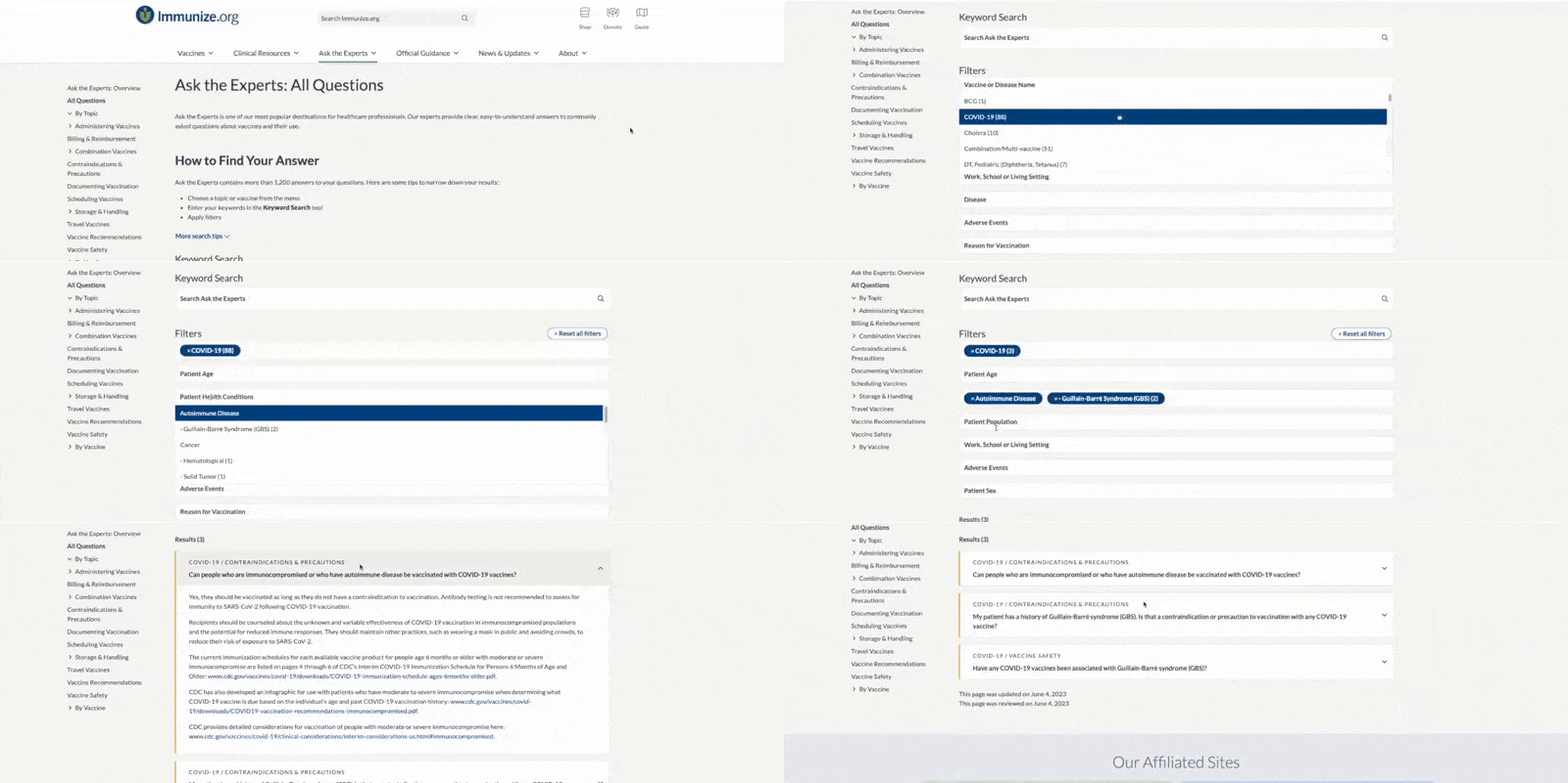


As an additional service to IZ Express readers, we periodically publish special editions such as this one, providing you with Ask the Experts questions and answers from Immunize.org experts. This issue includes 10 Q&As about influenza, COVID-19, and RSV vaccines and Vaccine Information Statements (VISs).
Our team is working to update all of the seasonal content in the Ask the Experts section of our website, but these selected updated questions and answers will help you get off to the right start with your seasonal vaccination practice. We will alert readers in IZ Express when entire sections are completely updated.
You can find these questions and answers, plus more than 1,300 others about vaccines and vaccine administration, on our "Ask the Experts" main page at www.immunize.org/ask-experts.
Immunize.org’s team of experts includes Kelly L. Moore, MD, MPH (team lead); Carolyn B. Bridges, MD, FACP; Iyabode Beysolow, MD, MPH; and Jane R. Zucker, MD, MSc.
- Q: What’s new about 2026–27 season influenza vaccines and recommendations?
- Q: Where can I obtain seasonal influenza vaccine recommendations and clinical guidance for the 2026–27 season?
- Q: What is mFlusiva influenza vaccine, how well does it work, and who is it recommended for?
- Q: For which vaccines is an egg allergy a contraindication?
- Q: When administering influenza vaccine, is giving patients a vaccine information statement (VIS) mandatory or is it only “recommended”?
- Q: Can the new American Academy of Pediatrics (AAP) one-page immunization fact sheets for families be used instead of a VIS?
- Q: What are the 2026–27 season recommendations for COVID-19 vaccination from the major medical societies and how do they compare to CDC’s recommendations in 2025–26?
- Q: How long do I need to wait after giving a dose of a 2025–2026 Formula COVID-19 vaccine before I can administer a dose of the 2026–2027 Formula COVID-19 vaccine?
- Q: Which children age 8 through 19 months should receive a dose of RSV preventive antibody (nirsevimab) entering their second RSV season, according to the American Academy of Pediatrics?
- Q: Should an infant who received a birth dose of nirsevimab at the end of the RSV season in late March get another dose of nirsevimab or clesrovimab in October since they are still younger than 8 months of age?
A: CDC’s influenza vaccination recommendations from the July 2025 CDC immunization schedules remain in effect for 2026–27, under the terms of the federal court orders halting implementation of votes made by ACIP after its membership was changed in June 2025. CDC continues to recommend annual influenza vaccination for all people without a contraindication, beginning at age 6 months.
This season, separate seasonal vaccination recommendations for use of influenza, COVID-19, and RSV vaccines were published by the American Academy of Pediatrics (AAP), American Academy of Family Physicians (AAFP), American College of Obstetricians and Gynecologists (ACOG), and the Infectious Diseases Society of America (IDSA). All of the medical societies emphasize the benefits of routine annual influenza vaccination.
Important 2026–27 updates are summarized below:
- All three vaccine virus components changed for 2026–27. All U.S. influenza vaccines remain trivalent, containing two influenza type A strains and one influenza type B strain.
- In August 2026, FDA approved mFlusiva (Moderna), the first mRNA influenza vaccine, for people age 50 years and older.
- Carrying over last season’s recommendations, CDC recommends high-dose inactivated influenza vaccine (HD-IIV, Fluzone High-Dose by Sanofi), adjuvanted inactivated influenza vaccine (aIIV, Fluad by Seqirus), or recombinant influenza vaccine (RIV, Flublok by Sanofi) preferentially for adults age 65 years and older.
- AAFP recommends HD-IIV, aIIV, RIV, or the new mRNA influenza vaccine preferentially for people age 65 and older.
- AAP recommends any age-appropriate product for children without preference.
- ACOG recommends an age-appropriate IIV or RIV during pregnancy. The live-attenuated influenza vaccine (LAIV, FluMist by AstraZeneca) is not recommended during pregnancy, and the mRNA vaccine is not approved for use during pregnancy because of a lack of data on its use during pregnancy.
- IDSA recommends an age-appropriate 2026–27 influenza vaccine for immunocompromised people. AAP and IDSA provide additional details in their guidance documents on the optimal timing of vaccine administration and, in certain circumstances, product choice, for children and adults with significant immunocompromise due to disease or treatment.
Q: Where can I obtain seasonal influenza vaccine recommendations and clinical guidance for the 2026–27 season?
A: CDC’s current 2026–27 interim clinical considerations are available at www.cdc.gov/flu/hcp/vax-summary/seasonal-influenza-vaccines.html. The version published on September 1, 2026, does not contain information about the mRNA influenza vaccine (mFlusiva by Moderna) which was licensed by FDA on August 5, 2026.
In the absence of a functional ACIP at CDC during 2026, separate seasonal respiratory virus vaccination recommendations were published by the American Academy of Pediatrics (AAP), American Academy of Family Physicians (AAFP), American College of Obstetricians and Gynecologists (ACOG), and the Infectious Diseases Society of America (IDSA). Their recommendations were informed by the Vaccine Integrity Project (VIP) of the University of Minnesota and the American Medical Association (AMA), which conducted a systematic review of relevant scientific literature published since the previous season’s vaccination recommendations were made. Published studies of the new mFlusiva mRNA influenza vaccine were included in the VIP review. AAP, AAFP, ACOG, and IDSA recommendation documents, plus the published evidence reviews, are all available from the AMA website at www.ama-assn.org/amaone/vaccine-recommendations.
A: Moderna’s mFlusiva is the first FDA-approved mRNA influenza vaccine. FDA approved it on August 5, 2026, for people age 50 years and older. It is not approved for use during pregnancy due to a lack of data on its use during pregnancy. It is supplied as a preservative-free, single-dose prefilled syringe and is administered as a 0.38 mL intramuscular dose. It is contraindicated for people who have had a severe allergic reaction (e.g., anaphylaxis) to a prior dose of mFlusiva or to a component of the vaccine. It contains no egg protein, preservatives, or antibiotics; it does contain polyethylene glycol (PEG). It is stored at standard temperatures for refrigerated vaccines: 2° to 8°C (36° to 46°F); it should never be frozen. It may be kept at room temperature, at 8° to 25°C (46° to 77°F), for up to 12 hours, but it should not be returned to the refrigerator after room-temperature storage begins. FDA information, including the package insert, is available at www.fda.gov/vaccines-blood-biologics/vaccines/mflusiva.
A large-scale, randomized clinical trial comparing its effectiveness to a standard, egg-based inactivated influenza vaccine (IIV) found it to be moderately superior to standard egg-based IIV, preventing 26.6% more cases of influenza infection in the study population age 50 years and older. This result is similar to the 24.4% relative reduction in influenza infections measured in a randomized clinical trial comparing high-dose influenza vaccine (HD-IIV) to standard, egg-based IIV among adults age 65 years and older that was published in 2014. Side effects, including injection site pain, fatigue, headache, and other systemic symptoms were significantly more common in mFlusiva recipients, but were generally mild and lasted a median of two days.
A separate study in people age 65 years and older measured a somewhat stronger antibody response to mFlusiva compared to HD-IIV; however, this serologic study did not compare the products’ relative effectiveness at preventing clinical infections. Further studies of mFlusiva’s clinical effectiveness in people age 65 years and older are planned.
The September 1, 2026, CDC interim clinical considerations for the use of 2026–27 influenza vaccines are silent on mFlusiva. The American Academy of Family Physicians (AAFP) recommends mFlusiva as one of four preferred options for adults age 65 years and older, based upon the clinical trial evidence of its superior effectiveness against influenza infection compared to standard IIV. View the AAFP 2026–27 season recommendations for COVID-19, influenza, and RSV vaccination of immunocompetent adults and healthcare personnel at www.aafp.org/assets/image/upload/v1788277985/
pdf_2026_through_2027_influenza_rsv_sars_covid_2_guidance.pdf.
A: Yellow fever vaccine is contraindicated for people who have a history of a severe (anaphylactic) allergy to eggs.
CDC and medical societies issuing vaccination recommendations do not consider egg allergy of any severity to be a contraindication or precaution to egg-based influenza vaccines. A person with egg allergy of any severity may receive any influenza vaccine that is appropriate for the person’s age and health status. When administering an egg-based influenza vaccine to a person with egg allergy of any severity, no additional safety precautions are needed, beyond those recommended when administering any vaccine to any recipient.
A: Giving patients an influenza VIS is mandatory under the National Childhood Vaccine Injury Act of 1986. The VIS must be given to all adults as well as to parents or guardians of children prior to vaccination. Two VISs are available, one for live attenuated influenza vaccine (LAIV) and one for inactivated influenza vaccine (IIV) and recombinant vaccine (RIV). The IIV and RIV VIS and all of its translations are available here: www.immunize.org/vaccines/vis/influenza-inactivated. The LAIV VIS and all of its translations are available here: www.immunize.org/vaccines/vis/influenza-live. Current influenza vaccine VISs are dated January 31, 2025. No specific VIS is available for mRNA influenza vaccine (mFlusiva) at this time.
Immunize.org also offers a printable PDF document with QR codes for easy access to all of the IIV and RIV influenza vaccine VIS translations: www.immunize.org/wp-content/uploads/catg.d/p2092.pdf. Healthcare providers or recipients can scan the codes to access a digital copy of the translation on their mobile device.
A: AAP has developed one-page immunization fact sheets intended to supplement, but not replace, the CDC Vaccine Information Statements (VISs) for vaccines given to children. VISs are required by federal law to be provided for all vaccines covered by the National Vaccine Injury Compensation Program, which includes all vaccines routinely recommended for children or during pregnancy.
The fact sheets, some of which are available in Spanish, can be downloaded at no cost from the AAP website at www.aap.org/en/patient-care/immunizations/immunization-fact-sheets.
A: Recommendations for the use of the 2026–2027 Formula COVID-19 vaccines were issued by the American Academy of Pediatrics (AAP), American Academy of Family Physicians (AAFP), American College of Obstetricians and Gynecologists (ACOG), and the Infectious Diseases Society of America (IDSA) on September 2, 2026. Their recommendations were informed by the Vaccine Integrity Project (VIP) of the University of Minnesota and the American Medical Association (AMA), which conducted a systematic review of relevant scientific literature published since the previous season’s vaccination recommendations were made. There is no preference expressed for any product: Spikevax (mRNA, age 6 months and up), Comirnaty (mRNA, age 5 years and up), mNexspike (mRNA, age 12 years and up), and Nuvaxovid (protein subunit, age 12 years and up).
In the 2025–26 season, CDC’s recommendation was for COVID-19 vaccination following shared clinical decision-making (a conversation about individual risks and benefits of vaccination) for all people, beginning at age 6 months.
The 2026–27 recommendations from medical societies are summarized below:
AAP (children through age 18 years):
- Age 6 through 23 months: routine use in all children.
- Age 2 through 18 years:
- at high risk of severe COVID-19, or
- who are residents of long-term care facilities or other congregate settings, or
- who have never been vaccinated against COVID-19, or
- whose household contacts are at high risk for severe COVID-19, or
- who meets none of the above conditions, but whose parent or guardian desires their protection.
- All adults age 19 years and older should receive a dose of 2026–2027 Formula COVID-19 vaccine.
- Adults age 65 years or older should receive a second dose of 2026–2027 Formula COVID-19 vaccine 6 months after the first dose to sustain protection.
- All healthcare personnel should be age-appropriately vaccinated.
- A dose of 2026–2027 Formula COVID-19 vaccine is routinely recommended for all individuals who are pregnant, contemplating pregnancy, recently pregnant, or lactating.
- A dose of 2026–2027 Formula COVID-19 vaccine is routinely recommended for people who are immunocompromised and, if they are moderately or severely immunocompromised, who have completed an initial vaccination series.
- A second booster dose can be given 2 to 6 months after dose one based on shared decision making and current levels of transmission.
- IDSA refers readers to previous guidance from CDC for the dosing schedules for an initial vaccination series recommended for a person with a moderate or severe immunocompromising condition. IDSA’s recommendations also give guidance for optimal timing of doses for certain subgroups based upon their disease or specific treatment.
A: The minimum interval is 8 weeks if using Spikevax (Moderna), Comirnaty (Pfizer-BioNTech), or Nuvaxovid (Sanofi-Novavax), and 3 months if using mNexspike (Moderna). An early dose of mNexspike inadvertently administered at least 8 weeks after a previous dose does not need to be repeated.
The exception to this standard interval is when the updated product dose is part of an initial vaccine series given to a young child or to a moderately or severely immunocompromised person. In those situations, simply continue with the series schedule using the updated product.
A: CDC’s recommendation for the use of nirsevimab (Beyfortus, Sanofi) in children age 8 through 19 months entering their second RSV season is limited to those children at the highest risk of severe RSV disease who were previously recommended to receive palivizumab (Synagis, AstraZeneca), plus American Indian/Alaska Native children. Palivizumab use was quite limited due to its high cost and monthly dosing. For the 2026–27 season, to address the burden of severe RSV disease in a broader population of high-risk children who could benefit from use of nirsevimab, AAP expanded its recommendation for nirsevimab in this age group:
- Children born preterm, at less than 32 weeks, 0 days’ gestation, regardless of the need for medication or other support
- Children with chronic lung disease attributable to prematurity or to other significant neonatal conditions (e.g., meconium aspiration or congenital diaphragmatic hernia) who required medical support (i.e., chronic corticosteroid therapy, diuretic therapy, or supplemental oxygen) at any time during the 6-month period before the start of the second RSV season
- Children with hemodynamically significant congenital heart disease (i.e., a defect that can result in symptoms and/or cardiac chamber dilation)
- Children with anatomic pulmonary abnormalities or neuromuscular disorders that put them at risk for severe RSV disease
- Children with severe immunocompromise
- Children with Down syndrome or other chromosomal differences placing them at higher risk of severe RSV disease
- Children with cystic fibrosis who have either:
- Manifestations of severe lung disease (previous hospitalization for pulmonary exacerbation in the first year after birth or abnormalities on chest imaging that persist when stable), or
- Weight-for-length that is less than the 10th percentile
- American Indian or Alaska Native children
A: The answer is no. The American Academy of Pediatrics and CDC recommend only a single dose of RSV preventive antibody product for infants younger than 8 months of age, administered during, or just before, RSV season. An infant who receives nirsevimab at the end of one season and who is younger than age 8 months at the beginning of the next season should not be given an additional dose of either RSV preventive antibody product. Likewise, children younger than 8 months of age born near the end of the previous RSV season to mothers who received an effective dose of Abrysvo RSV vaccine during pregnancy are NOT recommended to receive an RSV preventive antibody product at the beginning of the next season.
Children who meet the high-risk criteria to receive a dose of nirsevimab to protect them through their second RSV season should be at least 8 months of age (and younger than 20 months of age) at the time of administration of the second-season nirsevimab dose.
Suggest a question for "Ask the Experts"
If you have a question that you think may be of interest to our readers, please send it to us using our online form. We will consider it for inclusion in a future update of the “Ask the Experts” feature.
About IZ Express
IZ Express Disclaimer
ISSN 2771-8085
Editorial Information
-
Editor-in-ChiefKelly L. Moore, MD, MPH
-
Managing EditorJohn D. Grabenstein, RPh, PhD
-
Associate EditorSharon G. Humiston, MD, MPH
-
Writer/Publication CoordinatorTaryn Chapman, MS
Courtnay Londo, MA -
Style and Copy EditorMarian Deegan, JD
-
Web Edition ManagersArkady Shakhnovich
Jermaine Royes -
Technical ReviewerKayla Ohlde