

- New York Times publishes interactive summary of all vaccine-related bills introduced in 2026 state legislative sessions and outcomes
- Get new vaccinators in your clinic off to a great start! Access the staff training resources curated by Immunize.org.
- Vaccinate Your Family kicks off a year of celebration of its 35th anniversary, honoring late cofounders Rosalynn Carter and Betty Bumpers
- Measles 2026: 2,371 confirmed measles cases in 44 states and DC; Pennsylvania reports 31 cases in recent week
- “Which Infants Need RSV Protection in Their First RSV Season? How Well Does It Work?" New in the Ask the Experts Video Series on YouTube.
- Vaccines in the news
- American Pharmacists Association launches toolkit to help approach vaccine conversations with empathy, respect, and cultural awareness
- August is National Immunization Awareness Month. Use Voices for Vaccines’ resources to share positive messages with your patients.
- Find vaccine resources and show your support for immunization in the Immunize.org shop!
- Back to school! Explore the www.Give2MenACWY.org website to increase coverage for the MenACWY booster and other adolescent vaccinations.
- Register for Immunize.org Website Office Hours. Join a 30-minute discussion about our Official Guidance: States web section on August 12 at 4:00 p.m. (ET) or August 13 at 12:00 p.m. (ET). Recorded sessions archived.
- Virtual: Children’s Hospital of Philadelphia hosts Current Issues in Vaccines webinar titled “Who Can We Trust for Vaccine Information?” on September 9 at 12:00 p.m. (ET); CE credit offered
On July 28, New York Times published a comprehensive record and analysis of the more than 400 vaccine-related bills introduced in state legislatures between August 1, 2025 and July 1, 2026. The summary, Dozens of States Tried to Roll Back Vaccine Laws. Here’s How They Fared [gift link], provides interactive graphics and state-specific data, offering a broad overview of the status of immunization legislation in the United States and trends expected in future legislative sessions. This article is a valuable resource to anyone interested in state vaccine policy and legislation.
The findings include:
- More than 200 measures were introduced in 34 states, aiming to dismantle vaccination rules or raise questions about vaccine safety
- Only a very small number of these bills became law, but similar proposals are expected to return next session
- Bills fell into five broad categories: loosens requirements, alters vaccination systems, protects the unvaccinated, targets mRNA or COVID vaccines, and promotes claims of risk
- Language in bills often focused on health freedom and personal liberty

In July, Immunize.org posted its 2026 annual update of state requirements for entry into childcare, school, and college, as well as state immunization requirement exemption policies. The small number of changes compared to the 2025 update reflects that few of the bills introduced during these legislative sessions affected these requirements. However, the types of vaccine-related bills introduced during this legislative session also address occupational health, vaccine access, and medical practices and policies. Access Immunize.org’s state policy web pages based upon information confirmed and provided by state, New York City, and District of Columbia immunization program managers. Access the following information at the links below:
- Vaccine-specific maps and data tables summarizing state immunization requirements for childcare, school, and college entry
- Current state vaccine exemption policies for childcare and school entry
- Web links to each state’s website with details about their childcare and school requirements, and additional related resources
- Archived data tables and maps for 2023–25
For organizations with new staff or staff who need a refresher, the following six resources at Immunize.org are essential for building and sustaining vaccination knowledge and skills.
Our new Getting Started: For the New Vaccinator web page connects new vaccinators of all clinical backgrounds to basic resources that support each component of successful vaccine delivery. It also highlights key content from external partners. This section does not include every resource, but it is a good place to start.
Key Vaccination Resources for Healthcare Professionals is a 5-page annotated list of important training, education, and reference materials for people who vaccinate or oversee vaccination clinics.
Skills Checklist for Vaccine Administration is a 3-page tool to guide supervisors who observe and assess staff members' skills.

Clinical Resources: Storage and Handling web page features checklists, "Do Not Unplug" signs, ways to avoid errors, temperature logs, storage troubleshooting records, and more. You'll find links to CDC's storage and handling training tools, including the new 2026 update of CDC’s Vaccine Storage and Handling Toolkit along with other partner resources.
Clinical Resources: Administering Vaccines web page offers handouts on appropriate injection techniques, information on how to properly deliver intramuscular and subcutaneous injections, medical management of adverse reactions, summaries of vaccine recommendations, and how to use vaccines needing reconstitution.
Our partners at Vaccinate Your Family (VYF) are kicking off a year of celebration for their 35th anniversary. In 1991 the country was reeling from a measles outbreak that took the lives of 123 people and hospitalized more than 50,000. On July 28, 1991, former First Lady Rosalynn Carter and former First Lady of Arkansas Betty Bumpers cofounded Every Child By Two, (now known as Vaccinate Your Family). Their mission was to ensure that no child suffer from a vaccine-preventable disease. The initiative began by prioritizing child health and later expanded across the lifespan.
The anniversary year will feature monthly themes designed to engage partners, policymakers, and the public, culminating on March 8, 2027, in a "Celebration of Lives" event on the National Mall in Washington, D.C., to celebrate the millions of lives saved by vaccines over 35 years and memorialize those lost to vaccine-preventable diseases.

CDC reported, as of July 30, 2026 (week 31):
- 53 new measles cases in the previous week, reaching 2,371 confirmed measles cases for 2026 (2,289 cases in all of 2025)
- 43 states, New York City, and the District of Columbia reported measles cases in 2026
- 37 new outbreaks in 2026
Pennsylvania had the largest number of new cases (31) since the previous week’s update.
The Ohio Department of Health (ODH) reported the state’s third measles outbreak of 2026 among four unvaccinated individuals age 4 to 30 years. See details at: Summary of Infectious Diseases in Ohio dashboard.
The U.S. Measles Tracker website includes state and county-level data. Specific numbers from CDC and individual state websites differ slightly because the frequency and timing of federal and state updates vary.
Related Links
- AAP: Fact Checked: The MMR (Measles, Mumps and Rubella) Vaccine Is Safe and Effective web page
- CDC: Measles Cases and Outbreaks main page
- Immunize.org: Vaccines A–Z: Measles main page
- LetsGetRealAboutVaccines.org: Measles web page
- VaccineInformation.org: Measles web page
- CDC: MMWR main page providing access to the MMWR family of publications
Watch the newest video in the Ask the Experts Video Series, titled Which Infants Need RSV Protection in Their First RSV Season? How Well Does It Work? The brief video (3 minutes, 48 seconds) describes how RSV protection is recommended for all infants younger than 8 months during their first RSV season, either through maternal vaccination during pregnancy or an RSV preventive antibody after birth, both of which substantially reduce the risk of hospitalization.
The video is available on our YouTube channel, along with our full collection of quick video answers to popular Ask the Experts questions.

Like, follow, and share Immunize.org’s social media accounts and encourage colleagues and others interested in vaccination to do likewise.
- Facebook at ImmunizeOrg
- Instagram at ImmunizeOrg
- LinkedIn at ImmunizeOrg
- YouTube at ImmunizeOrg
- Immunize.org: Ask the Experts: all RSV-related video questions (22 videos)
These recent articles convey the potential risks of vaccine-preventable diseases and the importance of vaccination.
- NPR: Pediatricians and Health Officials Are Sidestepping Trump's CDC on Vaccine Advice (7/30/26)
- Reuters: Trump Administration Unfreezes $600 Million for Gavi for Global Vaccine Effort (7/29/26)
- The Conversation: How Vaccine Skeptics Use Storytelling Effectively to Create Powerful but Medically Inaccurate Messaging (7/27/26)

In March 2026, Immunize.org expanded its Official Guidance web section with a new page, State Public Health Immunization Recommendations.

Some state public health authorities offer guidance to support clinical decision-making and vaccine access in their states. In addition, three multistate alliances formed to develop state vaccination policies and address vaccine access issues. The States section of Official Guidance includes information about each alliance, with links to their websites and more.

State Immunization Recommendations Map
This section of the web page provides a map and table with links to each state’s immunization program home page. This, in turn, links, when available, to state-specific guidance on recommended vaccine schedules and vaccine access. States in one or more of the three multistate alliances are color-coded on the map.

Immunize.org updated three of its Questions and Answers (Q&A) summaries with 2025 disease statistics. The Q&A resource series is intended for staff and for patients or caregivers who are seeking more advanced information about diseases and the vaccines that prevent them. Updated handouts include:
Immunize.org updated its Notification of Immunization Letter Template, adding clesrovimab (Enflonsia, Merck) and adding the brand names of licensed COVID-19 mRNA and protein subunit vaccines.
The American Pharmacists Association launched new resources focused on building trust through culturally aware, patient-centered communication. The Pharmacists' Cultural Awareness Toolkits: Bridging Immunization Gaps in Underserved Populations offers resources that focus on Asian American, Hispanic, and non-Hispanic Black communities. The healthcare professional resources on health disparities and building trust are offered in two formats:
- Text-based, downloadable resources (handouts)
- Brief videos

View all resources: Pharmacists' Cultural Awareness Toolkits: Bridging Immunization Gaps in Underserved Populations.
National Immunization Awareness Month (NIAM) is here. This annual observance highlights the importance of protecting people of all ages against vaccine-preventable diseases through on-time vaccination. NIAM serves as a focal point for sharing credible information about the importance of staying up to date with routine immunizations.
The Voices for Vaccines (VFV) NIAM 2026 web page serves as a guide to promoting immunization throughout the month. This year's theme is that protection from vaccine-preventable diseases gives you one less threat to worry about. The page includes customizable social media graphics and video templates, sample captions, and a weekly posting schedule. VFV encourages partners to share these messages using the hashtags #AskForVax and #NIAM26.

During NIAM, encourage your patients to catch up on well-care exams and recommended vaccines. Research shows that healthcare providers remain the most trusted source of vaccine information for parents and patients.
The Immunize.org Shop offers a variety of products for your practice and to show how much you value vaccination. Items include:
- Laminated tables of QR codes linking to VISs for vaccines given to children and adults. Save paper and make it easy for patients to access a VIS from a smartphone or tablet. These are suitable for desk use as an 8.5" x 11" booklet or wall mounted as an 11" x 17" poster. Available in English and a Spanish translation.
- Wallet-sized Lifetime Immunization Record Cards: Printed on rip-proof, smudge-proof, waterproof paper designed to last a lifetime. Sold in boxes of 250.
- Immunization Techniques: Best Practices with Infants, Children, and Adults (CD-ROM): From the California Department of Public Health, visual training on the techniques for proper vaccine administration.
- "Save Lives. Immunize." branded T-shirts: Featuring our logo on the front. The back declares: “Save Lives. Immunize.” The fabric is a super soft, premium tri-blend that doesn’t shrink or wrinkle with washing. Three designs include:
- Vaccination Saves Lives pins make a refined statement in rich blue enamel with gold lettering and edges, measuring 1.65" x 0.75". Designs include traditional double stick-through posts and the new magnetic clasp, which holds the pin firmly in place without piercing clothing.


Visit Shop Immunize.org to view pricing information and to place an order.
For more information, call 651-647-9009 or email admininfo@immunize.org.
Immunize.org's www.Give2MenACWY.org website promotes the importance of adolescent vaccination, including the recommended MenACWY vaccine booster dose at age 16. Many teens are behind on vaccines, so vaccine outreach is more important than ever.
If you are looking for tools to explain meningococcal vaccine recommendations and assist in improving adolescent coverage for all recommended vaccines, view this site. Check out the many helpful tools from Immunize.org, CDC, and other organizations.

The website is divided into five easy-to-access sections:
- Vaccinate Teens: teen vaccination schedules and tips for improving vaccination rates
- Give 2 Doses: tools to help improve second dose coverage of MenACWY vaccine
- 16-Year-Old Visit: resources to help providers and patients remember the important vaccines recommended for 16-year-olds
- Tools for Providers: tools to explain meningococcal ACWY vaccine recommendations and improve coverage for all adolescent vaccines
- Resources: links to print materials, organizations involved in adolescent vaccination, personal stories about the importance of vaccination, and other resources of interest
The site also categorizes materials according to whether they are primarily of interest to providers, to adolescents, or to parents.
Visit Give2MenACWY.org and enjoy browsing (and deploying) its bountiful resources.
Related Links
- MenACWY: You're Not Done If You Give Just One: Give 2 Doses to Strengthen Protection
- Recommending MenACWY: What to Say and How to Say It
- Top 10 Ways to Improve Adolescent Immunization Rates
- Developing an Immunization Culture in Your Office
- Know Your Rates: Measuring Immunization Success in Your Practice
- Immunize.org: You're 16: We Recommend These Vaccines for You
- Dear Colleague Letter: 16-Year-Old Patients: Make Sure They Receive Their Annual Well Visit and Vaccinations, signed by six medical societies
- Immunize.org: Ask the Experts: Meningococcal ACWY
- CDC: ACIP Meningococcal Vaccine Recommendations
- CDC: Vaccination Coverage Among Adolescents Aged 13–17 Years—National Immunization Survey–Teen, United States, 2024
In its July 21 issue, Lancet published Effectiveness of Nirsevimab Immunisation on Invasive Pneumococcal Disease in Children Nationwide in France: An Observational Cohort Study. RSV disease may be associated with an increased risk of invasive pneumococcal disease (IPD), as a secondary bacterial infection. This research team found an association between a reduced risk of IPD among young children immunized with the RSV preventive antibody product nirsevimab (Beyfortus, Sanofi) during the first year of life. Portions of the findings and interpretation sections appear below.
Of the 608 641 children born in France during the study period, 527 971 were included, of whom 119 435 (22.6%) received nirsevimab. During the 6-month follow-up period, 112 cases of IPD occurred: 17 (14.2 per 100 000) in the immunised group versus 95 (23.3 per 100 000) in the non-immunised group. After IPTW [inverse probability of treatment weighting], nirsevimab was associated with a 36% reduction in the odds of hospitalisation for IPD 6 months after immunisation . . . 9 months after immunisation, effectiveness remained consistent with a 34% reduction . . .
Nirsevimab immunisation in children younger than 12 months was associated with a lower risk of IPD for at least 6 months following immunisation. These findings suggest an additional benefit of nirsevimab implementation beyond RSV disease prevention, but further studies are needed to confirm these findings.

In its July 23 issue, PLOS One published Parents’ Role as Advocates for and Against Childhood Vaccination: Findings from a Nationally Representative Survey. This research team’s goal was to identify future intervention partners by understanding parents’ role in advocating for or against childhood vaccines. They sent the survey to U.S. parents/caregivers who had at least one 9- to 12-year-old child and were participating in a broader online survey about adolescent health. These participants were members of an existing panel of community-dwelling adults, constructed from a probability-based sample of households, designed to be representative of the U.S. population.
The conclusions section appears below.
Findings of our nationally representative study suggest that parents who encourage routine vaccination far outnumber those who discourage it. Given that encouragers often advocate for measles vaccine, future efforts to increase vaccination coverage should consider ways to partner with parent advocates to stem the alarming resurgence of this disease.

On July 24, Emerging Infectious Diseases posted Genomic and Epidemiologic Insights into Ongoing Measles Outbreak, Israel, 2025–2026 as an early release (for final publication September 2026). The abstract appears below.
An ongoing measles outbreak in Israel, involving ≈3,200 cases and 16 deaths, threatens the country’s measles elimination status and reflects declining vaccination rates observed globally and within Israel. Epidemiologic investigations supported by sequencing suggest that a single importation triggered the outbreak, underscoring the critical role of rapid genomic surveillance in outbreak control.

To learn simple tips and tricks for using our websites efficiently, please register for our next set of Website Office Hours on Wednesday, August 12, at 4:00 p.m. (ET) or Thursday, August 13, at 12:00 p.m. (ET). The same content will be covered in both sessions.
We will open each 30-minute session with a short, live demonstration on navigating our Official Guidance: States web section, which includes maps and tables for each state’s vaccination requirements and exemptions. You can submit questions when you register or live on Zoom during the session

Register today for Immunize.org Website Office Hours (content is the same for both):
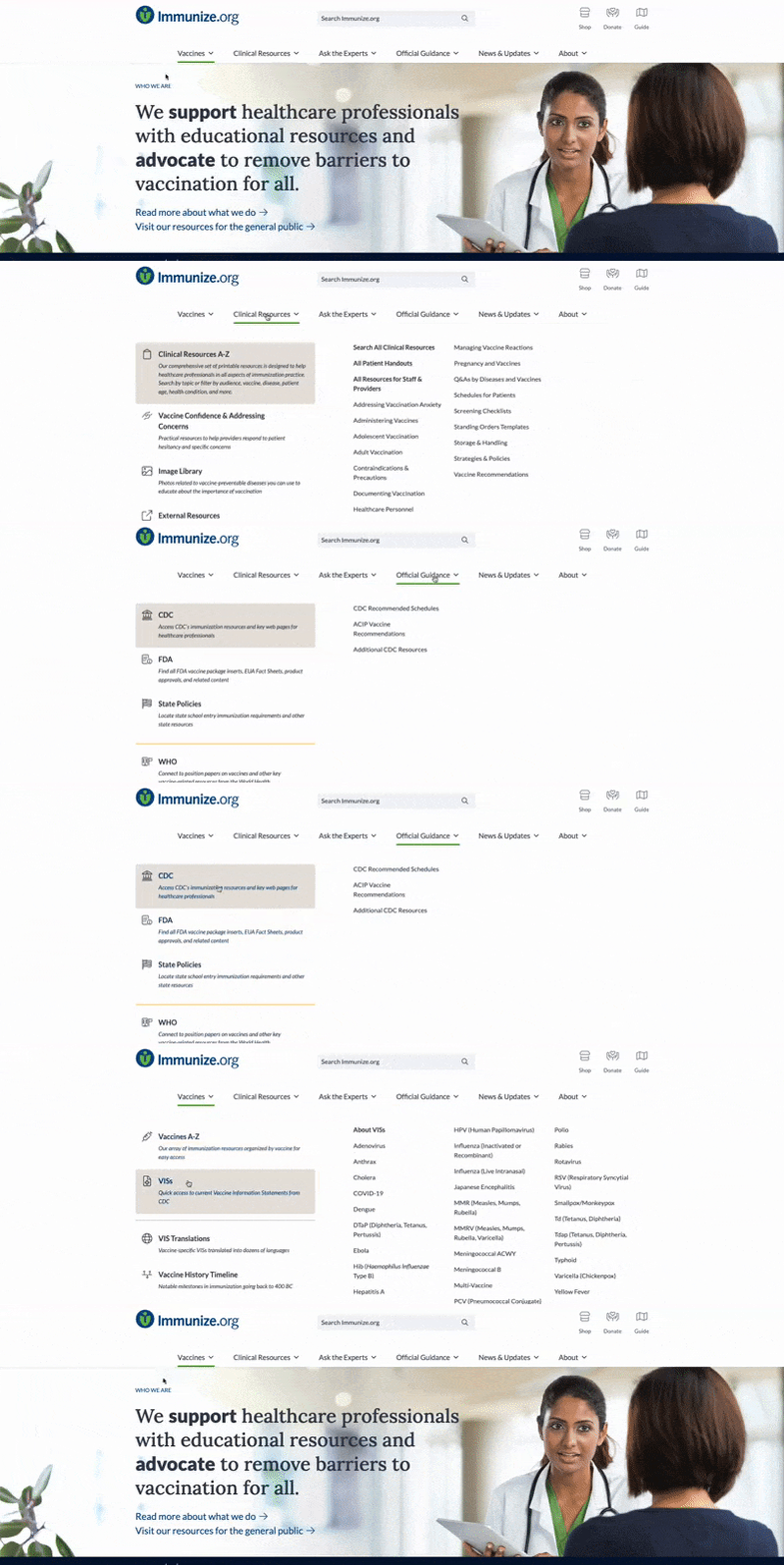
The archive of previous Website Office Hours content is posted at Immunize.org’s "Webinars & Videos" page.
Mark your calendar for future Immunize.org Website Office Hours.
The Vaccine Education Center (VEC) at Children's Hospital of Philadelphia (CHOP) will present a 1-hour webinar titled Who Can We Trust for Vaccine Information? beginning at 12:00 p.m. (ET) on September 9. Part of its Current Issues in Vaccines series, the webinar will feature Paul Offit, MD, director of the VEC.
Free continuing-education credits (CME, CEU, and CPE) will be available for both the live and archived events.
Register for the webinar.