


- FDA expands indication for 21-valent pneumococcal conjugate vaccine (PCV21, Capvaxive, Merck) to include children at increased risk; FDA advisory panel supports FDA licensure of mRNA influenza vaccine (mFlusiva, Moderna)
- Measles 2026: 2,104 confirmed measles cases in 39 states and DC; MMWR describes public health response to measles outbreak in Texas
- AAP announces plan to release guidance on 2026–27 respiratory virus vaccinations, HPV vaccination, and the 2027 immunization schedule
- Canada Day is July 1! Here’s a summary of vaccination information and advocacy in Canada.
- 4th of July We the People Vax campaign is available for download
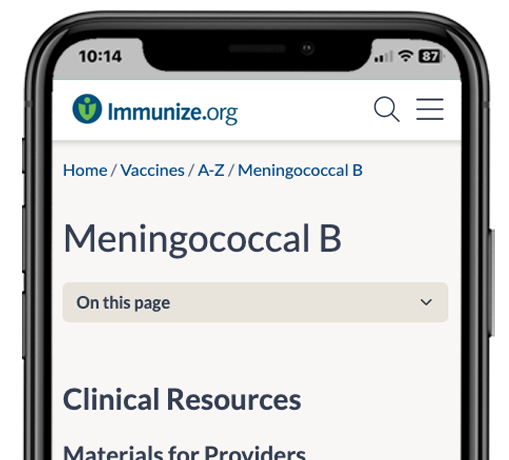
- “Introducing VaccineInformation.org (mobile view)": the new 4-minute video, part of the Orientation Video Series for Smartphones on YouTube
- Vaccines in the news
- Mt. Sinai Parenting Center and Lantern launch text messaging channel for healthcare providers with tips for raising healthy children, including vaccination; sign up for free weekly updates
- Recap: ACOG releases 2026 Maternal Immunization Schedule, endorsed by 13 medical, nursing, and pharmacy organizations
- Recap: Summit Adult Vaccine Recommendations Review (SAVRR) Council advises continuing to follow current seasonal respiratory virus vaccine recommendations until 2026–27 recommendations are published by medical societies
- Immunize.org's elegant "Vaccination Saves Lives" blue enamel pins make wonderful workplace recognitions
- Michigan State University publishes “State of CDC Workforce: Changes at the Centers for Disease Control and Prevention and CDC’s Ability to Protect the Public’s Health”
- “2024–2025 COVID-19 Vaccine and Major Adverse Cardiovascular Events Among US Veterans” published in JAMA Internal Medicine
- “Parental Decline of Newborn Vitamin K and Hepatitis B Vaccine Administration by Newborn Sex” published in Pediatrics
- Register for Immunize.org Website Office Hours. Join a 30-minute discussion of the VaccineInformation.org and LetsGetRealAboutVaccines.org websites on July 8 at 4:00 p.m. (ET) or July 9 at 12:00 p.m. (ET). Recorded sessions archived.
- Virtual: AIM hosts webinar titled “Adults Need Vaccines Too: Strategies to Support and Improve Adult Vaccination Efforts Through Addressing Medicaid and Medicare Challenges” on July 14 at 1:00 p.m. (ET)
PCV-21: On June 17, FDA expanded the indicated age range for PCV-21 (Capvaxive, Merck) to include children and adolescents age 2 through 17 years who have completed a primary pediatric PCV series and have one or more chronic medical conditions that put them at increased risk for invasive pneumococcal disease (IPD). This is the same population of children for whom a dose of pneumococcal polysaccharide vaccine (PPSV23, Pneumovax23, Merck) is currently recommended. A primary series in infants and young children is currently recommended to be completed with PCV15 (Vaxneuvance, Merck), or PCV20 (Prevnar20, Pfizer).
PCV21 is routinely recommended for adults age 50 and older and for those at increased risk age 18 through 49. PCV21 is not currently recommended for primary pneumococcal vaccination of young children because, although it includes serotypes more likely to affect adults that are not included in PCV15 or PCV20, it does not include some of the serotypes most likely to cause serious disease in young children.
Following a new licensed indication, recommendations for clinical use are typically made by CDC’s ACIP. Insurance coverage typically follows after recommendations are made. In the absence of ACIP, the next steps for federal recommendations are not clear at this time. AAP recommendations may follow at a later date. IZ Express will update our readers on recommendations when they are made.
mRNA influenza vaccine: On June 18, FDA’s Vaccines and Related Biological Products Advisory Committee (VRBPAC) reviewed the data on safety, effectiveness, and immunogenicity of a new mRNA influenza vaccine (mFlusiva, Moderna) being considered for licensure by FDA. In clinical trials during the single influenza season studied, VRBPAC members concluded that mFlusiva showed superior efficacy compared to a standard dose influenza vaccine in people age 50 years and older. The committee also concluded that it showed superior immunogenicity (evidence of stronger immune response) compared to a high-dose influenza vaccine in people age 65 years and older. The vaccine clinical trials demonstrated no safety signals of concern, consistent with standard egg-based influenza vaccine. Recipients of mFlusiva reported a higher rate of side effects after vaccination, compared to standard egg-based influenza vaccine, with most being mild or moderate and resolving within 2 days.
The advisory committee members also highlighted the potential advantages of having an FDA-licensed mRNA influenza vaccine technology. For example, vaccines can be developed and manufactured more rapidly with mRNA technology than with traditional influenza vaccine technology, an important advantage in responding to a future influenza pandemic.
VRBPAC voted unanimously that mFlusiva’s benefits appear to outweigh any risks for people age 50 years and older. The FDA is expected to issue its final decision about licensure of the new product in early August 2026.
Related Links
- FDA: Capvaxive web page
- FDA: Capvaxive approval letter
- FDA: Capvaxive package insert (PDF)
- NEJM: Efficacy and Safety of an mRNA Seasonal Influenza Vaccine in Adults (5/6/26)
- STAT: FDA Advisory Panel Endorses Moderna mRNA Flu Vaccine That Was Subject of Controversy (6/18/26)
- Immunize.org: Package Inserts and FDA Product Approvals main page
Measles 2026: 2,104 confirmed measles cases in 39 states and DC; MMWR describes public health response to measles outbreak in Texas
Report on Measles Outbreak in West Texas: CDC continues to publish articles describing the challenges faced during the 2025 Texas measles outbreak. Initial Public Health Response to a Measles Outbreak in a Close-Knit West Texas Community—January−February 2025 was published on June 18, 2026, in MMWR. A portion of the summary appears below.
During January 29–February 28, 2025, Texas reported 207 confirmed measles cases, primarily among members of a close-knit west Texas community. Most cases occurred among unvaccinated persons or those with unknown vaccination status. Measles, mumps, and rubella (MMR) vaccine and measles testing clinics were offered; however, community members were hesitant to interact with public health and health care systems, and MMR vaccine acceptance was low. Educational materials on measles and measles prevention were developed and distributed. . . .
In challenging community contexts, public health messaging intended to limit viral transmission and severe health outcomes could supplement standard control measures, including advising persons with suspected measles to avoid contact with other persons to prevent transmission and to seek medical care promptly.
Access the MMWR article in HTML or PDF.
U.S. Cases in 2026: As of June 18, CDC reported 74 new measles cases in the previous week, reaching 2,104 confirmed measles cases for 2026. So far, 39 states and the District of Columbia have reported measles cases in 2026. Specific numbers from CDC and individual state websites differ slightly, as the frequency and timing of federal and state updates vary.
Below is a map from CDC showing 2026 confirmed cases as of June 18.

Useful Resources: To prepare for measles outbreaks, CDC offers its Be Ready for Measles toolkit. Childcare centers like the one described in the outbreak above can benefit from this resource, Preparing and Responding to Measles: Checklist for Early Care and Education Centers. This checklist provides step-by-step guidance for preparing for and responding to measles cases in these settings.
Immunize.org offers measles-related resources for the public on several of our affiliated websites:
- VaccineInformation.org: Measles web page
- LetsGetRealAboutVaccines.org: Measles web page
- Immunize.org: Vaccines A–Z: Measles main page
- AAP: Fact Checked: The MMR (Measles, Mumps and Rubella) Vaccine Is Safe and Effective web page
- CDC: Measles Cases and Outbreaks main page
- Common Health Coalition: More Illness, Greater Cost: Spotlight Brief: Childhood Immunizations (PDF)
- Johns Hopkins International Vaccine Access Center: U.S. Measles Tracker web page
- Health Canada: Measles and Rubella Weekly Monitoring Report
- CDC: MMWR main page providing access to the MMWR family of publications
AAP announces plan to release guidance on 2026–27 respiratory virus vaccinations, HPV vaccination, and the 2027 immunization schedule
On June 11, the American Academy of Pediatrics (AAP) announced their plans to release guidance on 2026–27 respiratory virus vaccinations, HPV vaccination, and the 2027 immunization schedule. The process for releasing guidance is outlined on their web page: AAP Immunization Recommendations Process: 2026.
The timeline for AAP guidance release is as follows:
- Early August: influenza vaccine recommendations
- Early September: RSV and COVID-19 vaccine recommendations
- December: HPV vaccine recommendations
- January 2027: 2027 child and adolescent immunization schedule
AAP previously released its 2026 Recommended Child and Adolescent Immunization Schedule, which was endorsed by 12 medical, nursing, and pharmacy organizations representing more than 1 million healthcare professionals.
Related links
- AAP News: AAP Plans Fall Rollout of New Immunization Guidance ‘In the Best Interest of Children’ (6/11/26)
- AAP: AAP Immunization Recommendations Process: 2026
- AAP: 2026 Recommended Child and Adolescent Immunization Schedule (PDF)
- Immunize.org: Official Guidance: Healthcare Professional Organizations main page
O, Canada! Recognizing Canada’s birthday on July 1, 1867, we share these select Canadian vaccination resources. Happy Canada Day to the vaccination providers and champions among our readers in Canada!
Expert committees:
- National Advisory Committee on Immunization (NACI), the independent body that makes vaccination recommendations for Canada
- Committee to Advise on Tropical Medicine and Travel (CATMAT)
Advocacy groups:
- CANVax (Canadian Vaccination Evidence Resource and Exchange Centre): search through their library of resources (curated by the Canadian Public Health Association)
- Immunize Canada: a national coalition of nongovernmental, professional, health, government, and private sector organizations with a specific interest in promoting the understanding and use of vaccines recommended by NACI
- Canadian Nurses Association

Helpful resources:
- Canadian Immunization Guide
- Canadian Communicable Disease Report (CCDR), counterpart to MMWR
- Canadian Adverse Events Following Immunization Surveillance System (CAEFISS)
- Public Health Agency of Canada (PHAC)
- Canadian Paediatric Society: Education Program for Immunization Competencies (EPIC)
- Provincial and Territorial Routine and Catch-Up Vaccination Schedule for Infants and Children in Canada
- Provincial and Territorial Routine Vaccination Programs for Healthy, Previously Immunized Adults
- Help Eliminate Pain in Kids & Adults: organization offering resources to make the vaccination experience more positive for everyone
- CARD System (Comfort, Ask, Relax, Distract): strategies that will help to provide a better vaccination experience

Government links:
- Health Canada, counterpart to HHS
- Public Health Agency of Canada (PHAC), counterpart to CDC
- Health Products and Food Branch (HPFB), counterpart to FDA
- Drug Product Database online query: list of drugs and vaccines permitted to be distributed within Canada, corresponding to licensed or approved status in the United States

We the People Vax, sponsored by the Indiana Immunization Coalition, is a group of coalitions and health organizations raising awareness of the patriotism of vaccinating. Their campaigns include one designed for America’s 250th Independence Day.
Their 4th of July campaign includes:
- An MP4 video to share as a reel on Facebook and Instagram or as a post on any social media platform
- Two static JPG graphics
- Sample messages for easy and effective sharing (use #WeThePeopleVax in all posts)

America’s founding is in part due to the success of immunization. Forces of the Continental Army, weakened by repeated outbreaks of smallpox, lost the battle of Québec City in December 1775 and were forced to retreat to Fort Ticonderoga. Later, George Washington ensured his troops were healthy enough to fight the British by having soldiers in the Continental Army inoculated against smallpox. Today, vaccines protect our military, police forces, frontline workers, schools, communities, and families.
“Introducing VaccineInformation.org (mobile view)": the new 4-minute video, part of the Orientation Video Series for Smartphones on YouTube
This week, Immunize.org shares its latest 4-minute orientation video for people who use a smartphone to access our websites: Introducing VaccineInformation.org (mobile view). In this video, Kelly Moore, MD, MPH, reviews VaccineInformation.org, our educational website for the public, offering straightforward information for people of all ages about vaccine-preventable diseases and vaccines to prevent them.
The video is available on our YouTube channel, along with our full Orientation Video Series for Smartphones. This series is a collection of short videos to help you learn how to navigate Immunize.org resources through your smartphone.

The full Orientation Video Series can also be found on Immunize.org's website from the "Clinical Resources" menu by clicking "Webinars & Videos," then Videos, and then Orientation Video Series.
Immunize.org videos are often shared on our social media channels. Like, follow, and share Immunize.org’s social media accounts and encourage colleagues and others interested in vaccination to do likewise.
- Facebook at ImmunizeOrg
- Instagram at ImmunizeOrg
- LinkedIn at ImmunizeOrg
- YouTube at ImmunizeOrg
These recent articles convey the potential risks of vaccine-preventable diseases and the importance of vaccination.
- STAT: Shingles Vaccine May Lower Dementia Risk, New Study Finds (6/18/26)
- Washington Post: Inside the Push to Keep RFK Jr.’s Vaccine Agenda Alive (6/17/26)
- The Guardian: HPV Jabs Cut Risk of Dying from Cervical Cancer Before 30 to Almost Zero (6/17/26)
- Black Press USA: Doctors Seeing More Cases of Preventable Childhood Illnesses (6/17/26)
- Boston Globe, Opinion: I Grew Up Unvaccinated. Here’s Why Changing Exemption Laws Isn’t Enough. (6/16/26)
Spotlight on the website: Official Guidance: WHO and FDA

Today, we turn the spotlight on WHO and FDA immunization-related resources, which are located under the Official Guidance menu tab atop each page.
Selecting the WHO option under Official Guidance leads you to our World Health Organization page, which links to current vaccine-specific and general position papers. Also included are links to the Bulletin of the World Health Organization and Weekly Epidemiological Record.
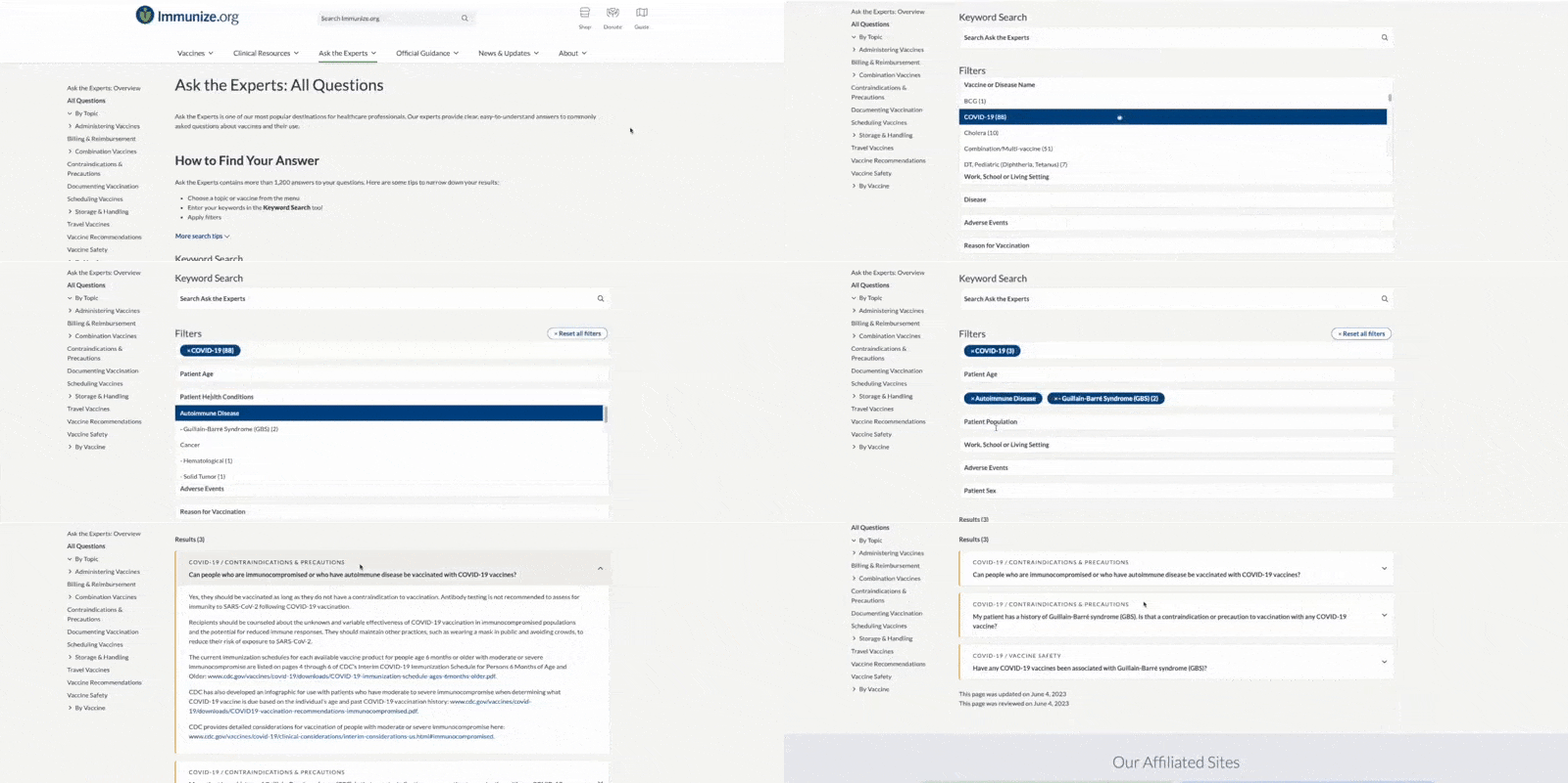
Find direct links to vaccine package inserts and related content under Official Guidance. Click FDA and then click “Package Inserts & EUAs.” Use the Vaccine or Disease Name filter to narrow results.

Package inserts can also be accessed from their respective Vaccines A–Z page. For example, package inserts for each PCV (PCV13, PCV15, PCV20, and PCV21) as well as PPSV23 are included on Pneumococcal. View the right-hand menu on this page and click on FDA Package Inserts & EUAs to jump directly to their location.

Related Link
- Immunize.org: Website Office Hours: Official Guidance, Part 1 (CDC, FDA, WHO) (37 minutes)
Immunize.org updated page 2 of its Shingles (Zoster): Questions and Answers resource for patients and caregivers to incorporate the American Academy of Family Physicians (AAFP) vaccine recommendations. It now states:
The American Academy of Family Physicians (AAFP) and CDC recommend that all adults age 50 years and older receive a 2-dose series of RZV (Shingrix). The doses should be given 2 to 6 months apart. People 50 years and older should receive RZV even if they previously received the live zoster vaccine or have had shingles.
Recap: Immunize.org updates "Protect Yourself from Hepatitis A and Hepatitis B . . . A Guide for Gay and Bisexual Men"
Immunize.org recently revised its patient handout Protect Yourself from Hepatitis A and Hepatitis B . . . A Guide for Gay and Bisexual Men to include updated disease statistics.
Lantern and the Mount Sinai Parenting Center have teamed up to offer pediatric healthcare providers tips by text message at no charge (beyond standard text message rates). One message is sent to the enrolled clinician’s smartphone each week. The tips are designed to help healthcare providers guide parents in raising healthy, resilient children by promoting positive parenting behaviors, strengthening parent-child relationships, and translating developmental science into simple, actionable guidance, including vaccination. These brief, high-yield educational nuggets are constructed to fit into the flow of a busy clinician’s day.
To sign up, text HCP to 274 448 or visit www.mylantern.org/hcp.

Recap: ACOG releases 2026 Maternal Immunization Schedule, endorsed by 13 medical, nursing, and pharmacy organizations
On June 10, the American College of Obstetricians and Gynecologists (ACOG) released its 2026 Maternal Immunization Schedule. ACOG’s maternal immunization schedule provides evidence-based vaccine recommendations to protect U.S.-based pregnant, postpartum, and lactating patients and their infants from vaccine-preventable illnesses.
The new ACOG guidance continues to recommend routine vaccination during pregnancy with four vaccines (influenza, COVID-19, Tdap, RSV). Vaccination during pregnancy confers protection during the pregnancy, as well as to the newborn in the early months of life. RSV vaccination is licensed and recommended for one pregnancy only; in subsequent pregnancies, infants should receive an RSV preventive antibody product.
ACOG recommends seven additional vaccines (pneumococcal, meningococcal, HepA, HepB, HPV, MMR, varicella) when indicated based on patient-specific circumstances. The recommended timing of these additional vaccines varies because some are contraindicated or not recommended during pregnancy.
All immunizations recommended on the ACOG schedule are also listed on the 2025 CDC schedule last updated July 2, 2025, which is currently in effect and published on the CDC website. A difference is that CDC currently recommends COVID-19 vaccination after shared clinical decision-making, while ACOG routinely recommends COVID-19 vaccination during pregnancy.
ACOG's 2026 Maternal Immunization Schedule was endorsed by 13 medical, nursing, and pharmacy organizations. View the ACOG immunization schedule designed for healthcare professionals. A patient-friendly version of the schedule is available as an infographic or PDF. All current schedules published by healthcare professional organizations, as well as detailed vaccination recommendations, are available at Immunize.org.
The Summit Adult Vaccination Recommendations Review (SAVRR) Council is a group of representatives of diverse organizations that deliver vaccinations to adults who meet to discuss implementation challenges and provide implementation guidance to support vaccinators who are following recommendations issued by medical societies. In their first vote, they approved interim guidance for healthcare professionals regarding the 2026–27 fall respiratory vaccination season, advising simply that vaccinators follow the currently available 2025–26 recommendations until medical societies issue updated 2026–27 guidance.
The medical societies planning to issue updated vaccination recommendations for seasonal respiratory viruses (influenza, RSV, COVID-19) are the American Academy of Pediatrics (AAP), the American Academy of Family Physicians (AAFP), the American College of Obstetricians and Gynecologists (ACOG), and the Infectious Diseases Society of America (IDSA). These organizations are coordinating the timing of the release of their updated recommendations in early September. AAP aims to publish its childhood influenza recommendations in August, with its RSV and COVID-19 recommendations coming in September.
The topline summary of the SAVRR Council’s interim guidance appears below.
The SAVRR Council recommends that healthcare professionals follow existing 2025–26 influenza, COVID-19, and RSV immunization recommendations from relevant professional medical associations for administering 2026–27 vaccines, once they become available, until updated recommendations for 2026–27 respiratory season vaccines are released.
The SAVRR Council is a committee of the National Adult and Influenza Immunization Summit (NAIIS), known as “the Summit,” established in 2026 to support implementation of evidence-based vaccination recommendations. To maintain its independence, the SAVRR Council does not accept vaccine industry funding or industry participation in its membership. Immunize.org administers and serves as the fiscal agent for the Summit and the SAVRR Council.
The SAVRR Council hosted its first public webinar focused on describing its purpose, membership, and function on June 9. A meeting summary and presentation slides will be posted on the SAVRR Council web page and announced in IZ Express soon.
Our Vaccination Saves Lives pins are meaningful gifts for people who understand that lives are not saved by vaccines on a shelf, but by the act of vaccination. The pin makes a refined statement in rich blue enamel with gold lettering and edges, measuring 1.65" x 0.75".


Select the design that best suits how you plan to use your pin:
- Double stick-through posts: Two posts slide through fabric and are held securely by either rubber or locking-metal backings. Both types of backing are provided in the package.
- New! Magnetic clasp: Hold the pin firmly in place without piercing clothing.


Be first in your office to wear these elegant new pins on clothing, white coats, backpacks, or tote bags to remind everyone you meet of the value of vaccination.
Click here for Vaccination Saves Lives pin pricing and ordering information.
In May 2026, Michigan State University published State of CDC Workforce: Changes at the Centers for Disease Control and Prevention and CDC’s Ability to Protect the Public’s Health. Portions of the Executive Summary appear below.
Since the second Trump Administration took over leadership of the U.S. federal government on January 20, 2025, the Centers for Disease Control and Prevention (CDC) has undergone significant changes and challenges, including lack of permanent leadership, elimination of programs, reductions-in-force and loss of staff, a deadly shooting, new policies, and restrictions on hiring, communication, and spending.
Between February and April 2026, we anonymously surveyed CDC workers to understand the effects of these changes and challenges on the CDC workforce and on CDC’s ability to protect the nation’s health, more than one year into the current Administration. We heard from 624 CDC workers: 433 still at CDC and 191 who left CDC since Inauguration Day. . . .
The CDC workforce is struggling to keep the agency functional in the face of operational difficulties, loss of staff and expertise, and a challenging work environment. The difficulties described by CDC workers portend a U.S. government losing its ability to protect the public’s health.

In its June 15 issue, JAMA Internal Medicine published 2024–2025 COVID-19 Vaccine and Major Adverse Cardiovascular Events Among US Veterans. Portions of the Findings and Meaning sections appear below.
This cohort study including 1 039 659 participants from the US Department of Veterans Affairs found that the 2024-2025 COVID-19 vaccine was associated with a lower risk of COVID-19–associated MACE [major adverse cardiovascular event], with more prominent risk reductions among those 75 years or older and those with comorbidities. Secondary analyses of all-cause MACE showed substantially larger absolute risk reductions. . . .
. . . Receipt of the 2024-2025 COVID-19 vaccine was associated with reduced COVID-19–associated cardiovascular risk; evidence of vaccine effectiveness against the broader outcome (all-cause MACE) likely reflects the hidden burden of undetected SARS-CoV-2 and associated complications that are amenable to reduction by COVID-19 vaccination.

In its June 15 issue, Pediatrics published Parental Decline of Newborn Vitamin K and Hepatitis B Vaccine Administration by Newborn Sex. This retrospective cohort study of all live births took place from January 2018 to December 2025 at three centers of the University of Pennsylvania health system in Philadelphia. A portion of the Results section appears below.
Among 93 163 newborns, 777 did not receive VK [vitamin K] prophylaxis (8.3 newborns per 1000 births) and 9400 did not receive HBV [hepatitis B vaccine] (100.9 newborns per 1000 births). HBV was not administered to 646 of 777 newborns (83%) whose parents declined VK prophylaxis. Female sex was associated with significantly higher adjusted odds of VK prophylaxis nonreceipt . . . compared with male sex. . . . Rates of VK prophylaxis decline increased significantly among both sexes.

To learn simple tips and tricks for using our websites efficiently, please register for our next set of Website Office Hours on Wednesday, July 8, at 4:00 p.m. (ET) or Thursday, July 9, at 12:00 p.m. (ET). The same content will be covered in both sessions.
We will open each 30-minute session with a short, live demonstration on navigating our popular public-facing websites, VaccineInformation.org and LetsGetRealAboutVaccines.org. You can submit questions when you register or live on Zoom during the session.

Register today for Immunize.org Website Office Hours (content is the same for both):
The archive of previous Website Office Hours content is posted at Immunize.org’s "Webinars & Videos" page.
Mark your calendar for future Immunize.org Website Office Hours.
Association of Immunization Managers (AIM) will host a webinar titled Adults Need Vaccines Too: Strategies to Support and Improve Adult Vaccination Efforts Through Addressing Medicaid and Medicare Challenges at 1:00 p.m. (ET) on July 14. Attendees will learn how immunization programs can navigate challenges with Medicaid and Medicare reimbursement utilizing partnerships and provider education.
Visit AIM’s resource website to view past adult immunization webinars.
For more upcoming events, visit our Calendar of Events.
About IZ Express
IZ Express Disclaimer
ISSN 2771-8085
Editorial Information
-
Editor-in-ChiefKelly L. Moore, MD, MPH
-
Managing EditorJohn D. Grabenstein, RPh, PhD
-
Associate EditorSharon G. Humiston, MD, MPH
-
Writer/Publication CoordinatorTaryn Chapman, MS
Courtnay Londo, MA -
Style and Copy EditorMarian Deegan, JD
-
Web Edition ManagersArkady Shakhnovich
Jermaine Royes -
Technical ReviewerKayla Ohlde