

- National Nurses Week is May 6–12 and School Nurse Day is May 6. Thanks to all the nurses who play a critical role in promoting and providing vaccinations!
- Immunize.org updates "Checklist of Current Versions of U.S. COVID-19 Vaccination Guidance and Clinic Support Tools"
- Mother’s Day is May 10; thanks to moms who keep us safe and healthy
- Measles 2026: 1,814 confirmed measles cases so far this year; South Carolina's large measles outbreak officially ended April 26
- “Healthcare Professional Organization Schedules and Recommendations": watch and share the new 3-minute video, part of the Orientation Video Series on YouTube
- “The extraordinary ability to influence things from the extreme micro to the extreme macro”: Immunize.org remembers global influenza public health leader, Nancy J. Cox, PhD
- Journalists interview Immunize.org experts
- Vaccines in the news
- Spotlight on the website: "Vaccine Safety" and "Vaccine Science" at LetsGetRealAboutVaccines.org
- Recap: Immunize.org and the Autism Science Foundation update “Evidence Shows Vaccines Unrelated to Autism"
- Recap: Immunize.org updates “MMR Vaccine Does Not Cause Autism: Examine the Evidence!”
- Summary: Immunize.org clinical resources, web pages, videos, and webinars released in March and April
- CDC and AMA’s Project Firstline offers “Pertussis: Trends, Treatment, and Prevention” on-demand training; CME available
- NFID blog post warns against forgetting the children harmed by vaccine-preventable diseases
- Explore the www.Give2MenACWY.org website to increase coverage for the MenACWY booster and other adolescent vaccinations
Notable Publications
Upcoming Events
National Nurses Week runs from May 6 through May 12. The observance recognizes the nurses who care for patients across every setting. Immunize.org is grateful to the nurses who play a central role in vaccination, from administering doses to educating families. Nurses rank high among the most trusted voices in health care. Their day-to-day conversations with patients build confidence in choosing to vaccinate.
May 6 is School Nurse Day. Immunize.org joins the National Association of School Nurses (NASN) in honoring the dedication of school nurses. School nurses advocate for student-centered care, including vaccination, and are essential to keeping schools a safe and healthy learning environment for everyone.

Celebrate school nurses as vaccination champions by spreading the word across your social media channels today by using the SND2026 logo, social media tools, and the hashtag #SND2026 with your posts on May 6.
Related Links
- American Nurses Association: National Nurses Week History web page
- NASN: School Nurse Day web page
Immunize.org updates "Checklist of Current Versions of U.S. COVID-19 Vaccination Guidance and Clinic Support Tools"
Immunize.org released the April 28 version of its Checklist of Current Versions of U.S. COVID-19 Vaccination Guidance and Clinic Support Tools. The April 28 version is updated with the most current dates of COVID-19 resources, with links refreshed. This checklist adds links to the 2026 immunization schedules from the American Academy of Pediatrics (AAP), American Academy of Family Physicians (AAFP), and American College of Obstetricians and Gynecologists (ACOG) that all include COVID-19 vaccination. All resources continue to reflect use of the 2025–2026 formulation.

Related Link
- Immunize.org: Vaccines A–Z: COVID-19 main page
This Mother's Day, Immunize.org celebrates the mothers who give their children a healthy start in life. Moms start looking after their children's health before they're even born by eating right, going to checkups, and getting vaccinated. Vaccination during pregnancy enables mothers’ protective antibodies to pass from mother to baby, keeping both safe during a baby’s first months of life. For example, Tdap vaccination during pregnancy reduces a newborn’s risk of hospitalization with pertussis by about 90%.
After delivery, moms can make sure their newborns get a hepatitis B vaccine and, if needed, RSV antibody protection before leaving the hospital. They are often the parent who makes sure children stay on track with vaccinations throughout childhood.
Thank you to all the moms and the mother figures in children's lives for giving them the best possible start to a healthy life. Happy Mother's Day!
Here are a few of us with our moms.


As of April 30, CDC reported 1,814 confirmed measles cases for 2026, 93% outbreak-associated. So far, 36 states have reported measles cases in 2026. Utah’s outbreak is now the largest active outbreak with 18 new cases reported in the past week, for a total of 428 cases since the beginning of 2026.
The South Carolina measles outbreak that began October 2, 2025, was declared over on April 26, following two incubation periods (42 days) with no new outbreak-associated cases. It ended after 997 confirmed cases and was the largest U.S. measles outbreak in 35 years, since the 1991 outbreak of 2,000 cases in New York City.
More than 95% of South Carolina cases with known status were unvaccinated, and more than 90% were children. The South Carolina Department of Public Health reported at least $2 million in direct public health response costs, with up to 90 staff at a time working on case investigation and contact tracing. Other routine public health activities were scaled back as staff were needed for the outbreak response. The outbreak also caused at least 5,250 missed days of in-person instruction across 31 schools and prompted nearly 19,243 additional vaccinations through March compared with the prior year. These cost and effect calculations do not account for the broader indirect costs to society and families.
The graph below shows South Carolina measles cases from October 2025 to March 2026, according to the South Carolina Department of Public Health.

Below is a map from CDC showing measles cases among U.S. residents as of April 30.

Vaccine coverage rates can vary considerably from community to community within a state. Pockets of unvaccinated people can accumulate in states with high vaccination coverage, creating conditions favorable for an outbreak if measles is introduced. Vaccination remains extremely effective. Immunize.org offers measles-related resources for the public on several of our affiliated websites:
- VaccineInformation.org: Measles web page
- LetsGetRealAboutVaccines.org: Measles web page
- Immunize.org: Vaccines A–Z: Measles main page
- AAP: Fact Checked: The MMR (Measles, Mumps and Rubella) Vaccine Is Safe and Effective web page
- CDC: Measles Cases and Outbreaks main page
- Common Health Coalition: More Illness, Greater Cost: Spotlight Brief; Childhood Immunizations (PDF)
- Johns Hopkins International Vaccine Access Center: U.S. Measles Tracker web page
- PopHIVE (Yale School of Public Health): Infectious Diseases Dashboard: Measles web page
- Health Canada: Measles and Rubella Weekly Monitoring Report
“Healthcare Professional Organization Schedules and Recommendations": watch and share the new 3-minute video, part of the Orientation Video Series on YouTube
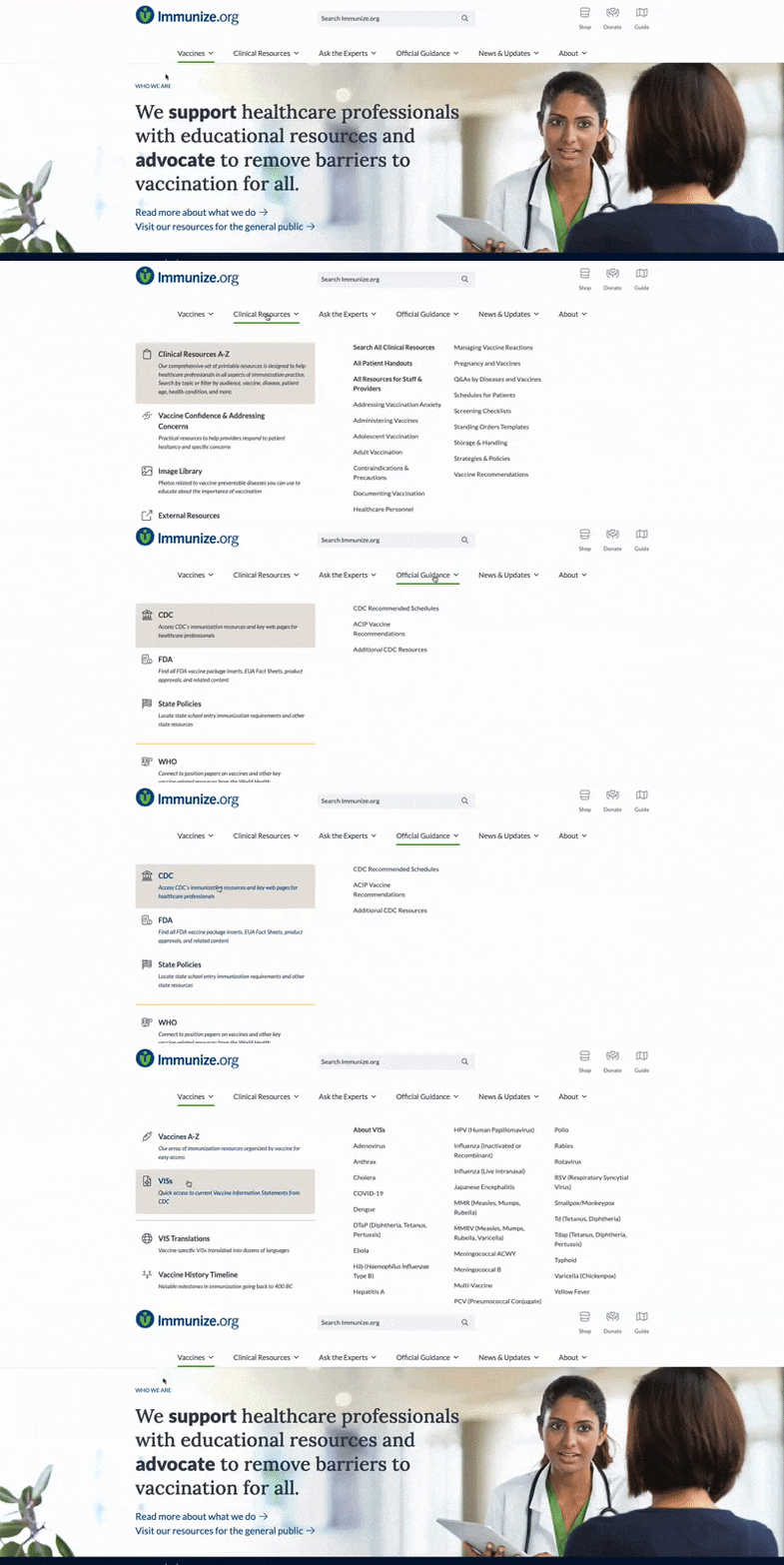
This week, our featured episode from the Orientation Video Series is titled Healthcare Professional Organization Schedules and Recommendations. In recent months, healthcare professional organizations that do not endorse recent changes to vaccination recommendations published by CDC began to issue their own immunization schedules and recommendations for the populations they serve. In this video, Kelly Moore, MD, MPH, reviews the areas of the Immunize.org website that present vaccine schedules and recommendations published by these organizations, providing our users with easy access to the recommendations and schedules they need, in addition to those published by CDC.
The 3-minute video is available on our YouTube channel, along with our full Orientation Video Series collection.

To find the full Orientation Video Series of 19 videos and more than 100 other short videos on Immunize.org's website, use the Clinical Resources tab and then choose “Webinars & Videos” on the left side.
Like, follow, and share Immunize.org’s social media accounts and encourage colleagues and others interested in vaccination to do likewise.
- Facebook at ImmunizeOrg
- Instagram at ImmunizeOrg
- LinkedIn at ImmunizeOrg
- YouTube at ImmunizeOrg
Nancy J. Cox, Ph.D., led the CDC’s influenza division from 1992 through 2014. She passed away in April from brain cancer. As Dr. Tom Frieden, former CDC director, wrote of her in his remembrance: “Most Americans have never heard her name, but her work prevented catastrophes the rest of us never had to think about.”
“When Dr. Cox took over the CDC influenza division in 1992, it had 14 staff. By the time she retired in 2014, it was a powerhouse unit and was anchored to a worldwide network of laboratories that, every year, characterizes thousands of viruses to update the flu vaccine. Hundreds of millions of people worldwide benefit from this work. It’s painstaking, methodical, and largely unseen. It’s also what stands between us and the next pandemic.”
Dr. Cox was the recipient of numerous scientific and achievement awards, including CDC’s Charles C. Shepard Science Awards five times. She was recognized by Time magazine as one of the “Time 100: The People Who Shape our World” and by Newsweek magazine with the Giving Back Awards in 2006. In addition, Dr. Cox was awarded the Service to America Medals Federal Employee of the Year for 2006 and received the CDC’s Lifetime Achievement Award in 2014. She was the author and coauthor of more than 250 research articles, reviews, and book chapters.
When the 2009 H1N1 pandemic began in the spring of 2009, her team identified and characterized the virus and shared this critical information with the world within days. That spring, her house was struck by lightning and burned to the ground. She was back at work the next day, with clothes still smelling of smoke.
We all owe Dr. Cox a debt of gratitude for dedicating her life to understanding and protecting humanity from influenza, one of our most ancient and deadly plagues.

Journalists seek out Immunize.org experts to help explain vaccines to the public and policy makers. We help the media understand and communicate the complex work vaccinators do. Here is a recent citation.
- Factcheck.org: The Persistent Misleading Claim That Vaccines Aren’t Properly Tested for Safety (4/27/26)
These recent articles convey the potential risks of vaccine-preventable diseases and the importance of vaccination.
- Forbes: Florida Tried to Loosen Vaccine Mandates but Failed. Here’s What That Could Have Meant for Public Health (5/1/26)
- Annenberg Public Policy Center: Scientists Esteemed by Public, with Vaccine Scientists Seen as Similar to Scientists in General (4/27/26)
- Washington Post: Measles Deaths Are Coming. Doctors Are Fighting an Uphill Battle. (4/28/26)
- Independent: Americans Who Get Their News from Right-Wing Media Outlets Are Far More Vaccine-Skeptical, Survey Shows (4/27/26)
- CNN: The HPV Vaccine Can Reduce Certain Cancers by Half. Expert Explains Why Men and Boys Should Get It (4/24/26)
- Pittsburgh Post-Gazette: Immunity Lost (4/19/26)

Our website, LetsGetRealAboutVaccines.org, educates and equips families and healthcare professionals with tools to confidently advocate for childhood vaccination. This week we spotlight the pages Vaccine Safety and Vaccine Science, which are found under the “Learn About Children’s Vaccines” menu.
The Vaccine Safety page (also in Spanish) explains the extensive research, review, and monitoring systems that help ensure vaccines are safe and effective before and after they are approved. It also emphasizes that vaccines are among public health’s greatest success stories.
The multistep journey of a vaccine is described, including these phases:
- Exploration
- Lab testing
- Clinical trials
- FDA approval
- Review by external experts
- Safety monitoring

The Vaccine Science page (also in Spanish) explains how childhood vaccines work, what they contain, and why they are an important part of protecting children’s health. It also covers how vaccines can prepare the immune system to fight infection.
Covered topics include:
- How the immune system works
- How vaccines work
- Types of vaccines and their ingredients
- Multiple doses and booster vaccines
- Understanding herd immunity

To learn more about LetsGetRealAboutVaccines.org, we recommend our live training video (20 minutes, 44 seconds), which contains a video tour of the website.
Immunize.org and the Autism Science Foundation updated their Evidence Shows Vaccines Unrelated to Autism resource. References were updated to reflect the latest evidence, which continues to show no relationship between vaccination and autism.
Immunize.org reviewed and updated references in MMR Vaccine Does Not Cause Autism: Examine the Evidence! Evidence continues to show no relationship between MMR vaccination and autism.
IZ Express regularly provides readers with information about Immunize.org’s new and updated educational materials for healthcare professionals and their patients. All Immunize.org materials are free to distribute.
If you missed them during recent weeks, the following materials were posted.
Clinical Resources for healthcare professionals:
- Standing Orders for Administering Varicella Vaccine to Children and Teens
- Skills Checklist for Vaccine Administration
- Strategies to Improve Adult Vaccination Coverage
- Vaccine Storage Emergency Response Worksheet
- Adult Immunization: Importance of Staying Up to Date with Vaccines
Web pages:
Videos:
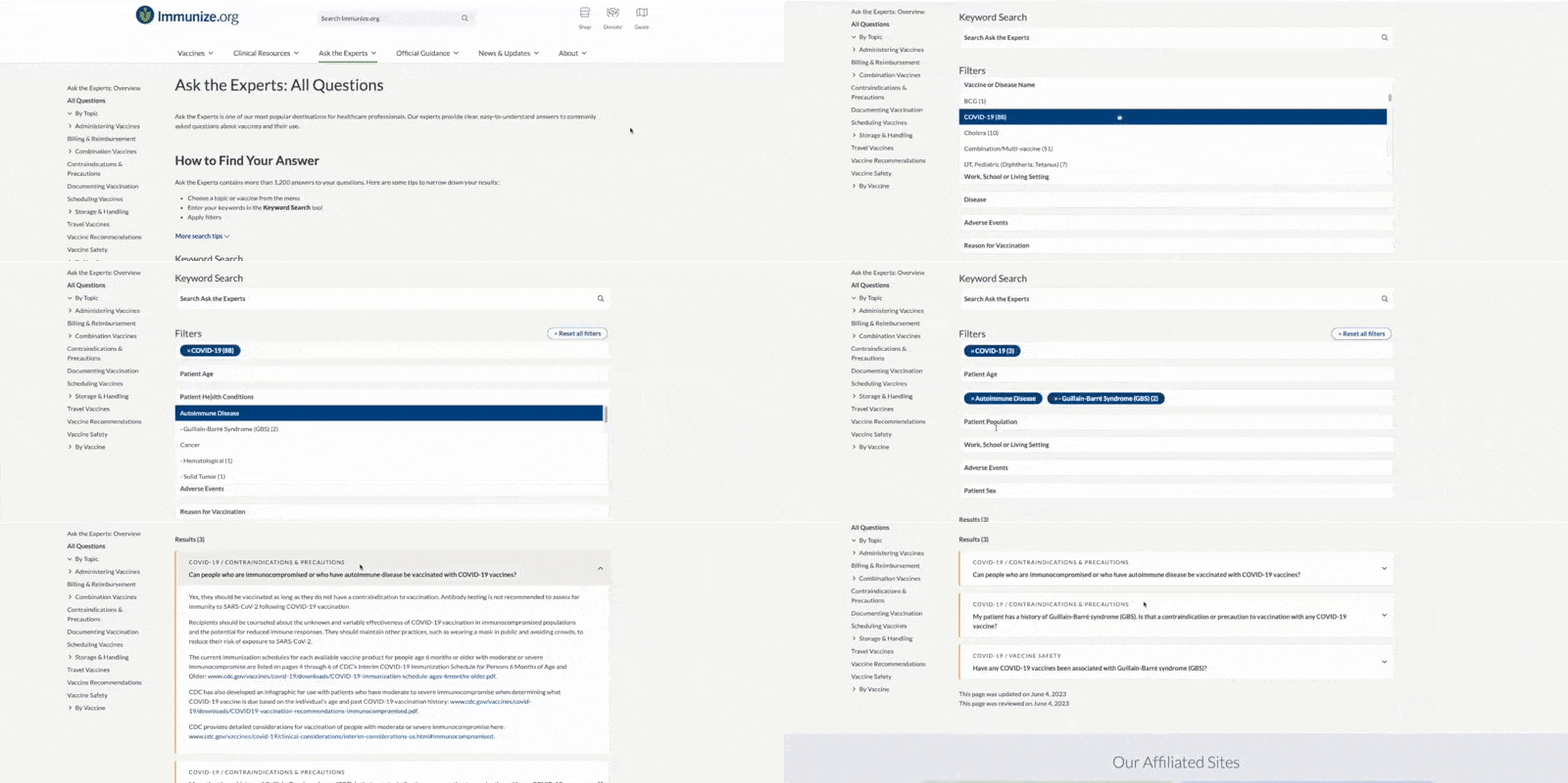
- Website Training Video: Ask the Experts (16:09)
- Website Training Video: About Us, Publication Archives, and Vaccine Timeline (16:57)
Webinars:
- Website Office Hours: Ask the Experts (26:09)
- Website Office Hours: About Us, Publication Archives, and Vaccine Timeline (31:35)
CDC and the American Medical Association (AMA) offer a 30-minute on-demand training titled Pertussis: Trends, Treatment, and Prevention. The training is part of Project Firstline, CDC's national training collaborative for infection prevention and control. Experts from CDC and AMA discuss the epidemiology of pertussis in the U.S., how local and national officials work together during an outbreak response, and outline infection prevention and control protocols.
Free continuing-education credits (CME) are available.

Watch the training.
Related Links
- Immunize.org: Ask the Experts: Pertussis main page
- Immunize.org: Vaccines A–Z: Pertussis main page
On April 29, NFID published a blog post titled Protecting the Health of Black Children. Author Dial Hewlett, Jr., MD, FIDSA, infectious disease consultant at Calvary Hospital in the Bronx, discusses the dangers of forgetting the children harmed by vaccine-preventable diseases. He warns that communities already facing disparities in access and outcomes, including Black children in the United States, are at greatest risk of being hurt by the consequences of vaccine confidence erosion.
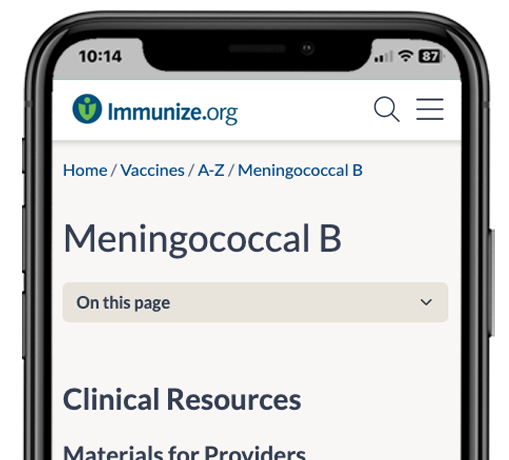
Immunize.org's www.Give2MenACWY.org website promotes the importance of adolescent vaccination, including the recommended MenACWY vaccine booster dose at age 16. Many teens are behind on vaccines, so vaccine outreach is more important than ever.
If you are looking for tools to explain meningococcal vaccine recommendations and assist in improving adolescent coverage for all recommended vaccines, view this site. Check out the many helpful tools from Immunize.org, CDC, and other organizations.

The website is divided into five easy-to-access sections:
- Vaccinate Teens: teen vaccination schedules and tips for improving vaccination rates
- Give 2 Doses: tools to help improve second dose coverage of MenACWY vaccine
- 16-Year-Old Visit: resources to help providers and patients remember the important vaccines recommended for 16-year-olds
- Tools for Providers: tools to explain meningococcal ACWY vaccine recommendations and improve coverage for all adolescent vaccines
- Resources: links to print materials, organizations involved in adolescent vaccination, personal stories about the importance of vaccination, and other resources of interest
The site also categorizes materials according to whether they are primarily of interest to providers, to adolescents, or to parents.
Visit Give2MenACWY.org and enjoy browsing (and deploying) its bountiful resources.
Related Links
- MenACWY: You're Not Done If You Give Just One: Give 2 Doses to Strengthen Protection
- Recommending MenACWY: What to Say and How to Say It
- Top 10 Ways to Improve Adolescent Immunization Rates (updated April 2026)
- Developing an Immunization Culture in Your Office (updated April 2026)
- Know Your Rates: Measuring Immunization Success in Your Practice (updated April 2026)
- Immunize.org: You're 16: We Recommend These Vaccines for You
- Dear Colleague Letter: 16-Year-Old Patients: Make Sure They Receive Their Annual Well Visit and Vaccinations, signed by six medical societies
- Immunize.org: Ask the Experts: Meningococcal ACWY
- CDC: ACIP Meningococcal Vaccine Recommendations
- CDC: Vaccination Coverage Among Adolescents Aged 13–17 Years—National Immunization Survey–Teen, United States, 2024
“Impact of Removing the Universal Hepatitis B Birth-Dose Vaccination in the US” published in JAMA Pediatrics
In its April 27 issue, JAMA Pediatrics published Impact of Removing the Universal Hepatitis B Birth-Dose Vaccination in the US. The model described shows how abandoning more than 3 decades of U.S. policy supporting universal hepatitis B birth dose vaccination and relying only on hepatitis B screening during pregnancy is likely to increase preventable infant hepatitis B infections with subsequent lifelong health consequences. Portions of the key points section appear below.
Findings In this modeling study, the targeted recommendation resulted in more neonatal infections than universal vaccination under current maternal screening and birth-dose vaccination coverage. Preventing these additional infections would require screening approximately 100 000 more women.
Meaning Targeted vaccination would likely increase neonatal infections even at current screening and vaccination levels; because vaccination coverage has historically declined when universal recommendations were withdrawn, the impact of such a change is likely to be greater.
Related Links
- JAMA Pediatrics: The Impact of Changing Hepatitis B Recommendations in the US (4/27/26)
- JAMA Pediatrics: Economic Impact of Delaying the Infant Hepatitis B Vaccination Schedule (4/27/26)
In its April 16 issue, the International Journal of Infectious Diseases published Incidence of Human Papillomavirus Infections in Women Aged 27 Years and Older in the US: A Federated Data Network Study. Portions of the abstract appear below.
Findings
The overall five-year cumulative incidence rate in the Dataworks sample (n = 305,974) was 10.3% . . . Cumulative incidence estimates were higher for the younger age groups, declined through age 59, and then increased through age 70+. . . . Higher HPV infection incidence was observed among Black, Hispanic, and Medicaid-enrolled women.
Interpretation
In a large cohort of US women ages 27 and older, new HPV infections were acquired throughout the lifespan. These women and their partners can benefit from preventive strategies to reduce risk of HPV-related diseases.

Virtual: Register for Immunize.org Website Office Hours. Join a 30-minute discussion about our News & Updates web content on May 13 at 4:00 p.m. (ET) or May 14 at 12:00 p.m. (ET). Recorded sessions archived.
To learn simple tips and tricks for using our websites efficiently, please register for our next set of Website Office Hours on Wednesday, May 13, at 4:00 p.m. (ET) or Thursday, May 14, at 12:00 p.m. (ET). The same content will be covered in both sessions.
We will open each 30-minute session with a short, live demonstration on navigating our News & Updates website section. You can submit questions when you register or live on Zoom during the session.

Register today for Immunize.org Website Office Hours (content is the same for both):
The archive of previous Website Office Hours content is posted at Immunize.org's "Webinars & Videos" page.
Mark your calendar for future Immunize.org Website Office Hours.
For more upcoming events, visit our Calendar of Events.
About IZ Express
IZ Express Disclaimer
ISSN 2771-8085
Editorial Information
-
Editor-in-ChiefKelly L. Moore, MD, MPH
-
Managing EditorJohn D. Grabenstein, RPh, PhD
-
Associate EditorSharon G. Humiston, MD, MPH
-
Writer/Publication CoordinatorTaryn Chapman, MS
Courtnay Londo, MA -
Style and Copy EditorMarian Deegan, JD
-
Web Edition ManagersArkady Shakhnovich
Jermaine Royes -
Technical ReviewerKayla Ohlde