


- “Tetanus in Four Children—Idaho, Minnesota, Missouri, and Wisconsin, 2024” published in MMWR
- “Tetanus Surveillance—United States, 2009–2023” published in MMWR
- “Clusters of Invasive Haemophilus influenzae Type B Disease Among Adults Using Substances or Experiencing Homelessness or Housing Instability—Alaska, Oregon, and Washington, 2023─2025” published in MMWR
- National Infant Immunization Week is April 19–25; jump start promotion activities with Voices for Vaccines’ resources
- Immunize.org reviews and updates Ask the Experts sections on Storage and Handling and Scheduling Vaccines
- Immunize.org updates three handouts to increase MenACWY 2-dose coverage, measure success, and build a culture of immunization in your office
- Late RSV activity continues; most jurisdictions that typically recommend stopping RSV preventive antibodies for infants after March 30 now advise continuing through April 30
- Measles 2026: 1,748 confirmed measles cases in first 4 months; 32 states report 2026 cases
- “Which Adults Should Be Vaccinated for Hepatitis B?” See this 3-minute video, part of the Ask the Experts Video Series on YouTube.
- Vaccines in the news
- “Nine-Valent Human Papillomavirus Vaccination and Related Cancers in Males” published in JAMA Oncology
- "The Health and Economic Repercussions of Declining MMR Coverage in the United States" published in PNAS
- “Influenza Vaccination Attenuates Acute Myocardial Infarction and Stroke Risk Following Influenza Infection: A Register-Based, Self-Controlled Case Series Study, Denmark, 2014 to 2025” published in Eurosurveillance
- Virtual: National Academy of Medicine hosts webinar titled “Communicating About Measles for Health Professionals” on April 28 at 12:30 p.m. (ET)
- Virtual: CDC hosts COCA call, “Rabies Is Still Here: Epidemiology, Outbreaks, and Costs of Prevention in the United States,” on April 30 at 2:00 p.m. (ET); CE credit offered
- Register for Immunize.org Website Office Hours. Join a 30-minute discussion about our News & Updates web content on May 13 at 4:00 p.m. (ET) or May 14 at 12:00 p.m. (ET). Recorded sessions archived.
CDC published Tetanus in Four Children—Idaho, Minnesota, Missouri, and Wisconsin, 2024 on April 16 in MMWR. On-time immunization and post-exposure prophylaxis for tetanus-prone wounds are essential to minimize the risk of tetanus. A portion of the summary appears below.
Because of high coverage with recommended tetanus toxoid–containing vaccine (TTCV), pediatric tetanus is rare in the United States; approximately four cases are reported annually. . . .
Among four U.S. children who developed tetanus in 2024, none had completed a primary TTCV series, and none received TTCV or tetanus immunoglobulin (TIG) prophylaxis after their exposure and before illness onset. All four patients required hospitalization, ranging from 8 to 45 days, and two required additional rehabilitation care. Only one child completed the TTCV series after illness. . . .
Completing a primary TTCV series and remaining up to date with TTCV vaccination are essential to preventing tetanus; patients with tetanus-prone wounds should receive timely administration of TTCV and TIG according to recommendations.

Access the MMWR article in HTML or PDF.
Related Link
- CDC: MMWR main page providing access to the MMWR family of publications
CDC published Tetanus Surveillance—United States, 2009–2023 on April 16 in MMWR. A portion of the results and interpretation sections appear below.
Results: During 2009–2023, a total of 402 tetanus cases and 37 associated deaths were reported from 47 states and the District of Columbia, with a mean annual tetanus incidence of 0.08 cases and 0.008 deaths per 1 million population. More than half (62.2%) of all reported tetanus cases occurred in males. Incidence was higher among males than females for all persons aged <65 years and higher among women than men for adults aged ≥80 years. Women aged ≥80 years had the highest overall tetanus incidence . . . A total of 45.0% of persons with tetanus who had a substantial wound sought medical care before disease onset. Among patients with wounds eligible for tetanus post-exposure prophylaxis, 2.3% received tetanus immune globulin (TIG) and 26% received TTCV [tetanus toxoid-containing vaccine] per recommendations. Among persons whose vaccination history was known, a substantial proportion (43.9%) had not received any TTCV doses, highlighting substantial gaps in coverage.
Interpretation: Despite being preventable through vaccination, tetanus continues to occur among persons of all age groups in the United States. Overall, males have higher incidence compared with females; the highest incidence is among older women. Approximately 1 in 10 persons who develop tetanus will die, with the highest mortality and case-fatality rates among older adults.

Access the MMWR article in HTML or PDF.
Related Link
- CDC: MMWR main page providing access to the MMWR family of publications
CDC published Clusters of Invasive Haemophilus influenzae Type B Disease Among Adults Using Substances or Experiencing Homelessness or Housing Instability—Alaska, Oregon, and Washington, 2023─2025 on April 16 in MMWR. A portion of the summary appears below.
Since the introduction of Haemophilus influenzae type b (Hib) conjugate vaccines in the United States in 1987, invasive Hib disease outbreaks have become uncommon. . . .
During April 2023–December 2025, two clusters (44 cases) of invasive Hib disease were identified among adults in Alaska, Oregon, and Washington; most patients would not have been eligible for routine Hib conjugate vaccination as children. Smoking (77%), illicit substance use (77%), and housing instability (68%) were common. These clusters demonstrate the vulnerability of adults, particularly those with specific risk factors, to this otherwise rare vaccine-preventable disease. . . .
Enhanced surveillance for invasive H. influenzae disease in adults could help assess the scope, characterize commonly reported exposures, identify future clusters, and guide development of strategies to protect at-risk populations.

Access the MMWR article in HTML or PDF.
Related Link
- CDC: MMWR main page providing access to the MMWR family of publications
Observed in April, National Infant Immunization Week (NIIW) highlights the importance of protecting infants from vaccine-preventable diseases and celebrates the achievements of immunization partners. Since 1994, hundreds of communities have joined together during NIIW to explain the crucial role vaccination plays in protecting our children, communities, and public health.
This year, Voices for Vaccines (VFV) is observing NIIW April 19–25 and created 16 graphics with corresponding social media language. The graphics, available in English and Spanish, emphasize the first nine vaccines for children.

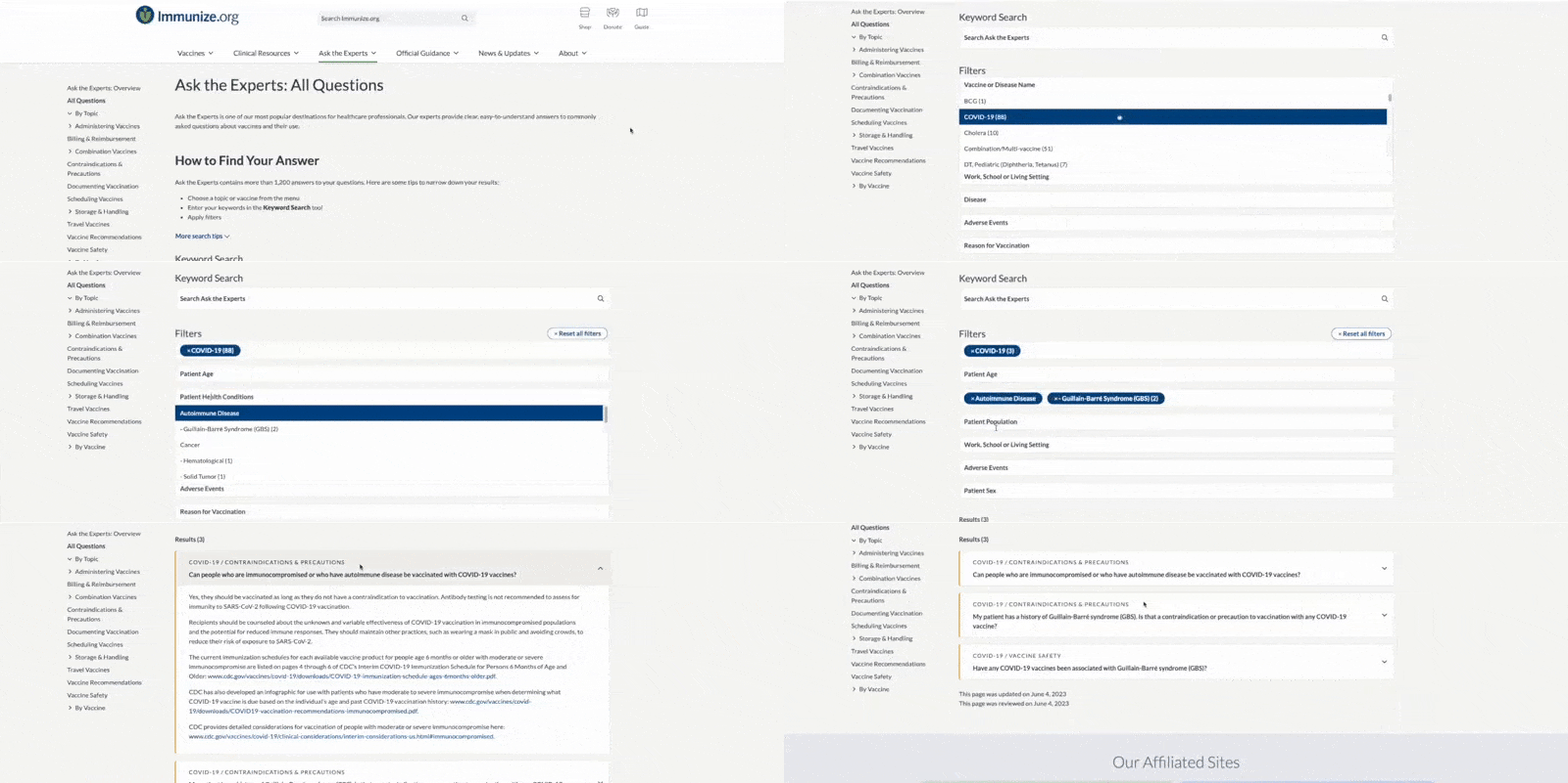
Immunize.org reviews and updates Ask the Experts sections on Storage and Handling and Scheduling Vaccines
On April 10, Immunize.org revised two sections of its clinical content: Ask the Experts: Storage and Handling and Ask the Experts: Scheduling Vaccines. Although no content required major changes, all content was updated for accuracy, including updating links.

Immunize.org’s Ask the Experts main page leads you to 30 web pages on various topics with more than 1,300 common or challenging questions and answers about vaccines and their administration. Immunize.org’s team of experts includes Kelly L. Moore, MD, MPH (team lead); Carolyn B. Bridges, MD, FACP; Iyabode Beysolow, MD, MPH; and Jane Zucker, MD, MSc.
Related Links
- Immunize.org: Ask the Experts: Storage and Handling main page
- Immunize.org: Ask the Experts: Scheduling Vaccines main page
- Immunize.org: Ask the Experts main page with more than 1,300 questions and answers
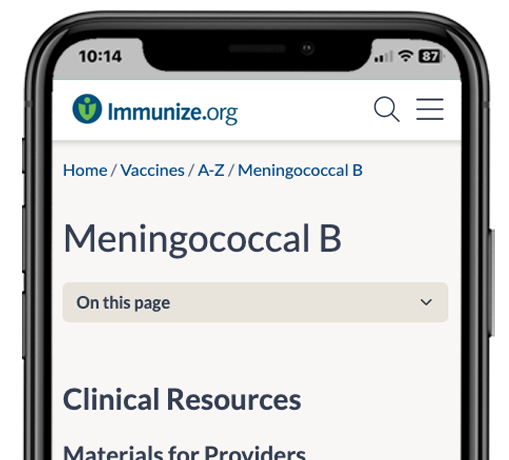
Immunize.org updates three handouts to increase MenACWY 2-dose coverage, measure success, and build a culture of immunization in your office
Immunize.org updated three handouts on its www.Give2MenACWY.org website, which describes the importance of adolescent vaccination, with a focus on the crucial, yet underutilized, MenACWY vaccine booster dose at age 16 that offers protection to young people through their late teens and early twenties. Updates were made to indicate alignment with American Academy of Pediatrics' recommended immunization schedule, and to remove references to outdated approaches to quality assessment. References were also reviewed and updated. Immunize.org's LetsGetRealAboutVaccine.org and VaccineInformation.org websites were added as sources of trustworthy information for parents, patients, and healthcare providers.


The website is divided into five easy-to-access sections:
- Vaccinate Teens: teen vaccination schedules and tips for improving vaccination rates
- Give 2 Doses: tools to help improve second dose coverage of MenACWY vaccine
- 16-Year-Old Visit: resources to help providers and patients remember the important vaccines recommended for 16-year-olds
- Tools for Providers: tools to explain meningococcal ACWY vaccine recommendations and improve coverage for all adolescent vaccines
- Resources: links to print materials, organizations involved in adolescent vaccination, personal stories about the importance of vaccination, and other resources of interest
Influenza activity in the United States continues to wane, with most of the remaining circulating influenza virus identified as type B. COVID-19 levels are very low across the country. According to CDC, RSV activity is elevated but has peaked in most regions of the country.
RSV preventive antibody products (nirsevimab [Beyfortus, Sanofi] and clesrovimab [Enflonsia, Merck]) are routinely recommended from October through March in most of the contiguous United States. This season, the National Respiratory and Enteric Viruses Surveillance System shows RSV activity persisting later in the spring than usual. Individual public health jurisdictions are responsible for recommendations to extend RSV preventive antibody administration beyond March, particularly for newborns, based upon local RSV epidemiology.
Only one dose of Beyfortus or Enflonsia is recommended for most infants. Infants with certain risk factors for severe RSV disease are the only ones recommended to receive a preventive antibody product as they enter their second RSV season. This means that most infants who receive RSV preventive antibody now, during this unusually late season, will not be eligible for RSV immunization at the beginning of the next RSV season in October.
The Association of Immunization Managers (AIM) collected information on this season’s changes in recommendations for use of RSV preventive antibody products from the 66 federally funded immunization program jurisdictions (including states, certain cities or counties, and territories). On April 2, AIM posted a map showing current RSV preventive antibody guidance, based on available information.
Visit the color-coded map and supporting documentation for each jurisdiction's status on AIM's website and details in your jurisdiction.

- AAP: RSV Immunization Administration Frequently Asked Questions web page
- Immunize.org: Standing Orders for Administering Nirsevimab RSV Preventive Antibody (Beyfortus, by Sanofi) to Infants and High-Risk Young Children (PDF)
- Immunize.org: Standing Orders for Administering Clesrovimab RSV Preventive Antibody (Enflonsia, by Merck) to Infants (PDF)
- Immunize.org: Vaccines A–Z: RSV (Respiratory Syncytial Virus) main page
- Association of Immunization Managers: Immunization Program Directory web page
As of April 16, CDC reported 1,748 confirmed measles cases for 2026, 76% of the cases reported in all of 2025. So far, 32 states have reported measles cases in 2026. Ten measles cases were reported among international visitors to the United States. Notable updates include:
- The Utah outbreak is the fastest growing outbreak in the United States. The Utah Department of Health and Human Services confirmed 602 cases since January 2026, with 75 cases reported in the past 3 weeks.
- Arizona’s outbreak is connected to the larger Utah outbreak. Arizona Department of Health and Human Services confirmed 299 cases in 2026, with 19 new cases in March and 2 new cases in April.
The chart below shows the U.S. measles cases by year since 2018, from the Johns Hopkins International Vaccine Access Center measles tracker. Dates for cases prior to 2025 are sourced from CDC, while 2025 and 2026 case dates align with the cases mapped above.

At local levels, vaccine coverage rates may vary considerably. Pockets of unvaccinated people can accumulate in states with high vaccination coverage. When measles spreads into communities of unvaccinated people, outbreaks can occur. Below is a map from CDC showing MMR vaccine coverage for kindergarteners by school year (2024–25).

Immunize.org offers measles-related resources for the public on several of our affiliated websites:
- VaccineInformation.org: Measles web page
- LetsGetRealAboutVaccines.org: Measles web page
- Immunize.org: Vaccines A–Z: Measles main page
- AAP: Fact Checked: The MMR (Measles, Mumps and Rubella) Vaccine Is Safe and Effective web page
- CDC: Measles Cases and Outbreaks main page
- Common Health Coalition: More Illness, Greater Cost: Spotlight Brief; Childhood Immunizations (PDF)
- Johns Hopkins International Vaccine Access Center: U.S. Measles Tracker web page
- PopHIVE (Yale School of Public Health): Infectious Diseases Dashboard: Measles web page
- Health Canada: Measles and Rubella Weekly Monitoring Report
This week, our featured episode from the Ask the Experts Video Series is titled Which Adults Should Be Vaccinated for Hepatitis B? The video summarizes the 35-year history of CDC’s recommendation for routine infant hepatitis B vaccination and elaborates on CDC’S recommendation for routine hepatitis B vaccination of all previously unvaccinated adults through age 59 years and those age 60 years and older with risk factors for hepatitis B. Adults age 60 years and older without known risk factors for hepatitis B infection may receive HepB.
The 3-minute video is available on our YouTube channel, along with our full collection of quick video answers to popular Ask the Experts questions.

Like, follow, and share Immunize.org’s social media accounts and encourage colleagues and others interested in vaccination to do likewise.
- Facebook at ImmunizeOrg
- Instagram at ImmunizeOrg
- LinkedIn at ImmunizeOrg
- YouTube at ImmunizeOrg
These recent articles convey the potential risks of vaccine-preventable diseases and the importance of vaccination.
- STAT: Don’t Believe Headlines Saying That Vaccine Skepticism Is Widespread (4/17/26)
- CIDRAP, Op-Ed: Measles, Misinformation, and What’s Actually in the MMR Vaccine (4/16/26)
- NBC News: Life-Threatening Virus That Causes Vomiting and Diarrhea at High Levels in the U.S., CDC Says (4/15/26)
- CIDRAP: Long COVID Costs World’s Economy Billions: Analysis (4/13/26)
- NBC News: A Deadly Bacterial Disease Is Returning, Doctors Warn, as Vaccination Rates Fall (4/2/26)

Our website, LetsGetRealAboutVaccines.org, provides facts and equips families and healthcare professionals with tools to confidently advocate for childhood vaccination. This week we shine the spotlight on “Vaccine-Preventable Diseases” (also available in Spanish), which is found under the “Learn About Children’s Vaccines” menu. Below are the desktop and mobile views of the dropdown menus.

Easy-to-understand information about routinely recommended U.S. vaccines for children is found under “Vaccine-Preventable Diseases,” and each page includes:
- Information about the disease
- Reasons for vaccination
- Side effects of the vaccine
- The effectiveness of the vaccine
- Understanding the risks: disease vs. getting vaccinated
- Recommended vaccine schedule
Below is a sample table on Understanding the Risks from Measles (Spanish). The table clearly compares the risk of the disease versus risk of the vaccine to prevent the disease.

To learn more about the features of LetsGetRealAboutVaccines.org, we recommend our live training video (20 minutes, 44 seconds), which contains a video tour of the website.
The Immunize.org team offers durable, laminated tables of QR codes linking to VISs for vaccines given to children and adults. VISs explain both risks and benefits of vaccination. Federal law requires you to document provision of CDC’s current VIS before administering any vaccine covered by the Vaccine Injury Compensation Program. CDC recommends VISs accompany other vaccines, too. An easy, paperless way to comply with the law is for patients to scan a QR code and access the VIS from a smartphone or tablet.
CDC produces official VISs only in English. CDC does not produce or certify available translations, so the official CDC VIS should accompany any translation.

These new tables belong in any room where vaccinations are given. Key features include:
- Durable quality: The tough laminate coating can be wiped down.
- Never out-of-date: Any time a VIS or translation is updated, the QR code will direct to the new VIS.
- Use as a booklet or poster: The laminated table arrives folded like a newspaper. It is suitable for desk use as an 8.5" x 11" booklet or wall mounted as an 11" x 17" poster.
- One version for official CDC VISs and one for Spanish translations: The table of official CDC VISs in English is sold individually. The table of Spanish translations is sold as a bundle with the table of official VISs so it is easy to make both available.
- Spanish version usable by non-Spanish speakers: The Spanish QR code table has side-by-side text in English to support its use by non-Spanish speakers.
- Easy access to all available translations: Both versions include a QR code link to the Immunize.org index of all VIS translations available in dozens of languages.
- Bonus content: The reverse side of the QR code poster includes links to Immunize.org's “Addressing Vaccination Anxiety” resources and additional VIS content.
Pricing (includes all shipping and handling costs)
Laminated CDC VIS QR Code Table (English)
1 copy: $14.00
2 copies: $9.00 each
3–4 copies: $6.50 each
5–9 copies: $5.00 each
10–19 copies: $4.00 each
20–59 copies: $3.00 each
60+ copies: $2.50 each
Bundle: Laminated CDC (English) + Spanish Translation VIS QR Code Tables
(each bundle includes 1 CDC VIS table and 1 table of Spanish translations)
1 bundle: $20.00
2 bundles: $16.00 each
3–4 bundles: $12.00 each
5–9 bundles: $8.50 each
10–19 bundles: $7.00 each
20–59 bundles: $6.00 each
60+ bundles: $5.00 each

Visit the Shop Immunize.org: Laminated VIS QR Code Tables web page to view images and order today! For additional information, call 651-647-9009 or email admininfo@immunize.org.
Immunize.org is pleased to introduce our newest lapel pin. Our Vaccination Saves Lives pins are meaningful gifts for people who understand that lives are not saved by vaccines on a shelf, but by the act of vaccination. The pin makes a refined statement in rich blue enamel with gold lettering and edges, measuring 1.65" x 0.75".


Select the design that best suits how you plan to use your pin:
- Double stick-through posts: Two posts slide through fabric and are held securely by either rubber or locking-metal backings. Both types of backing are provided in the package.
- New! Magnetic clasp: Hold the pin firmly in place without piercing clothing.


Be first in your office to wear these elegant new pins on clothing, white coats, backpacks, or tote bags to remind everyone you meet of the value of vaccination.
Click here for Vaccination Saves Lives pin pricing and ordering information.
April is National Oral Cancer Awareness Month. Head-and-neck (oropharyngeal) cancers are the most common HPV-associated cancer among men, striking more men than women.

In its April 9 issue, JAMA Oncology published Nine-Valent Human Papillomavirus Vaccination and Related Cancers in Males. The findings and meaning sections appear below.
This cohort study of 615155 vaccinated and 2290623 unvaccinated males aged 9 to 26 years found that males vaccinated with the 9v-HPV vaccine had a lower risk of HPV-related cancer compared with the unvaccinated cohort. The negative association of the 9v-HPV vaccine with HPV-related cancer was maintained in both males aged 9 to 14 years and males aged 15 to 26 years.
Meaning: The findings of this study suggest that the 9v-HPV vaccine is beneficial not only for females but also for males.
The United States is experiencing a resurgence of measles amid recent declines in childhood Measles–Mumps–Rubella vaccination. Using mathematical modeling informed by spatially resolved data on vaccination coverage, incidence, and associated economic costs, we quantified both the current and projected financial burden of measles in the United States under continued declines in coverage. For 2025, we estimated that measles imposes a cost of $244.2 million nationwide, with substantial heterogeneity in cost per case across counties driven by gaps in population immunity. Even modest annual reductions in vaccine coverage among young children generate a nonlinear increase in cases and hospitalizations, with costs totaling $7.77 billion over a 5-y period.
In its April 2 issue, Eurosurveillance published Influenza Vaccination Attenuates Acute Myocardial Infarction and Stroke Risk Following Influenza Infection: A Register-Based, Self-Controlled Case Series Study, Denmark, 2014 to 2025. Portions of the abstract results and conclusions sections appear below.
Among 1,221 individuals with a first-ever AMI [acute myocardial infarction] (n = 429; 35%) or stroke (n = 792; 65%), median age was 75 years (interquartile range: 66–82); 561 (46%) were female. After calendar-month adjustment, the IRR for cardiovascular events during the risk period was 3.5 . . . higher for AMI . . . than stroke . . . Prior influenza vaccination during the same influenza season, recorded in 610 (50%) episodes, reduced the excess risk of AMI or stroke associated with influenza infection . . .
Influenza infection conferred a transiently increased risk of first-time AMI and stroke. Vaccination substantially attenuated this risk, supporting its role in preventing cardiovascular complications after breakthrough infection.
On April 14, UNICEF published Bangladesh Launches Emergency Measles-Rubella Campaign with UNICEF, WHO and Gavi to Protect over 1.2 Million Children in 30 Upazilas. A portion of the press release appears below.
The Government of Bangladesh, with support from UNICEF, WHO and Gavi, the Vaccine Alliance, is launching an emergency measles-rubella vaccination campaign to protect more than 1.2 million children aged 6 months to 5 years across 30 upazilas [subdistricts] in 18 high-risk districts, with a phased expansion and gradual scaling up to additional districts and City Corporation areas nationwide. . . .
Bangladesh has a strong history of high immunization coverage, but even small disruptions can lead to the gradual accumulation of immunity gaps over time. Resurgences like the current one are typically the result of these accumulated gaps rather than a single factor. As the lead agency for vaccine procurement, UNICEF is working closely with the Government to ensure timely access to quality-assured vaccines and to expedite supply in response to increased demand.

The National Academy of Medicine and partners will host a webinar titled Communicating About Measles for Health Professionals at 12:30 p.m. (ET) on April 28. During the webinar, presenters will discuss the latest data, share evidence-based communication approaches, and provide practical tools to help professionals navigate conversations about measles vaccination, respond to concerns, and support informed decision-making.

To request continuing education credit from the American Public Health Association, attendees must watch the event live and complete a questionnaire within 30 minutes of the event’s conclusion.
Register for the webinar.
Virtual: CDC hosts COCA call, “Rabies Is Still Here: Epidemiology, Outbreaks, and Costs of Prevention in the United States,” on April 30 at 2:00 p.m. (ET); CE credit offered
CDC will host a Clinician Outreach and Communication Activity (COCA) call titled Rabies Is Still Here: Epidemiology, Outbreaks, and Costs of Prevention in the United States, 2:00–3:00 p.m. (ET) on April 30. During this COCA call, presenters will discuss the current rabies landscape in the United States and CDC resources to help clinicians and health departments with risk assessments.
A recording of the presentation will be archived for viewing on the COCA call web page a few hours after the live event ends.
Free continuing education credit (CME, CPE, CNE, and other) will be offered for this COCA call. Registration is not required.
Link for the April 30 call.
To learn simple tips and tricks for using our websites efficiently, please register for our next set of Website Office Hours on Wednesday, May 13, at 4:00 p.m. (ET) or Thursday, May 14, at 12:00 p.m. (ET). The same content will be covered in both sessions.
We will open each 30-minute session with a short, live demonstration on navigating our News & Updates website section. You can submit questions when you register or live on Zoom during the session.

Register today for Immunize.org Website Office Hours (content is the same for both):
The archive of previous Website Office Hours content is posted at Immunize.org’s "Webinars & Videos" page.
Mark your calendar for future Immunize.org Website Office Hours.
For more upcoming events, visit our Calendar of Events.
About IZ Express
IZ Express Disclaimer
ISSN 2771-8085
Editorial Information
-
Editor-in-ChiefKelly L. Moore, MD, MPH
-
Managing EditorJohn D. Grabenstein, RPh, PhD
-
Associate EditorSharon G. Humiston, MD, MPH
-
Writer/Publication CoordinatorTaryn Chapman, MS
Courtnay Londo, MA -
Style and Copy EditorMarian Deegan, JD
-
Web Edition ManagersArkady Shakhnovich
Jermaine Royes -
Technical ReviewerKayla Ohlde